
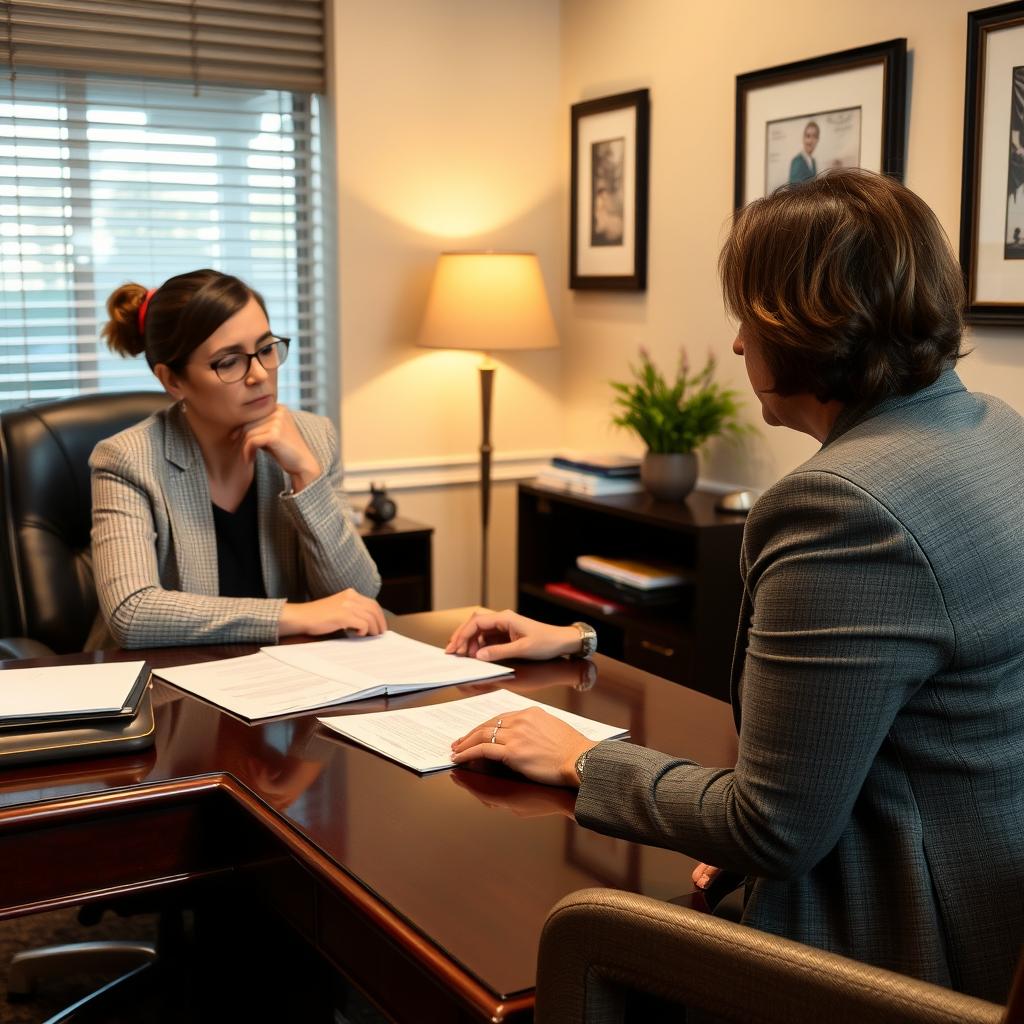
Visitation Modification Lawyer Virginia, VA
You have a visitation schedule that no longer works. Perhaps you changed jobs and your available weekends shifted, or your child’s needs have changed as they grow older. Maybe the other parent relocated, or safety concerns emerged that affect the time your child spends there. When a custody or visitation order no longer serves your child’s best interests, you need to ask the court for a modification. In Virginia, this requires showing a material change in circumstances—it is not enough simply to be dissatisfied with the current arrangement. At Law Offices Of SRIS, P.C., Mr. Sris and his Of Counsel team have helped parents across the Commonwealth seek visitation modifications since 1997. If you need to adjust your parenting time, reach our location at (888) 437‑7747 to request a consultation. Law Offices Of SRIS, P.C. – Advocacy Without Borders.
When a Visitation Schedule No Longer Fits
Parents often assume that once a judge signs a custody or visitation order, the terms are permanent. In reality, Virginia courts understand that families change. The parent who once had flexibility may now work a rigid shift; the child who once thrived in an alternating‑weekend schedule may now need more consistency during the school year. The legal standard that governs modification motions is straightforward: you must demonstrate that a material change of circumstances has occurred and that the change you seek is in the child’s best interests. Law Offices Of SRIS, P.C. Concentrates on family law matters throughout Virginia and helps parents evaluate whether the facts of their situation meet this threshold. We take the time to understand your daily reality and the specific reasons the current order no longer works before we advise whether to move forward.
Because Virginia law places the child’s welfare at the center of every modification decision, a motion to change visitation is different from an initial custody case. The court starts from the existing order and asks whether altered circumstances justify a different parenting schedule. A parent who seeks more parenting time must offer more than a preference; a parent who seeks restrictions on the other parent’s time must present evidence of changed risk. The Virginia Code sets out multiple factors the court examines, including the child’s relationship with each parent, each parent’s willingness to support the child’s relationship with the other, and any history that affects the child’s safety. At Law Offices Of SRIS, P.C., we work with clients to gather the information the court needs to make a well‑reasoned decision.
How Mr. Sris and His Of Counsel Handle Visitation Modification Cases
Every modification begins with a careful review of the existing order and the events that have occurred since it was entered. We sit down with you to understand what has changed—not in the abstract, but with the level of detail a judge will expect. This often means reviewing school records, medical records, work schedules, and correspondence between the parents. Where a modification is sought because of concerns about a child’s safety or well‑being, we help you identify the kind of evidence Virginia courts find persuasive, such as witness statements, police reports, or school counselor observations. Throughout this phase, we work with you to frame the narrative around the child’s needs, not the parents’ conflict.
Once we have developed the factual basis for a motion, we prepare and file the necessary pleadings in the appropriate Virginia court—typically the Juvenile and Domestic Relations District Court if the matter involves only custody or visitation, or in the Circuit Court if the visitation issue is part of a broader divorce action. We then handle all court appearances, including any required mediation or settlement conferences. Many modification cases resolve by agreement once both sides see the evidence laid out clearly; when they do not, Mr. Sris and his Of Counsel team are prepared to present the matter at trial. Our goal is always to work toward a resolution that serves the child’s best interests while protecting your parental rights.
What to Expect in the Modification Process
Filing a motion to modify visitation is not the same as starting from scratch. The parent asking for the change carries the burden of proof, so the first few weeks after filing typically involve exchanging information with the other side. Virginia’s discovery rules allow you to request documents and ask written questions, and in some cases depositions are taken. The court will also schedule a hearing, though the timeline depends on the court’s calendar and the complexity of the issues. Parents should expect that the process will take time and that the existing order remains in effect until the court issues a new one. Law Offices Of SRIS, P.C. Guides clients through each step so they understand what is happening and can make informed decisions along the way.
If an agreement can be reached, the parties may present a consent order to the court, which often avoids a contested hearing. When trial is necessary, the court hears testimony, reviews documents, and applies the statutory best‑interest factors. In Virginia, the judge has broad discretion to craft a visitation schedule that meets the child’s particular needs. Because outcomes depend heavily on the specific evidence presented, thorough preparation makes a significant difference. Our firm’s approach—grounded in decades of family law experience—is to enter every hearing with a clear, evidence‑backed argument for the schedule we believe is right for your child.
Legal Standards and What the Court Considers
Virginia Code § 20‑124.3 lists ten factors the court must weigh in determining a child’s best interests. Among them are the age and mental condition of the child, the existing relationship between each parent and child, the role each parent has played in the child’s life, and each parent’s willingness to support a close relationship with the other. The court also considers any history of family abuse and, when a child is of sufficient age and maturity, the child’s own preference. Additionally, § 20‑124.2 directs courts to ensure frequent and continuing contact with both parents when consistent with the child’s best interests. A motion to modify visitation must show that circumstances have changed such that applying these factors now points toward a different schedule. Law Offices Of SRIS, P.C. helps parents present their case within this statutory framework.
It is important to understand that a modification is not guaranteed simply because a parent would prefer more time or a different schedule. The court starts with a presumption that the existing order is correct, and the moving parent must overcome that presumption with evidence. Changes such as a parent’s relocation, a new work schedule that eliminates weekday contact, or a child’s developing special needs can all qualify as material changes, but each case turns on its own facts. An experienced family law attorney can assess whether the circumstances in your household meet the legal threshold and can help you present them in the most compelling way.
About Mr. Sris and His Of Counsel Team
Mr. Sris is the Owner and Founder of Law Offices Of SRIS, P.C. He is a former prosecutor who has built a multi‑state practice since founding the firm in 1997. Mr. Sris testified before the Virginia House Courts of Justice Committee in support of 2019 HB 635 (chief patron Del. David Bulova). He is admitted to practice in Virginia, Maryland, the District of Columbia, New Jersey, and New York, and he leads a team of experienced Of Counsel attorneys who concentrate in family law matters. Mr. Sris and his Of Counsel bring over 120 years of combined legal experience, with 4,739+ documented firm-wide results. Results may vary. Each attorney engaged with the firm brings substantial courtroom experience and a practical understanding of how Virginia judges approach visitation modification. You can read more about the team and verify bar admissions through the state bar directories listed below.
Frequently Asked Questions About Visitation Modification in Virginia
What counts as a material change in circumstances for a visitation modification?
A material change is any significant alteration in the factors that formed the basis of the original custody or visitation order. This can include a parent’s relocation, a change in a parent’s work schedule that reduces their availability, a child’s developing medical or educational needs, or a parent’s failure to follow the existing order. The change must affect the child’s well‑being in a way that makes the current schedule no longer appropriate. The court will evaluate whether the change is substantial enough that continuing the existing arrangement would not serve the child’s best interests.
Can I modify a visitation order without going to court?
You can modify by agreement, but only if the court approves the new order. If both parents agree on a new visitation schedule, they can submit a consent order to the court for the judge’s signature. As long as the proposed schedule appears to be in the child’s best interests, the judge typically approves it. If parents cannot agree, one side must file a motion and proceed through litigation. Even when agreement seems likely, having an attorney draft the order helps ensure the language accurately captures the terms and is enforceable later.
How long does it take to get a visitation modification in Virginia?
The timeline depends on whether the case settles and on the court’s calendar. Agreed modifications can often be finalized within a few months after the consent order is filed. Contested motions take longer because they involve discovery, mediation, and a hearing. Each court’s docket moves at its own pace, and cases involving expert testimony or complex safety concerns may extend further. Your attorney can give you a sense of the typical pace in the court where your case will be heard.
What if the other parent violates the modified visitation order?
If a parent refuses to follow a court‑ordered visitation schedule, you can file a motion for enforcement or contempt. The court can impose sanctions, order make‑up time, or, in serious cases, change custody. Document each violation carefully, including dates, times, and any communication. An attorney can help you decide when enforcement is the right step and what remedy to request. Repeated violations may also support a further modification if the circumstances show the other parent cannot comply with the order.
Do I need a lawyer for a visitation modification?
You are not legally required to have a lawyer, but the legal standard and procedural rules are complex. A parent who represents themselves must still prove a material change and present admissible evidence. An experienced family law attorney understands what judges in a particular locality typically consider persuasive, can prepare your case efficiently, and can negotiate with the other side on your behalf. Given that the outcome affects your relationship with your child for years, legal guidance often makes a significant difference in the quality of the result.
Can a child’s preference influence a visitation modification?
Yes, if the child is of sufficient age and maturity. Virginia Code § 20‑124.3 includes the reasonable preference of the child as one of the ten best‑interest factors. There is no fixed age at which a child’s preference becomes controlling; the judge weighs it together with the other factors. In practice, the older the child, the more weight the court may give to their wishes, but the judge always retains discretion to decide what schedule is best for the child overall.
Is there a waiting period before I can file for a modification?
Virginia does not impose a statutory waiting period for modification motions. You can file as soon as a material change occurs. However, courts are reluctant to entertain frequent modification requests that disrupt the child’s stability, so it is important that the change you are relying on is genuinely significant. An attorney can help you assess whether enough has changed to justify returning to court early or whether it is wiser to wait and document ongoing patterns.
What if I want to move out of Virginia with my child?
Relocation that affects the other parent’s court‑ordered visitation time almost always requires court approval or a modification of the existing order. Virginia requires a parent intending to relocate to give the other parent and the court advance written notice of the move. The court will then evaluate whether the relocation serves the child’s best interests, considering the impact on the child’s relationship with the other parent. Failing to obtain permission before moving can lead to a modification that reduces your parenting time.
For guidance on your specific situation, reach Law Offices Of SRIS, P.C. at (888) 437‑7747.
Explore related family law services: Custody Modification Lawyer Virginia · Child Support Modification Lawyer Virginia · Family Law Lawyer Virginia · Divorce Lawyer Virginia
For a full statutory breakdown, see our comprehensive analysis at srislawyer.com.
Primary sources: Virginia Code Title 20 (Family Law) · Virginia Circuit Courts
Attorney advertising. Prior results do not guarantee a similar outcome.
Case results depend on a variety of factors unique to each case.
Results may vary.
Our Fairfax Location: 4008 Williamsburg Court, Fairfax, VA 22032. By appointment only. Call (888) 437‑7747 to schedule.