
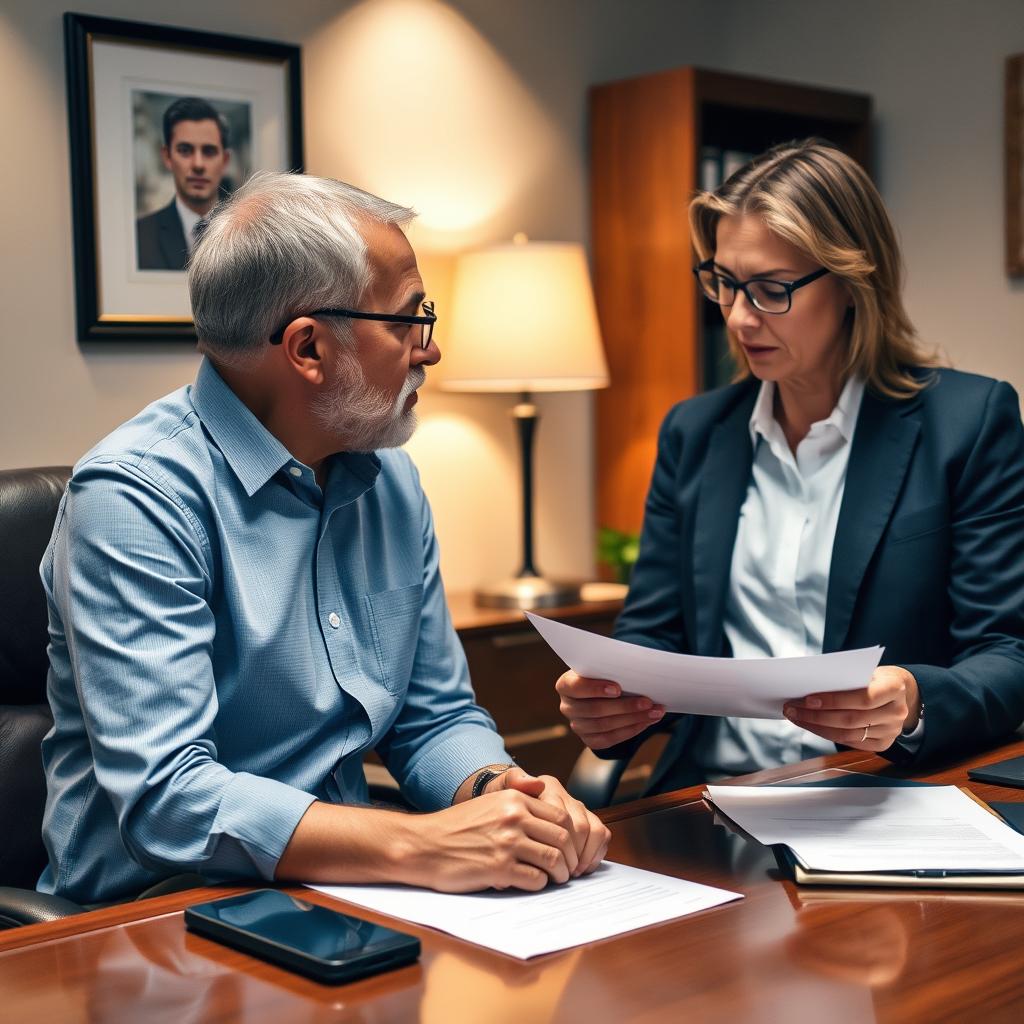
Spousal Support Lawyer Roanoke County, VA
When a marriage ends, one of the most pressing financial questions is whether either spouse will receive or pay spousal support—often called alimony. In Roanoke County, Virginia, spousal support is governed by the factors set forth in Virginia Code § 20‑107.1, and the outcome depends on the specific circumstances of each marriage and the parties’ post‑separation financial situations. Mr. Sris and his Of Counsel at Law Offices Of SRIS, P.C. Concentrate in representing clients throughout the Shenandoah Valley and Roanoke County in spousal support matters, from negotiated separation agreements to contested court hearings at the Roanoke County Circuit Court. To discuss your situation, contact Law Offices Of SRIS, P.C. at (888) 437‑7747. Law Offices Of SRIS, P.C. – Advocacy Without Borders.
Spousal Support in Roanoke County, Virginia
Spousal support in Virginia is not automatic and is determined using a qualitative, multi‑factor analysis. Under Va. Code § 20‑107.1, a judge may award support for a set period or indefinitely after considering the duration of the marriage, each party’s earning capacity and education, the standard of living established during the marriage, the contributions of each spouse to the family, and other relevant circumstances. The goal is to avoid a financial overreaching of one spouse at the expense of the other while accounting for the realities of each party’s ability to maintain themselves.
In Roanoke County, family‑law matters are heard in two courts: the Roanoke County Juvenile and Domestic Relations District Court handles standalone custody, visitation, and support petitions, while the Roanoke County Circuit Court—located at 305 East Main Street, Salem, VA 24153—has jurisdiction over divorce and all related equitable distribution and spousal support claims. If spousal support is part of a divorce, the Circuit Court is the forum. Our Shenandoah location routinely represents clients in Salem, Vinton, Cave Spring, Hollins, and Catawba, appearing at both courts as a case requires. The firm’s attorneys understand the local procedural expectations and work to present a clear financial picture that supports a fair outcome.
How Mr. Sris and His Of Counsel Handle Spousal Support Cases
When a client comes to Law Offices Of SRIS, P.C. with a spousal support concern, the first step is a consultation where Mr. Sris and his Of Counsel review the marriage’s financial history, the current incomes and expenses of both parties, and any existing separation or property agreements. If a settlement can be reached, the firm drafts the spousal support terms into a property settlement agreement that may be incorporated into a final divorce decree. If negotiation is not possible, the team prepares for a hearing at the Roanoke County Circuit Court, presenting evidence on the factors in § 20‑107.1 and arguing for an appropriate duration and amount of support.
Throughout the process, Mr. Sris and his Of Counsel concentrate on the substantive financial issues—evaluating income, imputed income, separate versus marital property, and any history of dissipation of assets—while guiding the client through the procedural steps. Because every marriage is different, the approach is tailored to the facts rather than built around arbitrary benchmarks. The firm works to achieve a resolution that respects the client’s long‑term financial interests without making any guarantee of a particular result.
About Mr. Sris and His Of Counsel Team
Law Offices Of SRIS, P.C. was founded by Mr. Sris, Owner and Founder, in 1997. He has practiced across Virginia, Maryland, the District of Columbia, New Jersey, and New York, and has concentrated in family law for much of his career. In addition to his courtroom practice, Mr. Sris testified before the Virginia House Courts of Justice Committee in support of 2019 HB 635 (chief patron Del. David Bulova). The firm’s Of Counsel attorneys bring additional litigation and negotiation experience, and together Mr. Sris and his Of Counsel bring extensive combined legal experience to each matter. Results may vary.
Frequently Asked Questions About Spousal Support in Roanoke County
What is spousal support in Virginia?
Spousal support is a court‑ordered payment from one spouse to the other during or after a divorce to address financial disparity. It is governed by Virginia Code § 20‑107.1, which sets out the factors a judge considers, such as the length of the marriage, each spouse’s earning capacity, and the standard of living during the marriage. Support can be temporary (pendente lite), for a defined period, or, in rare cases, indefinite. The specific form of support depends entirely on the facts presented to the court.
How does a court determine spousal support in Roanoke County?
A judge at the Roanoke County Circuit Court weighs the evidence against the statutory factors in Va. Code § 20‑107.1, looking at each spouse’s income, needs, and ability to pay. The judge examines not only current earnings but also potential earning capacity, the contributions each party made to the marriage (including non‑monetary contributions), and any fault grounds that may have contributed to the dissolution. Because the analysis is fact‑specific, presenting a thorough financial picture is essential. Contact us to discuss how these factors might apply to your situation.
Can spousal support be modified after a divorce?
Yes, spousal support can be modified if there has been a material change in circumstances since the last order. The party seeking modification must show the change is substantial and unanticipated at the time of the original award. Common bases include a significant change in income, disability, or retirement. Modification requests are heard at the Roanoke County Circuit Court, and the same statutory factors are applied. An experienced attorney can help determine whether your situation meets the threshold for modification.
How long must spousal support be paid?
The duration of spousal support is set by the court based on the marriage’s length and the recipient’s need for time to become self‑supporting. For shorter marriages, support may be awarded for a fixed period equal to half the length of the marriage, but the court has broad discretion. Indefinite support is reserved for marriages of long duration or where a spouse cannot reasonably be expected to become financially independent due to age, disability, or other factors. Every case is different, and the court tailors the duration to the facts.
What happens if my former spouse fails to pay court‑ordered support?
A spouse who fails to pay spousal support can be held in contempt and face enforcement actions such as wage garnishment or a judgment for arrears. The recipient can file a show cause motion at the Roanoke County Juvenile and Domestic Relations Court or the Circuit Court depending on where the support order originated. The court may order the paying spouse to pay the arrears plus interest and can impose sanctions intended to compel compliance. It is important to act promptly if payments stop, as arrears continue to accumulate.
Does marital fault affect spousal support in Virginia?
Yes, marital fault such as adultery, cruelty, or desertion can influence both the entitlement to and the amount of spousal support. Under Virginia law, a spouse who is found guilty of a fault‑based ground for divorce may be barred from receiving support, and a fault‑based ground can also justify awarding support to the injured spouse. However, fault is only one factor among many that the judge considers, and its weight depends on the specific evidence presented. It is advisable to consult with an attorney about how fault may be raised in your proceeding.
Can a prenuptial agreement affect spousal support?
Yes, a valid prenuptial or postnuptial agreement can waive, limit, or set the amount of spousal support, and Virginia courts generally enforce such agreements if they are entered into voluntarily and with full financial disclosure. If a party challenges the agreement, the court will examine whether it was unconscionable or obtained through fraud or duress. When an agreement governs spousal support, the court’s discretion under § 20‑107.1 is largely displaced. Reviewing the enforceability of an agreement early in the case is critical to understanding your rights.
Do I need a lawyer for spousal support in Roanoke County?
While you are not legally required to hire a lawyer, the spousal support process involves complex financial analysis and procedural rules that are difficult to navigate without experienced legal guidance. A lawyer can help gather and present the documentation the court will consider—tax returns, pay stubs, budgets, and asset statements—and can advocate for a fair outcome under the statutory factors. Mr. Sris and his Of Counsel have extensive experience handling spousal support matters in Roanoke County and throughout Virginia. To discuss your options, contact Law Offices Of SRIS, P.C. at (888) 437‑7747.
How do I start a spousal support case in Roanoke County?
A spousal support claim is typically initiated by filing a complaint for divorce that includes a request for support, or by filing a separate petition in the Juvenile and Domestic Relations Court if the parties are already separated. The complaint must be filed in the appropriate court—the Roanoke County Circuit Court for divorce‑related support, or the JDR Court for standalone support actions. After filing, the matter proceeds through discovery, negotiation, and potential hearings. The timeline is driven by the court’s calendar and the complexity of the financial issues, but prompt filing is important to preserve support rights. We can guide you through every step.
How much does a spousal support lawyer cost?
Attorney fees vary depending on the complexity of the case, the extent of negotiations, and whether a contested hearing is required, and Law Offices Of SRIS, P.C. offers consultations to discuss fee arrangements tailored to your matter. Factors that influence the overall cost include the number of disputes over property, income, and the length of any hearings. Many clients find that engaging experienced counsel early can help avoid unnecessary litigation expenses later. To learn more about fee structures, reach our firm at (888) 437‑7747.
Additional family law resources are available for nearby communities: Family Law in Fairfax County, Family Law in Prince William County, Family Law in Manassas City, and Family Law in Falls Church.
Outbound sources: Virginia Code Title 20 (Domestic Relations) and Virginia Judicial System provide the official statutory text and court information.
Attorney advertising. Prior results do not guarantee a similar outcome. Results may vary. case results depend on a variety of factors unique to each case.
Case results depend on a variety of factors unique to each case.