
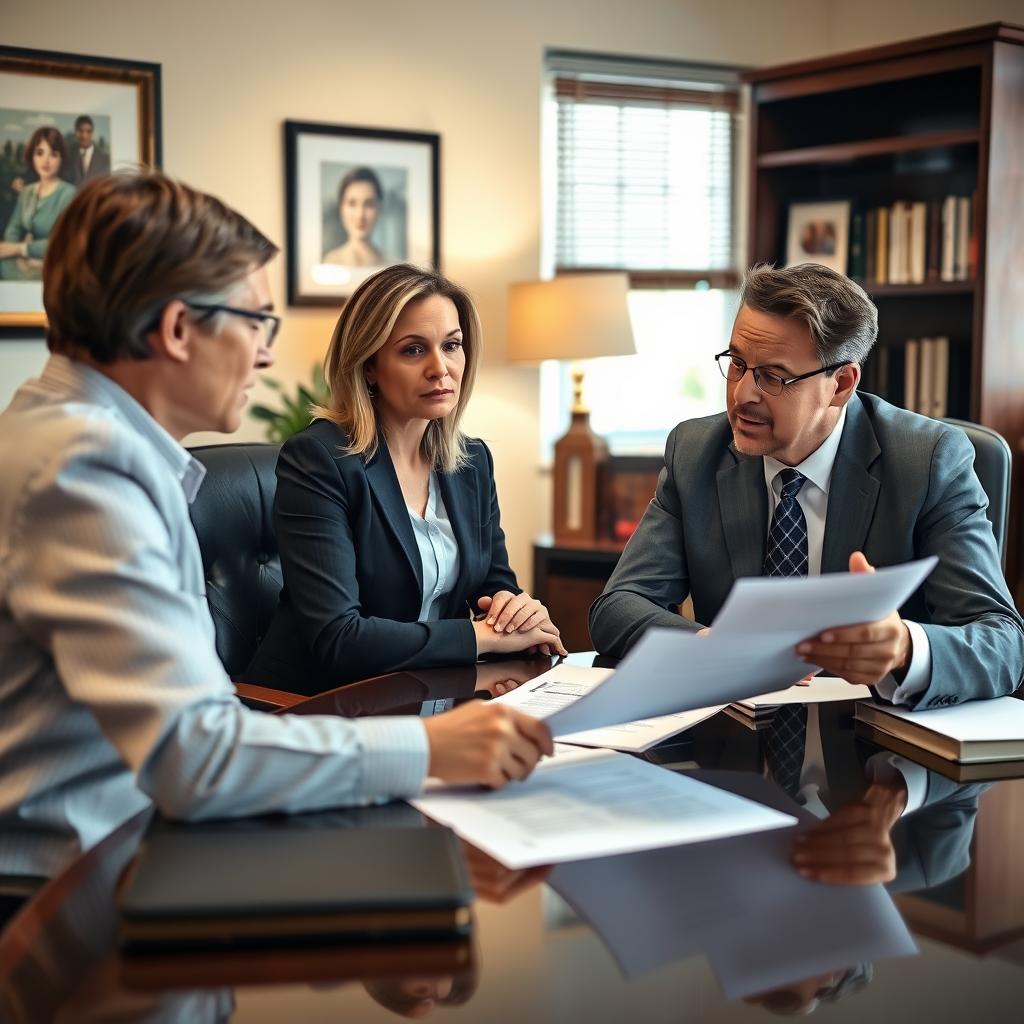
Spousal Support Lawyer Fauquier County, VA
Your divorce proceeding in Fauquier County brings up the question of spousal support—whether you may be required to pay it or whether you need it to maintain financial stability after the marriage ends. The uncertainty about monthly obligations or the income you will have to rely on can make an already difficult time feel overwhelming. At Law Offices Of SRIS, P.C., we work with clients throughout Fauquier County to address spousal support concerns with a clear, practical strategy. Mr. Sris and his Of Counsel team bring extensive combined legal experience to these matters, and they focus on protecting your financial interests whether you are seeking support or facing a request to pay it. To discuss how spousal support may apply in your case, call (888) 437-7747 to schedule a consultation. Law Offices Of SRIS, P.C. – Advocacy Without Borders.
What Spousal Support Means in Fauquier County
Spousal support, often called alimony, is a financial payment one spouse makes to the other after a separation or divorce. In Virginia, the award of spousal support is governed by Va. Code § 20-107.1, which sets out the factors the court must weigh. Spousal support is not automatic; the court looks at the needs of the requesting spouse, the other spouse’s ability to pay, the standard of living during the marriage, the duration of the marriage, and the contributions each spouse made to the family. Because Virginia is an equitable distribution state, property division and spousal support are considered together, and the final outcome depends heavily on the facts of each case.
In Fauquier County, spousal support matters are heard in two courts: the Fauquier County Juvenile and Domestic Relations District Court handles standalone support and custody petitions, while the Fauquier County Circuit Court, located at 6 Court Street in Warrenton, decides spousal support as part of a divorce proceeding. The Circuit Court is the court of record for equitable distribution and final divorce decrees. Mr. Sris and his Of Counsel are familiar with the local court procedures and regularly appear before the judges in the Twentieth Judicial District. We serve clients in Warrenton, New Baltimore, Bealeton, Marshall, The Plains, and the surrounding communities from our Fairfax location. While every case is different, understanding how the local court evaluates the statutory factors can help you build a stronger argument.
Virginia law allows for several types of spousal support. Temporary support, known as pendente lite support, may be awarded while a divorce is pending. Permanent or indefinite support can be part of the final decree. The court may also award a lump sum, rehabilitative support for a period of time while a spouse gains education or job training, or reservation of the right to seek support in the future. The court retains jurisdiction to modify support later if a material change in circumstances occurs.
How Mr. Sris and His Of Counsel Handle Spousal Support Cases
When you bring your spousal support matter to Law Offices Of SRIS, P.C., we start by gathering a complete picture of your financial situation. We review income, expenses, assets, debts, tax returns, pay stubs, and business interests to assess both the need for support and the paying spouse’s ability to provide it. In many cases, spousal support can be resolved through negotiation and a written separation agreement without a court hearing. We work to reach an agreement that is fair and sustainable, but when negotiation is not possible, we are prepared to litigate the issue in court.
If immediate support is needed, we can file a motion for pendente lite relief with the appropriate Fauquier County court. A pendente lite hearing allows the court to enter a temporary order for support, child custody, and use of the family residence while the divorce is pending. Our team handles all stages of the process, from the initial petition to enforcement or modification of an existing support order. Throughout the case, we provide straightforward guidance on what to expect and keep you informed of every development. Results may vary. depending on the specifics of your case, and we encourage you to schedule a consultation to discuss your particular situation.
About Mr. Sris and His Of Counsel Team
Mr. Sris, Owner and Founder of Law Offices Of SRIS, P.C., has been practicing since 1997 and is admitted in Virginia, Maryland, the District of Columbia, New Jersey, and New York. As a former prosecutor, he brings a disciplined, analytical approach to family law matters, including spousal support. Mr. Sris testified before the Virginia House Courts of Justice Committee in support of 2019 HB 635 (chief patron Del. David Bulova), a bill that addressed the equitable distribution of retirement assets and the QDRO process. His experience in legislative and courtroom advocacy informs the strategy he brings to every spousal support case. His Of Counsel team includes attorneys with extensive experience in family law, litigation, and financial matters, and they work collaboratively to pursue favorable outcomes for clients in Fauquier County. Our firm has documented results across multiple practice areas since 1997; prior results, however, do not guarantee a similar outcome
Frequently Asked Questions
How is spousal support determined in Virginia?
Spousal support in Virginia is determined by weighing the factors listed in Va. Code § 20-107.1, not by a fixed formula. The court examines the earning capacity, obligations, needs, and financial resources of each party, the standard of living during the marriage, the duration of the marriage, and the age and physical and mental condition of the parties. It also considers the contributions of each spouse to the family, including non-monetary contributions, and how marital property is divided. Because the court has broad discretion, presenting a clear financial picture is essential. For guidance on how these factors may apply to your situation, call (888) 437-7747.
Can spousal support be modified after it is ordered?
Yes, a spousal support order may be modified if there has been a material change in circumstances that was not contemplated when the original order was entered. Common reasons include a substantial change in income, job loss, retirement, or remarriage of the recipient. The party seeking modification must file a motion with the court that issued the original order—either the Fauquier County Juvenile and Domestic Relations District Court or the Fauquier County Circuit Court. The court will reexamine the financial circumstances of both parties under the same statutory factors. Modification is not guaranteed, and the burden is on the moving party. Reach Law Offices Of SRIS, P.C. at (888) 437-7747 to discuss whether a modification may be possible in your case.
What is the difference between pendente lite support and final spousal support?
Pendente lite support is temporary and is intended to maintain the status quo while a divorce is pending, whereas final spousal support is part of the divorce decree and may be for a set period or indefinite. The court may award pendente lite support early in the case after considering each spouse’s immediate needs and ability to pay. Final support is determined after a full hearing, often alongside property division. The amount and duration can differ significantly between the two. To understand how these two types of support might affect you, contact our firm for a consultation.
Do I need a lawyer for a spousal support case in Fauquier County?
While you are not legally required to have a lawyer, spousal support involves complex financial and legal issues that can have long-lasting effects. A lawyer can help you assemble the necessary financial documentation, calculate potential support obligations, negotiate a separation agreement, and represent you in court. Mistakes in presenting financial evidence or failing to address all statutory factors can result in an order that is difficult to change. Mr. Sris and his Of Counsel handle spousal support cases regularly in Fauquier County courts and can help you navigate the process. Call (888) 437-7747 to schedule a consultation.
What if my spouse is hiding income or assets to avoid paying support?
If a spouse is hiding income or assets, the court can use discovery tools and forensic accounting to uncover the true financial picture, and it may impute income to that spouse based on their earning capacity. Under Va. Code § 20-107.1, the court can consider the potential earning capacity of a spouse, not just current actual income, if the spouse is voluntarily underemployed. Discovery can include subpoenas for bank records, tax returns, and business financials. Presenting evidence of concealed assets or income can strongly influence the support award. Mr. Sris and his Of Counsel have experience handling cases involving complex financial matters and can guide you through the process of uncovering hidden income.
Related Family Law Resources
If you are dealing with family law issues in nearby counties, we also serve clients in:
- Fairfax County family law lawyer
- Prince William County family law lawyer
- Stafford County family law lawyer
- Loudoun County family law lawyer
- Arlington County family law lawyer
For authoritative information on Virginia spousal support law, consult the Virginia Code Title 20 (Domestic Relations). Court forms and local rules are available through the Fauquier County Circuit Court website.
Attorney advertising. Prior results do not guarantee a similar outcome.
Results may vary.
Case results depend on a variety of factors unique to each case.