
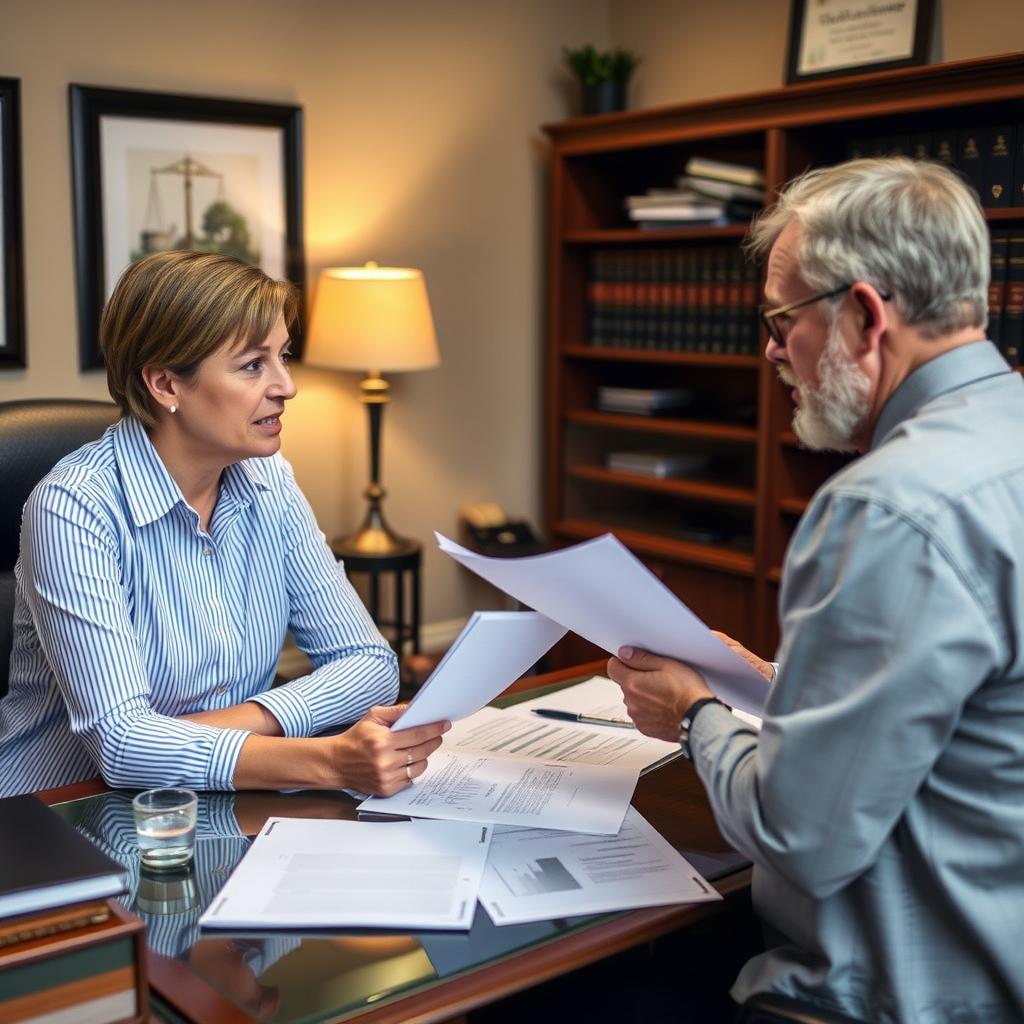
Separation Lawyer Rappahannock County, VA
For many people in Rappahannock County, separation is the first step toward a permanent change in family circumstances. Whether you are negotiating a separation agreement, establishing temporary support and custody arrangements, or preparing for a divorce, the legal decisions you make during this period carry lasting weight. Mr. Sris and his Of Counsel team at Law Offices Of SRIS, P.C. represent clients throughout the Twentieth Judicial District, including Washington, Sperryville, and Flint Hill, in all aspects of family-law separation. Our firm concentrates on helping you understand your rights and obligations under Virginia’s equitable‑distribution framework while working to reach a resolution that protects your interests. Reach our Fairfax location at (888) 437‑7747 to schedule a consultation. Law Offices Of SRIS, P.C. — Advocacy Without Borders.
What Separation Means in Rappahannock County
Virginia law does not recognize “legal separation” as a standalone court status, but separation functions as the foundation for almost every divorce and family‑law proceeding in the Commonwealth. Under Va. Code § 20‑91, parties who live separate and apart without cohabitation may proceed with a no‑fault divorce after meeting the statutory separation period: six months if there are no minor children of the marriage and the parties have signed a separation agreement, or one year otherwise. During this time, issues such as child custody, visitation, child support, and spousal support can be addressed through pendente lite orders in the Rappahannock County Juvenile and Domestic Relations District Court. The divorce itself—along with equitable distribution of marital property—is adjudicated in the Rappahannock County Circuit Court.
A well‑drafted separation agreement resolves many of these issues without court intervention. The agreement can distribute property, allocate debts, set support obligations, and outline parenting plans. Once signed by both parties and incorporated into a final divorce decree, it becomes an enforceable court order. Mediation is available but not required, and forensic accountants or business valuators are often used for complex marital estates. Because Rappahannock County shares judges with Fauquier and Loudoun Counties within the Twentieth Judicial District, familiarity with local practice helps move a matter forward efficiently.
How Mr. Sris and His Of Counsel Handle Separation Matters
Mr. Sris and his Of Counsel take a structured approach to separation and the related divorce process. The first priority is to identify the issues that require attention—temporary custody, use of the family home, pendente lite support—and address them through negotiation or, when necessary, motion practice. Once temporary arrangements are in place, the focus shifts to building a comprehensive separation agreement that reflects the client’s long‑term goals. When the parties cannot agree on all terms, our attorneys prepare the case for litigation in the Rappahannock County Circuit Court, always with an eye toward preserving claims to equitable distribution, spousal support, and a fair parenting plan.
Because Mr. Sris testified before the Virginia House Courts of Justice Committee in support of 2019 HB 635 (chief patron Del. David Bulova), the firm has particular insight into the statutory framework governing retirement‑asset division under Va. Code § 20‑107.3. That insight informs how our team analyzes high‑net‑worth or international‑element separations, though the representation always rests on the specific facts of each case. Mr. Sris and his Of Counsel draw on over 120 years of combined legal experience and 4,739+ documented firm-wide results to guide clients through every stage of a separation, from the initial consultation through the final decree. Results may vary.
About Mr. Sris and His Of Counsel Team
Mr. Sris, Owner and Founder of Law Offices Of SRIS, P.C., has practiced family and criminal law for nearly three decades. A former prosecutor, he founded the firm in 1997 and is admitted to practice in Virginia, Maryland, the District of Columbia, New Jersey, and New York. His extensive experience in family law includes negotiating separation agreements, litigating contested divorce and equitable‑distribution matters, and handling cross‑border family disputes. Mr. Sris keeps his personal caseload manageable so he can remain directly involved in the firm’s most complex matters, while the firm’s Of Counsel attorneys—all experienced litigators—contribute additional depth in areas such as custody, support enforcement, and property division.
Frequently Asked Questions
What is the difference between a separation and a divorce in Virginia?
Separation is the period of living apart required for a no‑fault divorce, while divorce is the court order that legally ends the marriage. In Virginia, you must live separate and apart without cohabitation for either six months (if no minor children and you have a signed separation agreement) or one year before a court can grant a no‑fault divorce. During the separation, you remain legally married, but you can negotiate and enforce a separation agreement that addresses custody, support, and property division. The divorce decree finalizes those arrangements and terminates the marital relationship.
Is a separation agreement required before I can file for divorce?
A separation agreement is required only if you seek a no‑fault divorce based on the six‑month separation period (Va. Code § 20‑91(9)(b)). For the one‑year separation ground, no written agreement is necessary, though one is strongly advisable to avoid contested litigation later. The agreement allows you and your spouse to resolve all issues—property, debts, support, custody—outside of court. Once signed by both parties and incorporated into a final decree, it becomes binding and enforceable. For guidance on your specific situation, call Law Offices Of SRIS, P.C. at (888) 437‑7747.
How does equitable distribution work during a separation?
Virginia courts divide marital property equitably—not necessarily equally—under Va. Code § 20‑107.3, considering factors such as each party’s contributions, the length of the marriage, and the circumstances of the dissolution. During the separation period, you and your spouse can agree on a property settlement that controls how assets and debts will be divided. If you cannot agree, the Rappahannock County Circuit Court will classify property as marital, separate, or hybrid, value it, and distribute the marital share. The separation agreement is often the most efficient tool to manage this process.
Can I get spousal support while we are separated?
Yes, the Rappahannock County Juvenile and Domestic Relations District Court may award pendente lite spousal support during a divorce proceeding. A motion for temporary support can address immediate financial needs, such as mortgage payments, health insurance, or living expenses, while the divorce is pending. The court considers the financial resources and earning capacities of both parties at the pendente lite stage. A final spousal support determination is made later, based on the 13 factors listed in Va. Code § 20‑107.1.
What role does a separation lawyer play in Rappahannock County?
A separation lawyer helps you understand your rights, negotiate a separation agreement, and represent you in court if disputes cannot be resolved. In Rappahannock County, where family‑law matters move between the J&DR District Court and the Circuit Court, an experienced attorney ensures that your filings are directed to the correct court and that statutory deadlines are met. The lawyer also serves as a buffer during emotionally charged negotiations, focusing on the long‑term legal and financial consequences of each decision. Reach our Fairfax location at (888) 437‑7747 to discuss your circumstances.
Does Virginia recognize informal separations?
Virginia law does not grant legal status to an informal separation, but a period of living apart with the intent to remain permanently separated is the basis for a no‑fault divorce. Dating or sharing a residence—even under the same roof if you maintain separate lives—can jeopardize the separation period’s validity. A clearly documented separation date, along with a formal separation agreement, protects your rights and avoids disputes later. The court will scrutinize whether the parties truly lived “separate and apart” as required by Va. Code § 20‑91(9). For guidance, contact our team at (888) 437‑7747.
Attorney advertising. Prior results do not guarantee a similar outcome. Results may vary.
Case results depend on a variety of factors unique to each case.