
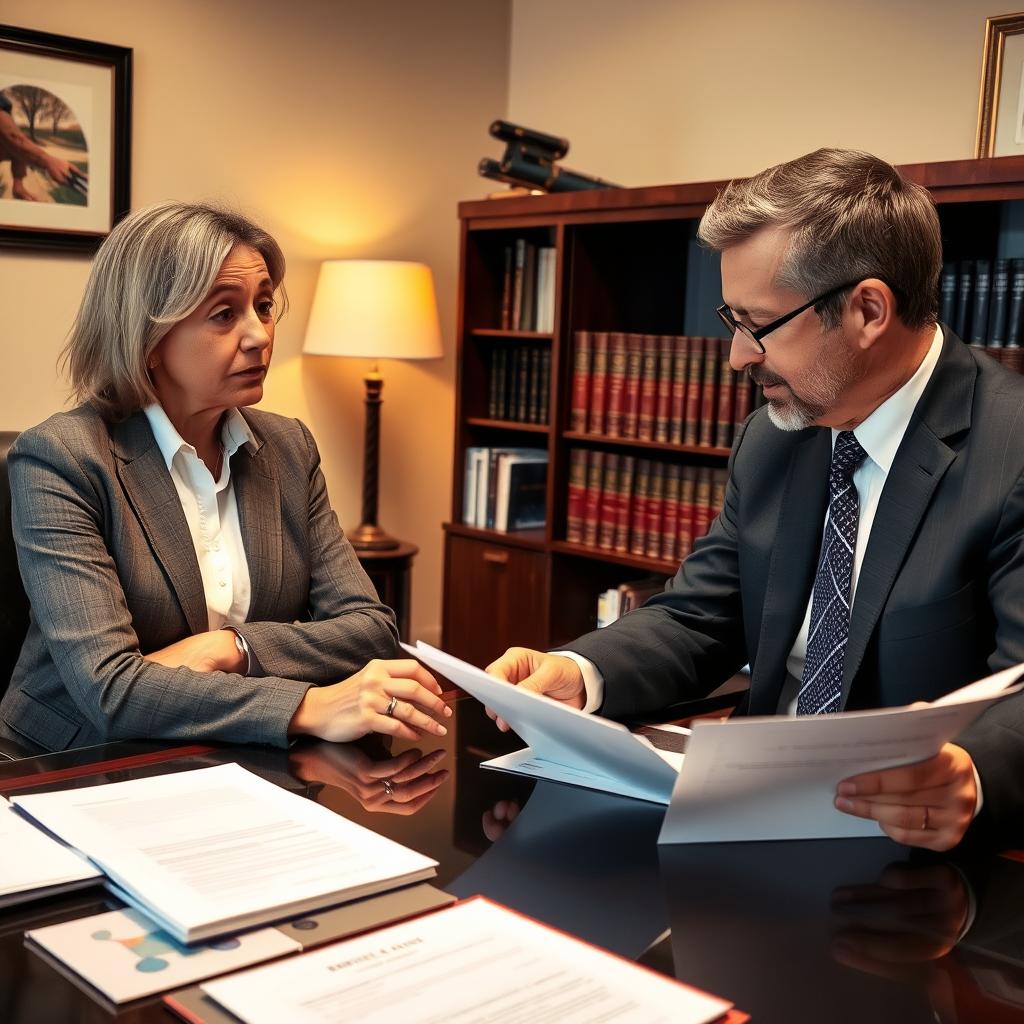
Separation Lawyer Prince William County, VA
For many residents of Prince William County, Virginia, a marital separation is the first significant step toward resolving a marriage, whether the ultimate goal is reconciliation or divorce. Under Virginia law, a separation is not merely a physical arrangement—it carries important legal consequences that affect property rights, spousal support, and future divorce grounds. Va. Code § 20-91(9) establishes the no-fault grounds for divorce based on living separate and apart for a required period, either one year or six months if there are no minor children and the parties have signed a separation agreement. The process often demands careful negotiation of a comprehensive agreement addressing equitable distribution, support obligations, and child-related matters. Law Offices Of SRIS, P.C. brings focused experience to separation matters in Prince William County, serving clients in communities like Manassas, Woodbridge, Dale City, Dumfries, Gainesville, Haymarket, Lake Ridge, and Occoquan. To discuss your situation with an experienced attorney, contact our firm at (888) 437-7747. Law Offices Of SRIS, P.C. – Advocacy Without Borders.
What Separation Means in Prince William County, Virginia
In Prince William County, as throughout Virginia, a separation is the threshold requirement for a no-fault divorce. The key statute, Va. Code § 20-91(9), provides two pathways. The first requires living separately for one continuous year; the second, found in subsection (9)(b), shortens the waiting period to six months when the parties have no minor children in common and have entered into a written separation agreement that resolves all issues concerning their marital property, support, and custody. Separation means that the spouses have ceased cohabitation and that at least one of them intends for the separation to be permanent. Even if the parties continue to reside under the same roof, Virginia courts will recognize a separation if the spouses’ lives are clearly separate—for example, they occupy different parts of the home, maintain separate finances, and do not hold themselves out as a married couple.
The local courts handling family law matters in Prince William County are the Prince William County Circuit Court and the Prince William County Juvenile & Domestic Relations District Court. The Circuit Court, located at 9311 Lee Avenue in Manassas, has exclusive jurisdiction over divorce and equitable distribution. Standalone custody, visitation, and support disputes are heard in the J&DR Court. In our practice, obtaining a well-drafted separation agreement early in the process often simplifies the eventual divorce proceeding and reduces conflict, particularly when parties agree on the terms of property division and child-related provisions. A separation agreement that meets Virginia’s requirements can later be incorporated into a final decree of divorce, making the process more efficient.
How Mr. Sris and His Of Counsel Handle Separation Cases
Separation cases demand careful planning because the decisions made during this period—whether about temporary support, parenting schedules, or property use—set the foundation for the eventual divorce. Mr. Sris and his Of Counsel take a practical approach, beginning with a thorough consultation to understand each client’s immediate concerns and long-term objectives. The first step often involves drafting a separation agreement, also called a property settlement agreement, that addresses all relevant issues: classification and division of marital property, spousal support under the thirteen factors in Va. Code § 20-107.1, child custody and visitation arrangements grounded in the trusted-interests factors of § 20-124.3, and child support calculated under Virginia’s guidelines. The agreement can also include terms for the use of the family home, payment of debts, and the handling of retirement accounts.
If the parties cannot reach an agreement on all terms, the firm works to protect the client’s interests through negotiation, mediation, or, when necessary, by filing a pendente lite motion with the court. A pendente lite hearing can provide temporary relief—such as temporary spousal support, exclusive use of the marital residence, or temporary custody orders—while the separation proceeds. Throughout the process, Mr. Sris and his Of Counsel draw on extensive experience in Virginia family law to focus on outcomes that serve the client’s needs while keeping the matter moving toward resolution. The timeline for completing a separation agreement varies by case, depending on the complexity of the assets, the level of cooperation between the parties, and the court’s calendar.
About Mr. Sris and the Firm’s Of Counsel Attorneys
Mr. Sris, Owner and Founder of Law Offices Of SRIS, P.C., has practiced law since 1997 and is admitted in Virginia, Maryland, the District of Columbia, New Jersey, and New York. A former prosecutor, he brings insight into trial advocacy and negotiation that benefits clients in family law disputes, where litigation often looms as a possibility. Mr. Sris testified before the Virginia House Courts of Justice Committee in support of 2019 HB 635 (chief patron Del. David Bulova), legislation that revised the equitable distribution process for retirement assets—a credential that reflects the firm’s deep engagement with Virginia family law. The firm’s Of Counsel attorneys, who appear regularly in Prince William County courts, contribute additional experience and perspective. Together, the firm has documented 289 case results across all practice areas in Prince William County with a 97% favorable outcome rate. Results may vary. Our Fairfax location serves clients throughout Prince William County and the surrounding region.
Prince William County General District Court is currently presided over by Hon. Che C. Rogers. Court hours: Mon-Fri 8:00AM-4:00PM. Counsel appearing on family law matters should plan filings accordingly.
Frequently Asked Questions
What is a separation agreement in Virginia?
A separation agreement is a written contract between spouses that resolves all matters arising from the marriage, including property division, spousal support, and child custody. Also called a property settlement agreement, it serves as the foundation for a no-fault divorce by establishing the terms of the separation. In Virginia, a comprehensive separation agreement that is signed by both parties and resolves all issues can allow a divorce to proceed after only six months of separation if there are no minor children. The agreement can address equitable distribution under Va. Code § 20-107.3, support obligations, parenting plans, and other financial matters. An experienced family law attorney can help ensure the agreement is legally sound and protects your rights.
How long must we be separated before we can file for divorce in Prince William County?
Virginia requires a continuous separation period of one year, or six months if there are no minor children and the parties have signed a separation agreement resolving all issues. The clock starts when the parties begin living separately with at least one spouse intending the separation to be permanent. The separation can be under the same roof if the spouses lead separate lives, but careful documentation is important. The divorce complaint is filed in the Prince William County Circuit Court, and the mandatory waiting period must be complete before a final decree can be entered. Meeting the timelines exactly can affect the outcome, so legal guidance early in the process is advisable.
Can we separate and still live under the same roof in Virginia?
Yes, spouses can live under the same roof and still be considered separated under Virginia law if they have ceased marital cohabitation and at least one intends the separation to be permanent. The key is that the parties must not share a marital relationship—they typically maintain separate bedrooms, handle their own finances, and do not present themselves as a couple. Courts examine the totality of the circumstances, so evidence such as separate bank accounts, independent social lives, and clear communication of the separation can be critical. Because the burden of proof falls on the party asserting the separation, consulting an attorney to document the arrangement is often essential.
Do I need a lawyer to draft a separation agreement?
No law requires you to hire a lawyer to draft a separation agreement, but having an experienced attorney review and prepare the document can help avoid costly mistakes. Separation agreements involve complex legal rights—equitable distribution of retirement accounts, spousal support, child support guidelines, and custody best-interests factors. An improperly drafted agreement may be later challenged as unenforceable or may fail to provide the protections you expect. An attorney can ensure the agreement complies with Virginia law, is clear and complete, and serves your interests. Mr. Sris and his Of Counsel routinely assist clients with separation agreements in Prince William County.
What happens if we cannot agree on a separation agreement?
If spouses cannot agree on the terms of a separation, they may still separate and later pursue a no-fault divorce after the required waiting period, or proceed with a contested divorce. In the interim, either spouse can request temporary relief from the court—pendente lite orders for spousal support, custody, and use of the family home—to stabilize the situation while the case progresses. Mediation or negotiation through counsel can often resolve disputed issues without a full trial. When agreement is not possible, the Prince William County Circuit Court ultimately decides contested matters at a final hearing, applying Virginia’s equitable distribution factors and best-interests standards. Having capable representation from the outset helps protect your position.
How does the court handle property division during a separation?
During a separation, property generally remains with the spouse who currently possesses or controls it unless a court order or separation agreement provides otherwise. Virginia is an equitable distribution state (Va. Code § 20-107.3), meaning that upon divorce the court will classify property as marital or separate, value it, and divide the marital share equitably—not necessarily equally. A separation agreement can preempt the court’s division by specifying how assets and debts will be allocated, which can save time and legal expense. If the parties cannot agree, the divorce court will apply the eleven equitable distribution factors to arrive at a fair division. Legal advice early in the separation phase can help a client understand what a reasonable settlement might look like.
Attorney advertising. Prior results do not guarantee a similar outcome.
Results may vary.
Case results depend on a variety of factors unique to each case.