
Separation Agreement Lawyer Alexandria, VA
You and your spouse have decided to live apart. You have worked out the basics—who stays in the family home, how the children’s time will be divided, and perhaps a rough idea of support—but you want to put everything in writing. A separation agreement in Virginia can resolve property division, custody, visitation, and support without requiring a contested court battle. At Law Offices Of SRIS, P.C., Mr. Sris and the firm’s Of Counsel attorneys help Alexandria couples draft enforceable separation agreements that protect their rights, reduce uncertainty, and lay the groundwork for a smoother divorce if one is pursued later. From the Alexandria Circuit Court to the Juvenile and Domestic Relations District Court, our team has extensive experience navigating the local court practices that can affect how an agreement is later reviewed. For a confidential consultation, reach Law Offices Of SRIS, P.C. at (888) 437-7747. Law Offices Of SRIS, P.C. – Advocacy Without Borders.
Strategy Options for a Separation Agreement in Alexandria
Every separation agreement must be tailored to the couple’s specific circumstances, but several strategic paths are common in Alexandria. The first is a comprehensive property settlement agreement that addresses all marital assets and debts, spousal support, and—if children are involved—custody, visitation, and child support. Because Virginia is an equitable distribution state, dividing property fairly does not always mean a 50/50 split. Mr. Sris and the firm’s Of Counsel attorneys concentrate on identifying what is marital, what is separate, and how the Alexandria Circuit Court would likely classify each asset under Va. Code § 20‑107.3. A second strategy focuses on limited-purpose agreements—for example, an agreement that settles only custody and support while leaving property division for later negotiation or litigation. A third approach uses the separation agreement as the foundation for a no‑fault divorce under Va. Code § 20‑91(9)(b), which requires a six‑month separation and a signed agreement when no minor children are present. In each option, the firm’s goal is to draft a clear, unambiguous document that reduces the chance of future enforcement disputes.
Alexandria’s proximity to Washington, D.C., often introduces additional complications. Federal employees, military personnel, and contractors frequently hold retirement accounts, security clearances, and benefits that require careful handling in a separation agreement. The firm’s Of Counsel attorneys are experienced in identifying these issues and drafting provisions that comply with both federal and Virginia law. Whether you need a simple agreement or one that addresses complex assets, the firm’s approach begins with understanding your objectives and then translating them into language a court can enforce.
What to Expect When Drafting a Separation Agreement
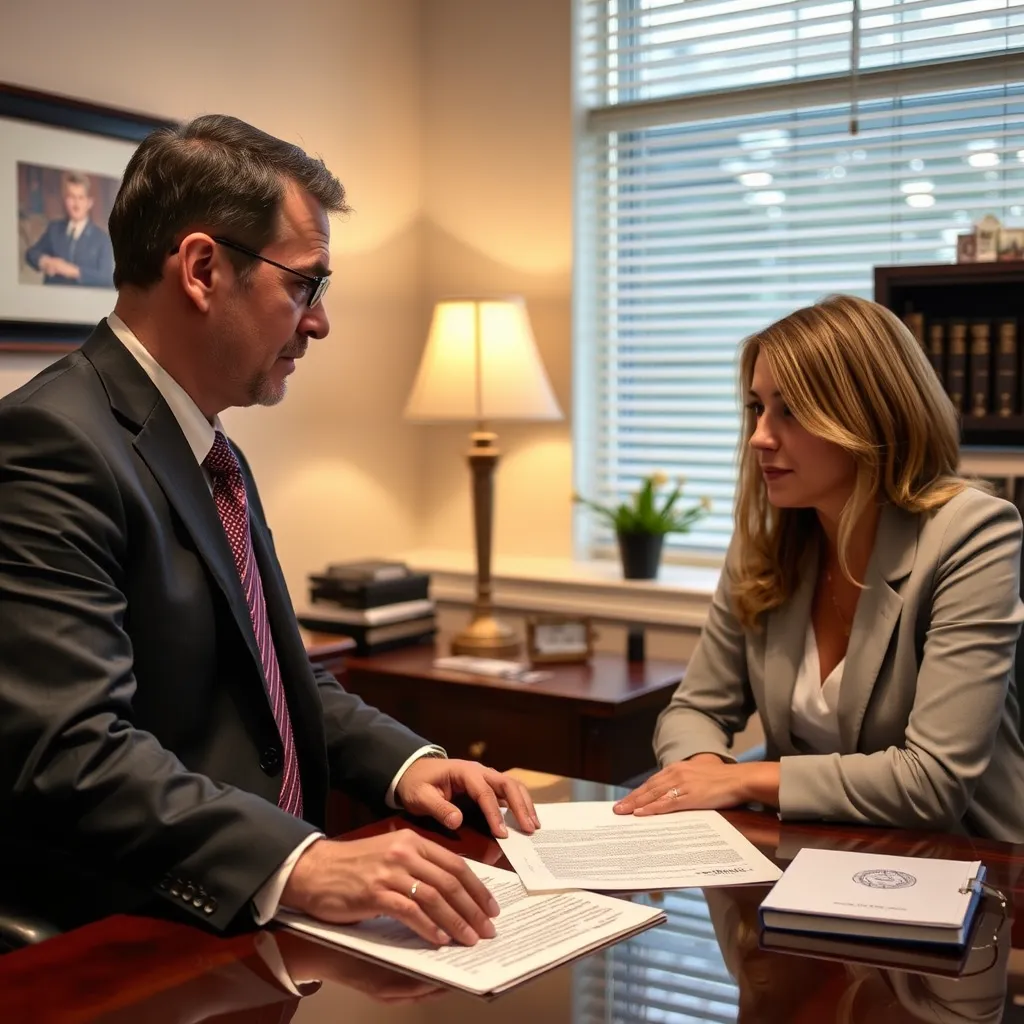
The process typically begins with a consultation where Mr. Sris or one of the firm’s Of Counsel attorneys gathers information about the marriage, the assets, the children, and each person’s goals. The attorney then outlines the options and drafts an initial agreement. If both parties are cooperating, the agreement can often be completed without setting foot in a courtroom. In more contentious situations, the firm may recommend mediation or limited-scope negotiation to resolve sticking points. Once both parties sign, the agreement becomes a binding contract. For those who later decide to divorce, a well‑drafted separation agreement can be incorporated into the final divorce decree, streamlining the court process.
Because separation agreements are contracts, clarity is essential. Ambiguous terms can lead to disputes about intent, while incomplete provisions may leave important issues unresolved. The firm’s Of Counsel attorneys review every clause to confirm it meets Virginia legal standards and accurately reflects the clients’ understanding. If you later need to enforce or modify the agreement, Mr. Sris and the firm’s Of Counsel attorneys represent clients in the Alexandria Circuit Court and the Alexandria Juvenile and Domestic Relations District Court.
The Consequences of an Incomplete or Unenforceable Agreement
Without a properly drafted separation agreement, couples who separate may find themselves in a legal gray area. Virginia does not recognize “legal separation” as a formal status, so except for a court order in a divorce or custody case, no judge will enforce the living arrangements or support terms you have informally agreed upon. An agreement that is poorly written or omits required disclosures risks being set aside by the Alexandria Circuit Court. If a court finds the agreement unconscionable or the product of fraud or duress, it may refuse to enforce it, leaving the parties back where they started—with no resolution and mounting legal fees. Mr. Sris and the firm’s Of Counsel attorneys work to draft separation agreements that withstand judicial scrutiny, so you can rely on them when you need them most.
About Mr. Sris and the Firm’s Of Counsel Attorneys
Mr. Sris, Owner and Founder of Law Offices Of SRIS, P.C., has practiced family law since founding the firm in 1997. A former prosecutor, he brings an analytical, evidence‑focused approach to every separation agreement he handles. Mr. Sris testified before the Virginia House Courts of Justice Committee in support of 2019 HB 635 (chief patron Del. David Bulova). The firm’s Of Counsel attorneys include practitioners with backgrounds in family law, complex property division, and child welfare, enabling the team to address even the most intricate separation‑agreement issues. Together, they bring extensive combined legal experience. Results may vary.
Mr. Sris is admitted in Virginia, Maryland, the District of Columbia, New Jersey, and New York. The firm’s Arlington location serves clients throughout Alexandria, Old Town, Del Ray, and Kingstowne. You can reach Law Offices Of SRIS, P.C. at (888) 437-7747.
Frequently Asked Questions
Do I need a lawyer to write a separation agreement in Alexandria?
You are not legally required to hire a lawyer for a separation agreement, but an experienced family law attorney can help ensure your agreement is legally sound and fully addresses property division, support, and custody. Virginia law treats separation agreements as contracts, and courts will enforce them only if they are clear, complete, and voluntarily entered. Mr. Sris and the firm’s Of Counsel attorneys can identify potential pitfalls and draft provisions that align with Alexandria court practices, reducing the risk of later disputes.
How is a separation agreement different from a divorce in Virginia?
A separation agreement resolves financial and child‑related issues while you remain legally married; a divorce ends the marriage and the court may adopt the agreement’s terms into a final decree. In Virginia, a separation agreement can serve as the basis for a no‑fault divorce after the required separation period. Many couples use the agreement to settle everything ahead of time, making the divorce process simpler and less expensive.
Can a separation agreement include child custody and support?
Yes, a separation agreement can address custody, visitation, and child support, but the court will still review these provisions to ensure they serve the child’s best interests. The Alexandria Juvenile and Domestic Relations District Court handles custody and support matters. Even with a signed agreement, a judge may modify child support if it deviates from Virginia guidelines. An attorney can help structure the agreement to balance flexibility with enforceability.
What happens if my spouse breaches the separation agreement?
If a spouse breaches a separation agreement, you may seek enforcement through the Alexandria Circuit Court, which can order compliance and award damages or attorney fees. Because the agreement is a contract, the court can use contempt powers to enforce obligations such as property transfers or payment of support. Mr. Sris and the firm’s Of Counsel attorneys represent clients in enforcement actions.
Is a separation agreement valid if we later reconcile?
A separation agreement typically remains in effect unless the parties agree to rescind it or the agreement itself includes a reconciliation clause. Virginia law generally treats a separation agreement as a binding contract that survives reconciliation only if specific conditions are met. If you and your spouse attempt reconciliation, consult an attorney before taking any action that could unintentionally void the agreement.
How long does it take to finalize a separation agreement in Alexandria?
The timeline depends on the complexity of the issues and the level of cooperation between the parties, ranging from a few weeks for simple agreements to several months for complex matters. Mr. Sris and the firm’s Of Counsel attorneys work efficiently to move the process forward while ensuring that no detail is overlooked. Once signed, the agreement takes effect immediately. For a confidential consultation, reach Law Offices Of SRIS, P.C. at (888) 437-7747.
Do we have to go to court to create a separation agreement?
No, a separation agreement is a private contract that does not require a court appearance to be created or signed. You only need to go to court if you later file for divorce and wish to incorporate the agreement into the decree, or if one party breaches the agreement and you seek enforcement. Many Alexandria couples complete the entire agreement process with attorney assistance and never appear before a judge.
What should I bring to a consultation about a separation agreement?
Bring a list of assets and debts, recent pay stubs, tax returns, information about children, and any existing court orders or agreements. Having these documents ready allows the attorney to give you more precise guidance during the consultation. The firm’s location is available by appointment; to schedule, call (888) 437-7747.
Can a separation agreement be modified later?
A separation agreement can be modified only by mutual written consent of both parties, unless the agreement itself or a court order provides otherwise. Child custody and support provisions may be modified by a court if there has been a material change in circumstances, even without both parties’ agreement. An attorney can help you negotiate a modification or present the request to the Alexandria court.
Where can I find a separation agreement lawyer near Alexandria?
Law Offices Of SRIS, P.C. represents clients in Alexandria from its Arlington location and can be reached at (888) 437-7747 for a consultation. The firm’s Of Counsel attorneys are experienced in drafting and litigating separation agreement matters in the Alexandria Circuit Court and the Juvenile and Domestic Relations District Court. For guidance on your specific situation, contact Law Offices Of SRIS, P.C. at (888) 437-7747.
For a full statutory breakdown of Virginia separation agreement law, see our comprehensive analysis on srislawyer.com.
Additional family law resources: Fairfax County family law attorney | Fairfax City family lawyer | Falls Church family law representation
Primary law sources: Virginia Code Title 20 | Alexandria Circuit Court | Virginia Judicial System
Attorney advertising. Prior results do not guarantee a similar outcome.
Results may vary.
Case results depend on a variety of factors unique to each case.