
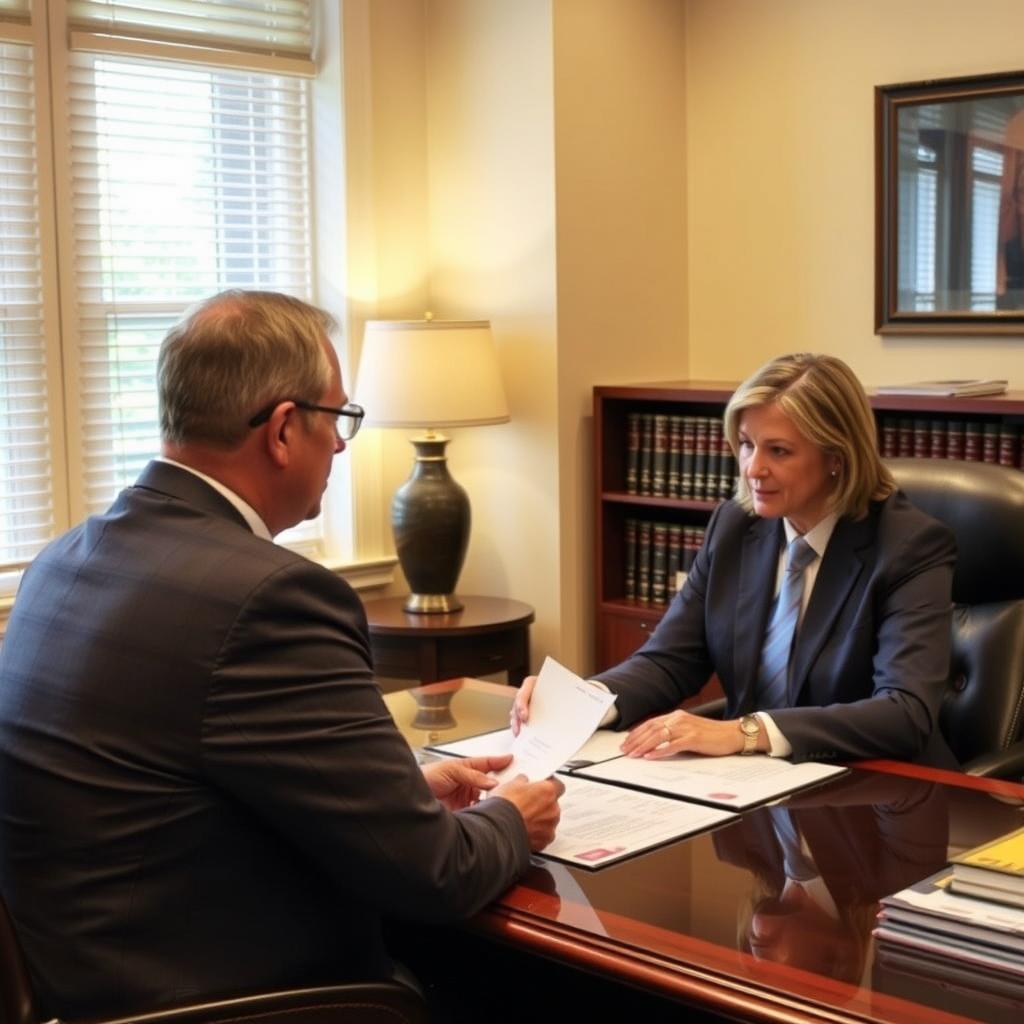
Recognition Of Foreign Divorce Lawyer Prince George County, VA
When a divorce is finalized in a country outside the United States, questions about its validity in Virginia often arise when one party wishes to remarry, divide assets located here, or modify custody and support arrangements. A foreign divorce decree is not automatically enforceable or recognized in the Commonwealth—a party must take steps to have the decree recognized by a Virginia circuit court. Mr. Sris, Owner and Founder of Law Offices Of SRIS, P.C., and the firm’s Of Counsel attorneys represent clients in Prince George County and throughout Virginia who need to establish the legal effect of an overseas divorce. Whether you need to domesticate a foreign decree for property division, enforce its terms, or simply confirm your marital status for a new marriage, qualified legal guidance helps you present the matter properly before the Prince George County Circuit Court. For a consultation, reach Law Offices Of SRIS, P.C. at (888) 437-7747. Law Offices Of SRIS, P.C. – Advocacy Without Borders.
Recognizing a Foreign Divorce in Prince George County, Virginia
Virginia law does not treat a foreign divorce as self-executing. A decree issued abroad must be brought before a court of competent jurisdiction—the circuit court for the county where the party resides—and presented for recognition or domestication. In Prince George County, the Circuit Court at 6601 Courts Drive, Prince George, VA 23875 handles all divorce, equitable distribution, and spousal support matters. The court applies principles of comity to determine whether the foreign judgment meets Virginia’s standards of due process and jurisdiction. While a marriage validly contracted abroad is presumptively recognized under the doctrine of lex loci celebrationis, a divorce decree does not carry the same automatic weight. The party seeking recognition must show that the foreign court had jurisdiction over the parties and that the proceeding was fundamentally fair.
Common reasons for seeking recognition include remarrying in Virginia—where a clerk will require proof that any prior marriage has been legally dissolved—and resolving property division or support issues when assets or obligors are located here. A domestication action, often filed under the Uniform Foreign-Country Money Judgments Recognition Act, can turn a foreign divorce decree into a Virginia judgment that is enforceable in the same manner as a decree originally entered here. The firm’s Richmond location serves clients in Prince George County through every stage of this process, from gathering the necessary documentation to presenting a verified petition and supporting evidence to the court. Prince George County General District Court is presided over by Hon. Thomas Stark IV; court hours are Mon-Fri 8:30AM-4:30PM. Counsel appearing on family law matters should plan filings accordingly.
Frequently Asked Questions
What does it mean to recognize a foreign divorce in Virginia?
Recognition of a foreign divorce means a Virginia court confirms the decree is legally valid and will give it effect for purposes such as remarrying, dividing property, or modifying support obligations. Without recognition, a Virginia court may treat the marriage as still existing, which can create complications for any subsequent marriage and for the distribution of assets. The process involves filing a complaint for recognition or domestication in the circuit court where you live—in Prince George County, that is the Prince George County Circuit Court. The court examines whether the foreign court had proper jurisdiction and whether the proceeding met basic due process standards. Once recognized, the foreign decree carries the same weight as a Virginia divorce judgment.
Why would I need a lawyer to handle a foreign divorce recognition in Prince George County?
An experienced family law attorney helps ensure your petition for recognition is procedurally sound, properly supported with foreign-law evidence, and presented to the correct Prince George County court. Recognizing a foreign divorce is not a simple administrative filing. You must translate and authenticate foreign documents, prove the foreign court’s jurisdiction, and address any potential objections—such as claims that the foreign proceeding lacked due process. Mr. Sris and the firm’s Of Counsel attorneys are familiar with the legal standards applied by Prince George County Circuit Court judges and can anticipate the documentation and argument the court will require. Handling the matter without legal guidance risks delay, denial, or an unenforceable result.
What is the legal basis for recognizing foreign divorces in Virginia?
Virginia courts recognize foreign divorces under the common-law principle of comity, which permits a state to give effect to the judicial acts of a foreign country as long as the foreign court had jurisdiction and the proceeding was consistent with due process. There is no single statute that governs recognition; instead, the court evaluates the foreign decree on a case-by-case basis using factors similar to those in the Uniform Child Custody Jurisdiction and Enforcement Act or the Uniform Foreign-Country Money Judgments Recognition Act for monetary aspects. The foreign decree must be final and conclusive. If the foreign divorce addresses property division, the court will consider Virginia equitable distribution principles under Va. Code § 20-107.3. The attorney presents evidence that the foreign judgment satisfies Virginia’s comity standard.
Can a Virginia court refuse to recognize a foreign divorce?
Yes, a Virginia circuit court can refuse to recognize a foreign divorce if the foreign court lacked personal or subject-matter jurisdiction, the respondent was not given notice and an opportunity to be heard, or the decree was obtained through fraud or is contrary to Virginia public policy. For example, a divorce granted in a country where neither party resided or where the respondent was never served with process may not be recognized. Similarly, a divorce that purports to extinguish fundamental parental rights without a meaningful hearing could be challenged. An attorney reviews the foreign proceeding for potential defects before filing for recognition, so you can address concerns up front rather than face an unexpected denial from the Prince George County Circuit Court.
How do I domesticate a foreign divorce decree in Prince George County?
Domesticating a foreign divorce decree involves filing a petition in the Prince George County Circuit Court, attaching a certified and translated copy of the foreign decree, and demonstrating that the foreign court had jurisdiction and the proceeding met due-process standards. The petition should state the grounds for recognition, describe the parties’ connection to Virginia, and identify any relief being sought—such as enforcement of property provisions or a declaration of marital status. The foreign decree must be authenticated, typically by an apostille if the issuing country is a party to the Hague Apostille Convention, or by consular legalization if it is not. The court may schedule a hearing. If the court grants recognition, it enters an order domesticating the decree, which then functions as a Virginia judgment for enforcement purposes.
What if my foreign divorce involves children or property located in Virginia?
When a foreign divorce addresses child custody, visitation, or support, those provisions must also be recognized or registered under the Uniform Child Custody Jurisdiction and Enforcement Act (UCCJEA) or the Uniform Interstate Family Support Act (UIFSA) to be enforceable in Virginia. For property, the Virginia court will consider whether the foreign decree’s property division is consistent with Virginia equitable distribution law. The Prince George County Juvenile and Domestic Relations District Court handles standalone custody and support matters, while the Circuit Court handles divorce and equitable distribution. The firm’s Of Counsel attorneys help coordinate recognition of the entire foreign decree across both courts when necessary. If the foreign decree is incomplete—for example, it dissolved the marriage but did not address property—a separate equitable distribution action may be required under Va. Code § 20-107.3.
Do I need to appear in court for a recognition of foreign divorce action?
Whether you must personally appear in the Prince George County Circuit Court depends on the circumstances of your case and whether the recognition is contested. In many uncontested recognition proceedings, the court may permit your attorney to appear on your behalf, especially if the evidence is presented by affidavit. However, if the opposing party contests recognition or raises factual disputes, the court may require an evidentiary hearing at which you would need to testify. An attorney handles much of the procedural work—drafting and filing the petition, submitting authenticated documents, and arguing the legal sufficiency of the foreign decree—which reduces the need for in-person appearances. Discuss your specific situation with counsel to understand what will be expected of you.
Can an attorney help enforce a foreign divorce decree in Virginia after it is recognized?
Yes, once a foreign divorce decree is recognized or domesticated by a Virginia circuit court, it becomes enforceable as a Virginia judgment, and a family law attorney can pursue contempt, garnishment, or other enforcement remedies if the other party fails to comply. For example, if the foreign decree orders payment of spousal support and the obligor resides in Prince George County, your attorney can file a rule to show cause in the Circuit Court. If the decree divides retirement accounts or real estate, a qualified domestic relations order (QDRO) or deed transfer may be needed. The firm’s Of Counsel attorneys assist with post-recognition enforcement, ensuring that the domesticated decree is not just a paper judgment but a practical tool for obtaining the relief to which you are entitled.
What is the difference between recognition and domestication of a foreign divorce?
Recognition is the court’s determination that the foreign divorce is legally valid and will be given effect in Virginia, while domestication converts the foreign decree into an enforceable Virginia judgment that can be enforced through the same mechanisms as a decree originally entered by a Virginia court. Recognition alone may be sufficient if you only need to prove your marital status has changed—for example, to remarry. Domestication is necessary when you need to enforce the decree’s terms, such as collecting money judgments, transferring property titles, or modifying custody orders. In practice, parties often seek both in the same proceeding. A domestication action requires more formal proof and may involve serving the other party to give them an opportunity to object before the court enters a Virginia judgment.
How long does the recognition or domestication process take in Prince George County?
The timeline for recognizing or domesticating a foreign divorce decree in Prince George County varies significantly depending on the complexity of the foreign proceeding, whether the matter is contested, and the court’s current docket. If the foreign decree is straightforward, the opposing party does not object, and all documentation is properly authenticated and translated, the court may enter an order within a matter of weeks or a few months. If jurisdictional or due-process issues are raised, additional briefing and an evidentiary hearing may be needed, which can extend the timeline. Matters handled in the Circuit Court are subject to that court’s scheduling practices. An attorney helps shepherd the case through the procedural steps to minimize unnecessary delay.
How can Law Offices Of SRIS, P.C. assist with recognition of a foreign divorce in Prince George County?
Law Offices Of SRIS, P.C. assists by preparing and filing the recognition petition, gathering and authenticating foreign documents, arguing the legal standard for comity, and advocating for you in the Prince George County Circuit Court. Mr. Sris, a former prosecutor, founded the firm in 1997 and has practiced family law across multiple jurisdictions. The firm’s Of Counsel attorneys bring extensive combined legal experience in family law matters, including domesticating foreign judgments and handling complex cross-border family cases. The firm’s Richmond location serves clients in Prince George County and the surrounding area. The team works to present a clear, well-documented case so the court can make the necessary findings efficiently. For guidance on your specific situation, reach Law Offices Of SRIS, P.C. at (888) 437-7747.
About Mr. Sris and the Firm’s Of Counsel Attorneys
Mr. Sris, Owner and Founder of Law Offices Of SRIS, P.C., concentrates his practice on family law matters including the recognition of foreign divorce decrees. He is a former prosecutor and is admitted in Virginia, Maryland, the District of Columbia, New Jersey, and New York. Mr. Sris testified before the Virginia House Courts of Justice Committee in support of 2019 HB 635 (chief patron Del. David Bulova). The firm’s Of Counsel attorneys bring extensive combined legal experience to family law cases. Results may vary.
For additional information on related practice areas, see our pages on Family Law Lawyer Fairfax County, VA, Family Law Lawyer Prince William County, VA, and Family Law Lawyer Manassas, VA.
Attorney advertising. Prior results do not guarantee a similar outcome.
Case results depend on a variety of factors unique to each case.