
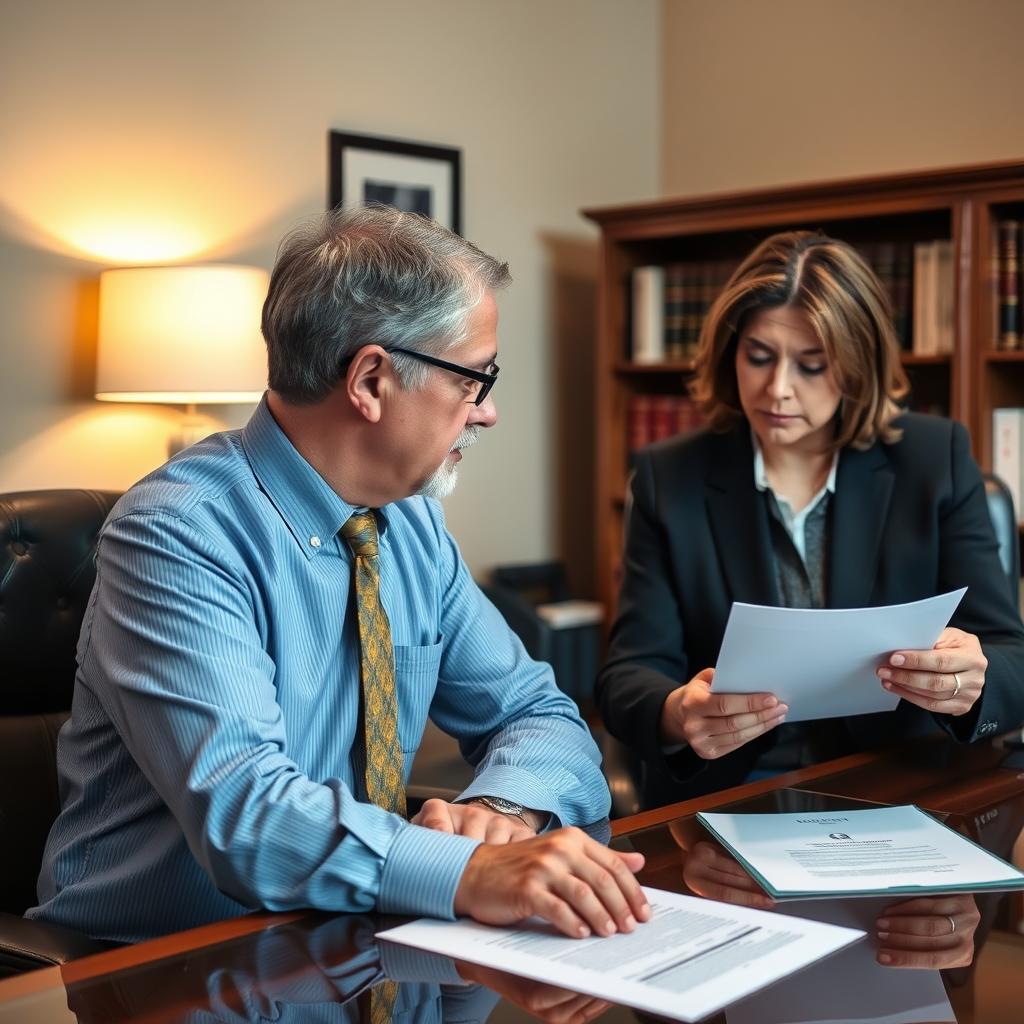
Property Settlement Lawyer Powhatan County, VA
When a marriage ends in Powhatan County, the division of property is governed by Virginia’s equitable distribution framework under Va. Code § 20‑107.3. Equitable distribution does not mean an equal split; it requires the court to classify and value all assets, then distribute them fairly based on eleven statutory factors. The process involves tracing separate and marital property, valuing businesses, retirement accounts, and real estate, and determining whether debts are marital or separate. The Powhatan County Circuit Court, located at 3834 Old Buckingham Road, Suite C, Powhatan, handles all divorce and property settlement matters, while the Juvenile and Domestic Relations District Court addresses related custody and support issues. Because property settlement in Virginia can involve complex financial questions—such as business interests, inherited property, and executive compensation—working with an experienced attorney is important to protect your financial interests. Mr. Sris and his Of Counsel team represent clients in property settlement negotiations and litigation throughout Powhatan County, including Powhatan, Moseley, Flat Rock, and Huguenot Springs. Reach Law Offices Of SRIS, P.C. at (888) 437‑7747 to schedule a consultation. Law Offices Of SRIS, P.C. – Advocacy Without Borders.
What Property Settlement Means in Powhatan County
In Virginia, property settlement is the process of identifying, classifying, valuing, and dividing the assets and debts a couple accumulated during their marriage. The Powhatan County Circuit Court has exclusive jurisdiction over divorce and the division of marital property, while separate maintenance and custody issues may be heard by the Juvenile and Domestic Relations District Court. Virginia is an equitable distribution state, meaning the court divides marital property fairly but not necessarily equally. The classification step is critical: property acquired by either spouse during the marriage is presumptively marital, while property owned before the marriage, inherited, or received as a gift from a third party is separate and not subject to division. However, commingling of assets can transform separate property into marital property, creating disputes that require careful analysis.
The eleven factors set forth in Va. Code § 20‑107.3 guide the court’s decision. These factors include the duration of the marriage, the monetary and non-monetary contributions of each spouse, the circumstances experienced to the dissolution, the age and health of the parties, and the tax consequences of any proposed division. In a rural county like Powhatan, family farms, timberland, and small businesses often form a significant part of the marital estate, and their valuation may require input from appraisers or forensic accountants. Mr. Sris and his Of Counsel team have experience evaluating these types of assets, ensuring that the property division accounts for the full picture of the marital estate, including any hidden or undervalued assets.
How Mr. Sris and His Of Counsel Handle Property Settlement Cases
Mr. Sris and his Of Counsel approach property settlement with a focus on thorough asset identification and strategic negotiation. They begin by working with their client to compile a complete financial inventory—including real estate, bank and investment accounts, retirement plans, business interests, and personal property—and then classify each item as marital or separate under Virginia law. When necessary, they collaborate with forensic accountants, business valuators, and pension attorneys to uncover concealed assets or to accurately value complex holdings such as closely held businesses, professional practices, or intellectual property. The goal is to build a clear record that supports a fair division, whether through a negotiated separation agreement or, if necessary, litigation in the Powhatan County Circuit Court.
In many cases, the parties are able to reach a comprehensive property settlement agreement that resolves all financial issues without a trial. Such agreements, once signed by both spouses, are incorporated into the final divorce decree and provide certainty and control over the outcome. Mr. Sris and his Of Counsel bring extensive combined legal experience to the negotiation table. Results may vary. When litigation is unavoidable, the team’s familiarity with the Powhatan courts and with Virginia’s equitable-distribution factors allows them to present a compelling case to the judge. Throughout the process, the firm’s multi-state resources and collaborative approach help address cross-border issues—such as out-of-state real estate or retirement accounts in another jurisdiction—that frequently arise in modern divorce.
About Mr. Sris and His Of Counsel Team
Mr. Sris, Owner and Founder of Law Offices Of SRIS, P.C., has been practicing law since 1997. A former prosecutor, he is admitted to practice in Virginia, Maryland, the District of Columbia, New Jersey, and New York. Mr. Sris testified before the Virginia House Courts of Justice Committee in support of 2019 HB 635 (chief patron Del. David Bulova), the legislation that revised the equitable-distribution statute to address certain pension and retirement-account procedures. This firsthand engagement with the law’s development underscores his sustained focus on property-settlement issues.
Working alongside Mr. Sris, the firm’s Of Counsel attorneys contribute additional litigation and negotiation experience, including backgrounds in family law, business valuation, and forensic analysis. Together, they serve clients in Powhatan County from the firm’s Richmond location, appearing regularly before the Powhatan County Circuit Court and the Juvenile and Domestic Relations District Court. The team is supported by professionals who speak Spanish and Tamil, enabling the firm to communicate effectively with a diverse client base. To discuss how Mr. Sris and his Of Counsel can assist with your property settlement, contact the firm at (888) 437‑7747.
Frequently Asked Questions
What is a property settlement agreement in Virginia?
A property settlement agreement is a written contract between divorcing spouses that divides their marital assets, debts, and often addresses spousal support. Once signed and incorporated into the final divorce decree, it becomes a binding court order. Such agreements allow the parties to retain control over the division instead of leaving the decision to the judge. In Powhatan County, a comprehensive agreement can streamline the divorce process and reduce litigation costs. However, it is important to ensure the agreement accurately identifies all assets, declares separate property, and addresses tax consequences, pension divisions, and future contingencies. Mr. Sris and his Of Counsel review every agreement to confirm that it protects their client’s long-term financial interests.
How does the court divide marital property in Powhatan County?
The Powhatan County Circuit Court divides marital property equitably—not necessarily equally—based on the eleven factors listed in Va. Code § 20‑107.3. The judge classifies each asset as marital, separate, or hybrid, then assigns a value and determines a fair distribution. Factors such as the length of the marriage, each spouse’s contributions as a homemaker or wage earner, and the reason for the divorce all influence the outcome. Separate property, like an inheritance kept in a separate account, generally remains with the owner, but commingling or use of marital funds can change that classification. Because the standard is fairness rather than a rigid formula, having an experienced attorney present a strong factual record can make a significant difference in the final distribution.
Do I need a lawyer for a property settlement in Powhatan County?
While Virginia law does not require you to hire an attorney, property division involves complex valuation, classification, and tax issues that can have long-term financial consequences. A lawyer can identify hidden assets, challenge an unequal appraisal, and draft a separation agreement that fully protects your rights. Without legal guidance, you risk overlooking assets such as retirement benefits, stock options, or business goodwill, or accepting a settlement that undervalues the marital estate. Mr. Sris and his Of Counsel help clients throughout Powhatan County navigate the property-settlement process, whether through negotiation or litigation. For a consultation, reach Law Offices Of SRIS, P.C. at (888) 437‑7747.
Can we reach an agreement outside of court?
Yes, many couples resolve property settlement outside of court through negotiation, mediation, or collaborative law, and then submit a signed separation agreement to the Powhatan County Circuit Court. This approach allows the parties to craft a customized division that fits their unique financial situation and avoids the expense and uncertainty of trial. Even in contested cases, the majority of issues are settled before a final hearing. Mr. Sris and his Of Counsel work to reach a fair agreement whenever possible, but remain prepared to litigate the division if the opposing side is unwilling to negotiate reasonably.
What if my spouse is hiding assets?
If you suspect your spouse is concealing assets, an attorney can use formal discovery tools—including interrogatories, document requests, and depositions—to uncover the full marital estate. Forensic accountants may be retained to trace funds, analyze business records, and identify transactions that suggest hidden income or property. Virginia law requires both parties to make full financial disclosure, and deliberate concealment can lead the court to award a larger share to the innocent spouse or impose sanctions. Mr. Sris and his Of Counsel have experience working with financial attorneys to detect hidden assets and to present that evidence persuasively before the Powhatan County Circuit Court.
How does Virginia’s equitable distribution differ from community property?
Virginia is not a community property state; it follows equitable distribution, which focuses on fairness rather than a strict fifty-fifty split. Community property states typically classify all assets acquired during marriage as equally owned, whereas in Virginia the court considers the eleven statutory factors to determine what division is just. As a result, the outcome can vary widely depending on the couple’s circumstances, and a spouse who made significant non-monetary contributions, such as staying home to raise children, may receive a larger share of the marital estate. This flexibility also makes it important to present a compelling factual narrative to the judge, which an experienced Virginia family-law attorney is well-positioned to do.
Attorney advertising. Prior results do not guarantee a similar outcome. Results may vary. Case results depend on a variety of factors unique to each case.