
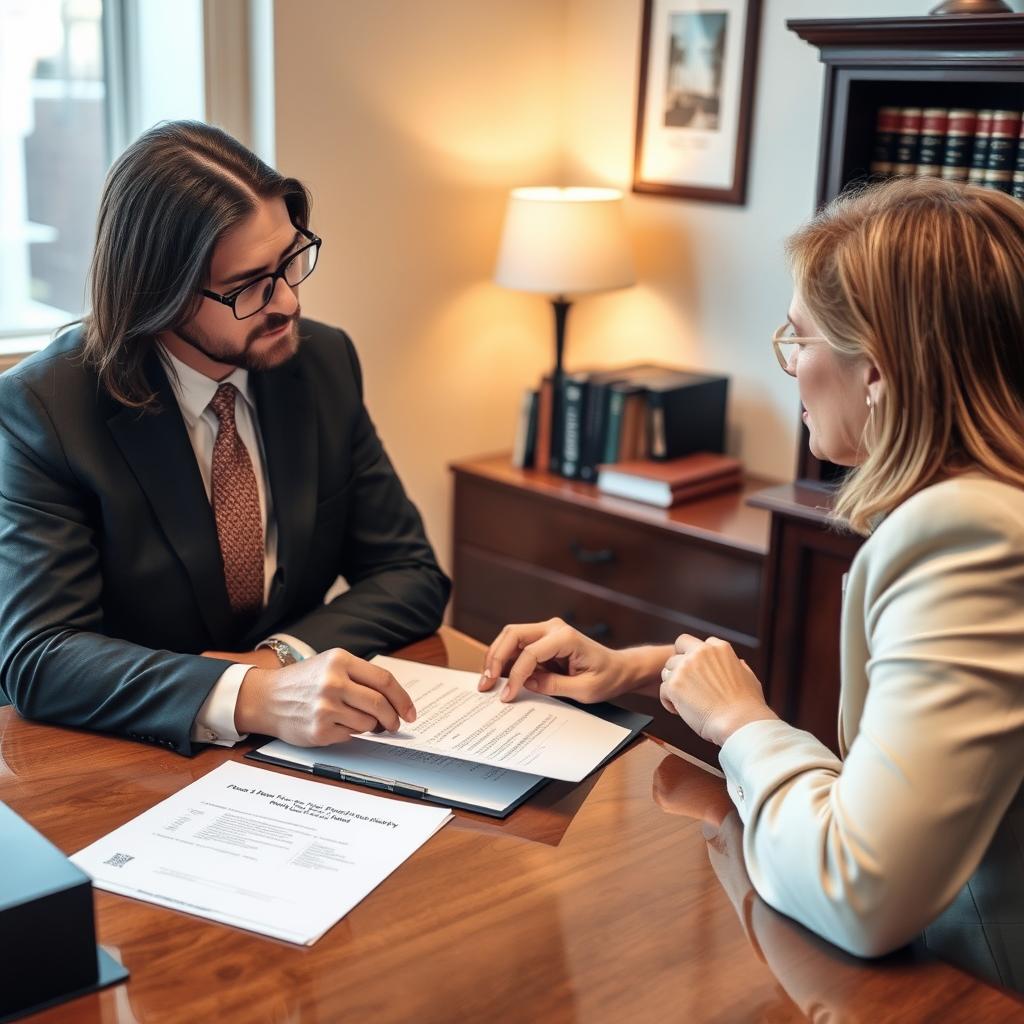
Property Settlement Lawyer Isle of Wight County, VA
Call (888) 437-7747 to request a consultation.
Dividing marital property can be one of the most contested aspects of a divorce. In Isle of Wight County, Virginia, property settlement—formally known as equitable distribution—is governed by Va. Code § 20‑107.3 and handled by the Isle of Wight County Circuit Court. Whether you and your spouse have already agreed on a separation agreement or face disputes over real estate, retirement accounts, business interests, or other high‑value assets, experienced legal counsel can help protect your financial future. Mr. Sris and his Of Counsel at Law Offices Of SRIS, P.C. represent individuals throughout Isle of Wight County, including the communities of Smithfield, Windsor, and Carrollton. Mr. Sris testified before the Virginia House Courts of Justice Committee in support of 2019 HB 635 (chief patron Del. David Bulova), the legislation that revised subsection (g) of Virginia’s equitable distribution statute. That involvement reflects a thorough understanding of how Virginia’s property‑division framework works in practice. For a confidential consultation about your property‑settlement matter, reach our firm at (888) 437‑7747.
What Property Settlement Means in Isle of Wight County
Property settlement—also called equitable distribution—is the process of identifying, classifying, valuing, and dividing marital assets and debts when a marriage ends. Virginia is not a community‑property state; instead, the court applies equitable distribution, which means a fair, but not necessarily equal, division of marital property. The Isle of Wight County Circuit Court, located at 17122 Monument Circle, Suite A, Isle of Wight, Virginia, has exclusive original jurisdiction over divorce and equitable distribution matters under Va. Code § 20‑96. The court follows the eleven statutory factors set out in § 20‑107.3 to arrive at a division that it considers just.
For residents of Smithfield, Windsor, Carrollton, and the surrounding rural areas of the Fifth Judicial District, a property‑settlement case typically begins when one spouse files a complaint for divorce in the Circuit Court. If the parties have already signed a comprehensive separation agreement (also called a property settlement agreement) that resolves all financial and property issues, the court can approve that agreement and incorporate it into the final divorce decree, often without a contested hearing. When no agreement exists, the court will schedule a trial or a settlement conference to determine how to classify and distribute each asset and debt. Because Virginia is an equitable distribution state, the outcome depends heavily on the specific facts of the marriage—the length of the union, each spouse’s financial and non‑financial contributions, and the factors listed in § 20‑107.3. Mr. Sris and his Of Counsel can guide you through that process and help you present a complete picture of the marital estate.
How Mr. Sris and His Of Counsel Handle Property Settlement Cases
Property‑settlement work requires meticulous attention to both the legal framework and the financial details of each case. Mr. Sris and his Of Counsel approach every matter by first working to establish a complete and accurate inventory of all marital and separate property. That inventory may include real estate, bank and investment accounts, retirement plans, business interests, stock options, vehicles, and personal property. They also identify and verify debts, because the division of liabilities is equally part of the settlement.
Once the marital estate is defined, Mr. Sris and his Of Counsel analyze the facts against the statutory factors. They help clients understand whether certain assets are likely to be classified as separate property—property acquired before the marriage or received by gift or inheritance during the marriage—which generally remains with the owning spouse. For complex assets, such as a family business or professional practice, the firm regularly works with forensic accountants and business valuation professionals to develop a credible valuation that can be presented to the court or used in settlement negotiations. Throughout the process, Mr. Sris and his Of Counsel remain focused on achieving a resolution that protects the client’s interests, whether through negotiation of a separation agreement or, when necessary, litigation before the Isle of Wight County Circuit Court. Mr. Sris and his Of Counsel bring extensive combined legal experience to these matters. Results may vary. in your case.
About Mr. Sris and His Of Counsel Team
Mr. Sris, Owner and Founder of Law Offices Of SRIS, P.C., has practiced law since 1997 and is admitted in Virginia, Maryland, the District of Columbia, New Jersey, and New York. A former prosecutor, he brings a trial‑tested perspective to every client’s matter. Mr. Sris’s involvement in Virginia’s equitable distribution law is a matter of public record: he testified before the Virginia House Courts of Justice Committee in support of 2019 HB 635 (chief patron Del. David Bulova), which resulted in a revision to Va. Code § 20‑107.3. That experience gives him a distinct familiarity with the statute’s purpose and operation.
Mr. Sris is supported by an experienced group of Of Counsel attorneys who are engaged through Excella and who contribute their own substantial legal backgrounds. Together, Mr. Sris and his Of Counsel serve clients across multiple jurisdictions and practice areas. For property‑settlement matters in Isle of Wight County, the team handles everything from straightforward separation agreements to complex equitable distribution disputes involving closely held businesses, professional licenses, and international assets. Clients meet with the firm at the Richmond location—7400 Beaufont Springs Drive, Suite 300, Room 395, Richmond, VA 23225—by appointment only. To schedule a consultation, call (888) 437‑7747.
Frequently Asked Questions
What is property settlement in a Virginia divorce?
Property settlement, also called equitable distribution, is the process of dividing marital assets and debts when a marriage ends under Virginia law. The court classifies property as marital, separate, or hybrid, then distributes the marital portion according to the eleven factors in Va. Code § 20‑107.3. Separate property—generally assets acquired before marriage or received by gift or inheritance during marriage—remains with the owning spouse. The goal is a fair division, not necessarily an equal split. A property settlement can be resolved through a signed separation agreement or, if the parties cannot agree, by a judge’s ruling after a hearing.
How is property divided in Isle of Wight County?
The Isle of Wight County Circuit Court divides marital property under Virginia’s equitable distribution statute, Va. Code § 20‑107.3. The court first decides what property is marital and what is separate, then values each item, and finally determines a division that is fair based on factors such as the length of the marriage, each spouse’s contributions, and the reasons for the divorce. Unlike community‑property states, Virginia does not apply a strict 50/50 rule. The judge has broad discretion, and the outcome can vary significantly depending on the specific facts of the case and whether the parties have reached a separation agreement.
What factors does the court consider in equitable distribution?
The court considers the eleven factors listed in Va. Code § 20‑107.3: the contributions of each spouse to the acquisition and care of the marital property, the duration of the marriage, the age and health of each party, the circumstances that contributed to the dissolution, how and when property was acquired, the debts and liabilities of each spouse, the liquid or non‑liquid character of the property, tax consequences, and any other factors the court deems relevant. For example, a spouse who stayed home to raise children may be viewed as having made significant non‑monetary contributions. The court weighs all factors together—no single factor automatically controls the outcome.
Can we reach a property settlement without going to court?
Yes, many couples resolve property division through a separation agreement, also called a property settlement agreement, without a contested court hearing. If the agreement is in writing, signed by both spouses, and properly addresses all marital assets and debts, the Isle of Wight County Circuit Court can incorporate it into the final divorce decree. In an uncontested divorce proceeding, at least one party must appear in court (often briefly) to present the agreement and a corroborating witness. Mr. Sris and his Of Counsel can draft or review a separation agreement to help ensure it complies with Virginia law and protects your rights.
Do I need a lawyer for property settlement in Isle of Wight County?
You are not legally required to hire a lawyer, but experienced legal representation can help protect your financial interests, especially when significant assets or debts are at stake. An attorney can assist with identifying hidden or undervalued assets, ensuring that retirement accounts are properly divided through a Qualified Domestic Relations Order (QDRO) when necessary, and negotiating terms that reflect the statutory factors. Even when the divorce appears amicable, mistakes in the classification or valuation of property can have long‑term consequences. For guidance on your specific situation, reach Law Offices Of SRIS, P.C. at (888) 437‑7747.
What about retirement accounts and pensions?
Retirement accounts and pensions earned during the marriage are generally considered marital property and are subject to equitable distribution in Virginia. The court may award a percentage of the marital share of a defined‑benefit pension, 401(k), IRA, or other retirement plan under Va. Code § 20‑107.3(g). The division often requires a QDRO to transfer funds without incurring early‑withdrawal penalties. Because retirement assets can be among the largest marital assets, proper valuation and careful drafting of the division language are critical. Mr. Sris and his Of Counsel can work with pension valuation attorneys and tax professionals to structure a settlement that satisfies the court and protects your retirement future.
Additional family law resources: Fairfax County family lawyer | Fairfax City family lawyer | Prince William County family lawyer | Manassas family lawyer
Primary sources: Virginia Code § 20‑107.3 (Equitable Distribution) | Virginia’s Judicial System
Attorney advertising. Prior results do not guarantee a similar outcome.
Results may vary.
Case results depend on a variety of factors unique to each case.