
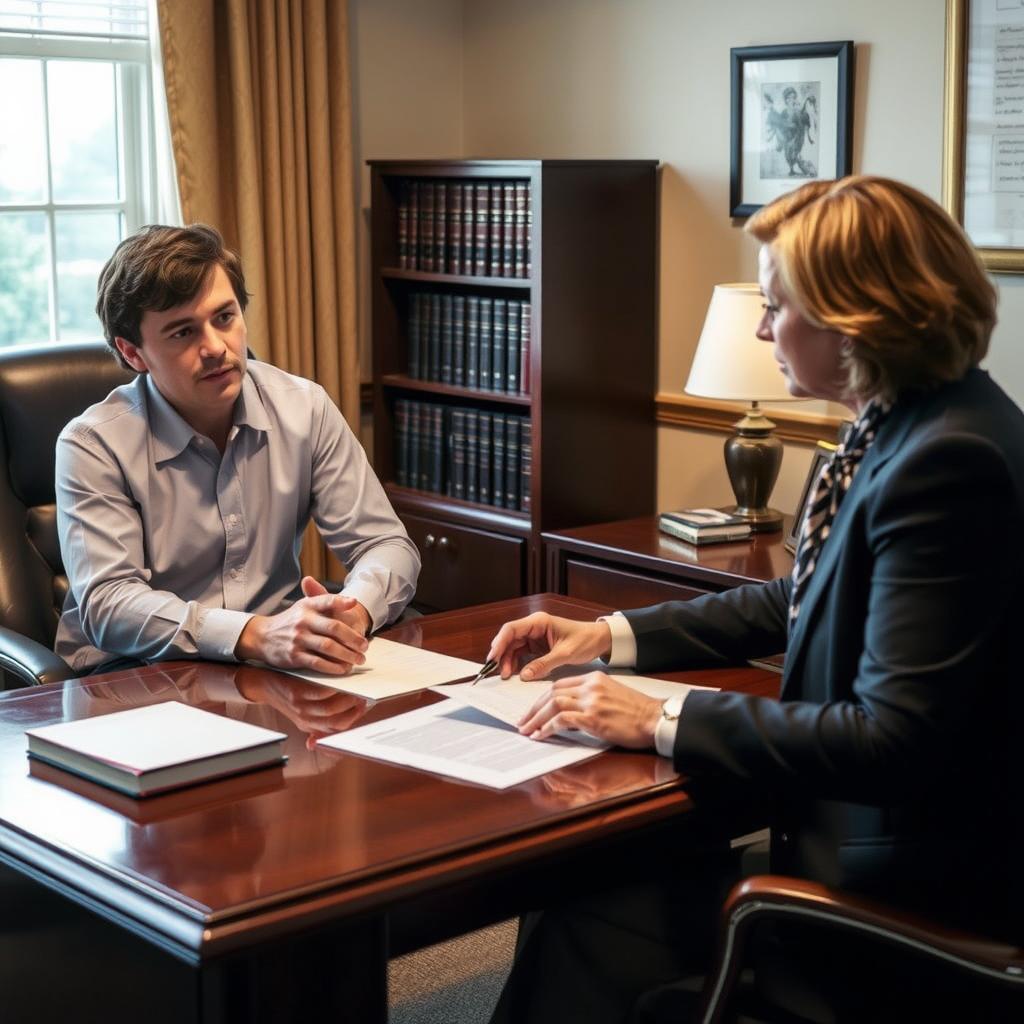
Postnup Lawyer Roanoke County, VA
You and your spouse married with a clear understanding of your financial lives, but circumstances have changed. A new business, a shift in income, or a desire to protect separate property before a conflict arises—these are all reasons Roanoke County couples consider a postnuptial agreement. Drafted correctly, a postnup can clarify property division and spousal support expectations under Virginia law, reducing uncertainty for both parties. Mr. Sris, Owner and Founder of Law Offices Of SRIS, P.C., and his Of Counsel team represent clients across the 23rd Judicial District, including those served from the firm’s Shenandoah Location. Reach our location at (888) 437-7747 to discuss whether a postnuptial agreement fits your situation. Law Offices Of SRIS, P.C. – Advocacy Without Borders.
What a Postnuptial Agreement Means in Roanoke County, Virginia
In Virginia, postnuptial agreements are governed by the Premarital Agreement Act, Va. Code § 20‑147 et seq. Though the statute uses the term “premarital,” its provisions apply equally to agreements entered into after marriage—provided the agreement is in writing, signed by both spouses, and executed voluntarily with full financial disclosure. A postnup can address property classification, division of marital and separate assets, and spousal support obligations.
Roanoke County lies within the 23rd Judicial District. Any dispute over the validity or enforcement of a postnuptial agreement falls under the jurisdiction of the Roanoke County Circuit Court, located at 305 East Main Street, Salem, Virginia. Because Virginia is an equitable distribution state, the court must determine whether a postnuptial agreement is fair and enforceable under the same standards that apply to premarital agreements. Mr. Sris and his Of Counsel understand how local judges scrutinize financial disclosures and whether both parties had a meaningful opportunity to consult independent counsel before signing. That insight helps shape agreements that are more likely to withstand a later challenge.
How Mr. Sris and His Of Counsel Handle Postnuptial Agreement Cases
Every postnuptial agreement begins with a confidential consultation. The legal team at Law Offices Of SRIS, P.C. Obtains a comprehensive picture of the marital estate—real property, retirement accounts, business interests, investment portfolios, and separate property claims—so the agreement can be drafted around the actual financial reality. If both spouses have separate counsel, the firm coordinates with opposing counsel to negotiate terms. When only one spouse seeks representation, the drafting attorney remains neutral in writing but provides the represented spouse with thorough advice about legal rights and potential outcomes.
Once a draft is prepared, the other spouse is encouraged to retain independent review counsel. Virginia courts look unfavorably on agreements signed without adequate disclosure or under circumstances suggesting coercion. For that reason, the firm documents the process clearly, including financial affidavits and, where appropriate, a record that independent legal advice was offered or obtained. If a dispute arises later—whether during a separation or a divorce proceeding—Mr. Sris and his Of Counsel can represent the client’s interests in the Roanoke County Circuit Court, presenting evidence about the circumstances surrounding the agreement’s execution.
About Mr. Sris and His Of Counsel Team
Mr. Sris, Owner and Founder of Law Offices Of SRIS, P.C., has practiced family law in Virginia since 1997. He is a former prosecutor, an experience that trained him to evaluate evidence and anticipate how judges and opposing counsel approach contested hearings—a skill directly applicable when a postnuptial agreement is challenged in court. Mr. Sris is admitted in Virginia, Maryland, the District of Columbia, New Jersey, and New York.
Mr. Sris and his Of Counsel bring extensive combined legal experience to postnuptial agreement matters. Results may vary. The team works collaboratively, drawing on the firm’s resources to address both the drafting requirements of the Premarital Agreement Act and the practical realities of a couple’s financial situation. The firm’s Shenandoah Location serves clients throughout Roanoke County, including Salem, Vinton, Cave Spring, Hollins, and surrounding communities.
Frequently Asked Questions
Are postnuptial agreements enforceable in Virginia?
Yes, a properly executed postnuptial agreement is enforceable in Virginia if it meets the requirements of the Premarital Agreement Act. The agreement must be in writing, signed by both spouses, and entered into voluntarily after a full and fair disclosure of each party’s financial circumstances. A court will refuse enforcement if it finds the agreement was unconscionable when signed or that a spouse did not receive adequate financial disclosure and did not waive the right to that disclosure in writing. Because postnups are scrutinized closely during a divorce, working with an experienced attorney increases the likelihood the agreement will hold up.
Why would a Roanoke County couple consider a postnuptial agreement?
Couples often use a postnuptial agreement to clarify financial rights after a significant life event—such as starting a business, receiving an inheritance, or experiencing a shift in income—without the finality of a divorce. In Roanoke County, where family farms, small businesses, and real estate holdings are common, a postnup can define what is separate property and what is marital, potentially avoiding costly litigation later. The agreement can also address spousal support or waive claims to certain assets, giving both spouses a measure of predictability during the marriage.
How does a postnuptial agreement differ from a prenuptial agreement?
The primary difference is timing: a prenuptial agreement is signed before the marriage, while a postnuptial agreement is entered into after the couple is already married. Both are covered by the same Virginia statutory framework, Va. Code § 20‑147 et seq. However, because a postnup is executed during the marriage, spouses already owe each other fiduciary duties, and the standard of voluntary execution is argued differently in court. An attorney familiar with how Roanoke County Circuit Court judges analyze the surrounding facts can help frame the agreement to reflect that the spouses are already in a fiduciary relationship.
What financial disclosures are required for a valid postnuptial agreement?
Virginia law requires that each spouse provide a fair and reasonable disclosure of their property and financial obligations before signing a postnuptial agreement, unless that right is waived in writing. The disclosure should include assets, debts, income, and any other information that would materially affect the other spouse’s decision to sign. Attaching detailed financial statements to the agreement and acknowledging in the document that disclosure was made or waived is a standard way to build a record that the agreement was informed and voluntary, which helps defend against a later claim of inadequate disclosure.
Can a postnuptial agreement address spousal support?
Yes, a postnuptial agreement can waive, set limits on, or otherwise determine spousal support obligations, provided the waiver is not unconscionable. Under Virginia law, a spouse may waive the right to spousal support entirely or agree to a predetermined amount under certain conditions. Courts review such waivers carefully, particularly if the spouse seeking support would become a public charge. The agreement should clearly state that both parties considered the potential need for support and made an informed decision.
Do both spouses need separate lawyers for a postnuptial agreement in Virginia?
Virginia law does not require each spouse to have independent legal counsel, but it is a factor courts consider when determining whether an agreement was entered into voluntarily and with full understanding. When both sides are represented by separate attorneys, it is more difficult to later argue that the agreement was signed under duress or without understanding the consequences. Even if only one spouse retains counsel, the drafting attorney should encourage the unrepresented spouse to obtain independent review and document that recommendation in writing. This step can significantly strengthen the agreement’s enforceability.
How does the Roanoke County Circuit Court handle postnuptial agreement disputes?
The Roanoke County Circuit Court applies the same legal framework as other Virginia circuit courts: the judge examines the circumstances of execution, the fairness of the agreement at the time it was signed, and whether full disclosure occurred. If a divorce is pending, the postnup’s terms are typically folded into the broader equitable distribution proceeding. The court may hold a separate evidentiary hearing on the agreement’s validity. Working with an attorney who understands local judicial expectations and filing procedures can help present the case efficiently.
What makes a postnuptial agreement vulnerable to challenge?
A postnuptial agreement may be set aside if a spouse proves it was signed under duress, coercion, or fraud, or if the financial disclosure was materially incomplete and no waiver was signed. Other grounds include unconscionability—a one-sided agreement that shocks the conscience of the court—and a failure to meet the statutory requirement of a writing signed by both parties. Pressure to sign quickly, without time for review, may also be cited to argue the agreement was not voluntary. To reduce these risks, the agreement should be negotiated well in advance of any contemplated separation and with a clear record of the disclosure and review process.
Can a postnuptial agreement be modified after it is signed?
Yes, a postnuptial agreement can be amended or revoked by a subsequent written agreement signed by both spouses. Changes in circumstances—such as the birth of a child, a significant change in income, or the sale of a business—may prompt spouses to revisit the original agreement. The amendment should be executed with the same formalities as the original postnup, including full disclosure or a written waiver. Without a formal amendment, verbal agreements or informal understandings generally will not override the written document.
What should I bring to a consultation about a postnuptial agreement?
Come to the consultation with a list of all assets and debts, recent tax returns, pay stubs, business financial records, and any existing estate-planning documents. Bringing a rough inventory of what each spouse owns separately and what is jointly held helps the attorney assess what the agreement should cover. Previous prenuptial agreements, separation agreements, or correspondence about finances are also useful. The more complete the picture, the better tailored the postnuptial agreement will be to the couple’s actual financial situation.
Related Resources
Learn more about family law representation across Virginia:
Fairfax County Family Law Lawyer |
Prince William County Family Law Lawyer |
Manassas Family Law Lawyer
Primary Sources
Review the Virginia statute governing postnuptial agreements and the court that handles them in Roanoke County:
Virginia Premarital Agreement Act (Va. Code § 20‑147 et seq.)
Roanoke County Circuit Court
Attorney advertising. Prior results do not guarantee a similar outcome. Results may vary.
Case results depend on a variety of factors unique to each case.