
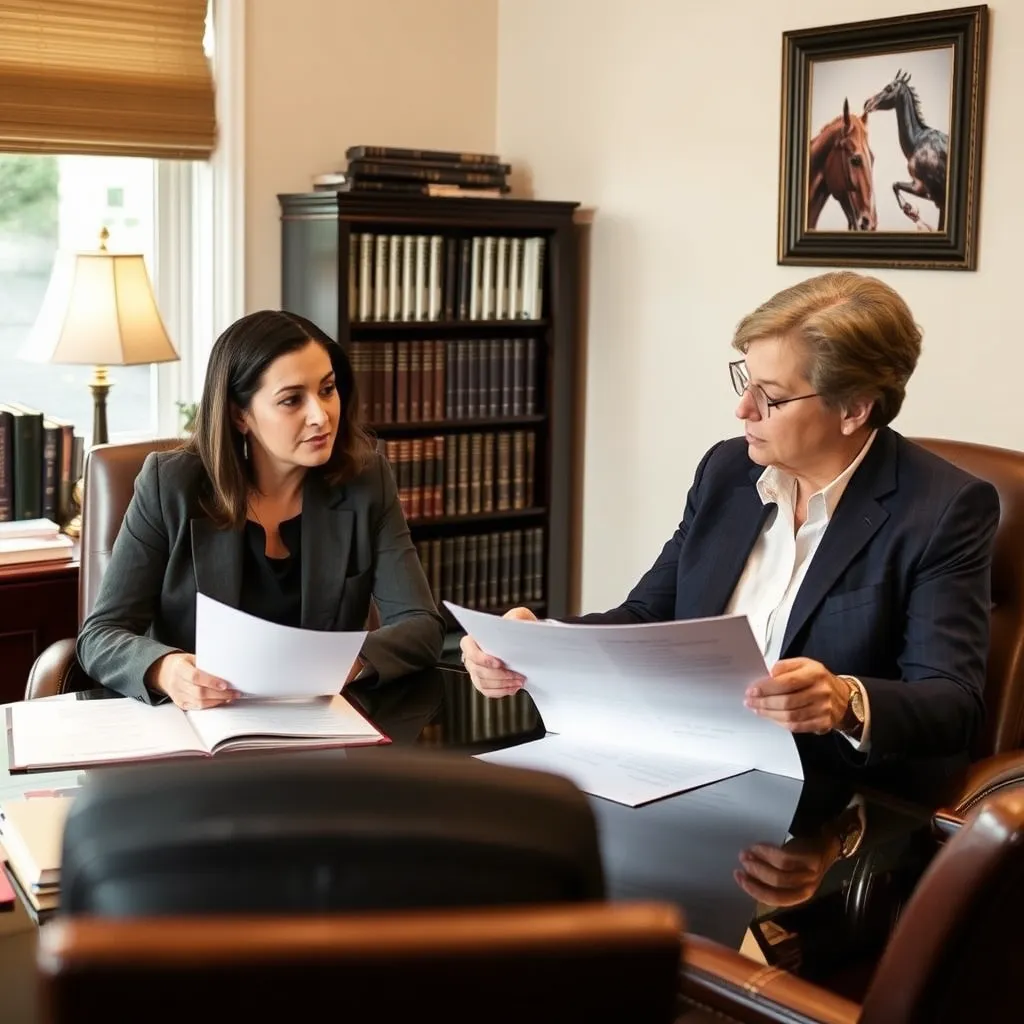
Foreign Divorce Decree Enforcement Lawyer Poquoson, VA
When a marriage ends through a divorce granted in another country, one spouse may find that the terms of that foreign decree—concerning property, support, or marital status—need to be given effect in Virginia. A foreign divorce decree enforcement lawyer in Poquoson, VA, helps clients navigate the legal process of recognizing and enforcing an international divorce judgment in the Virginia courts. At Law Offices Of SRIS, P.C., Mr. Sris and the firm’s Of Counsel attorneys guide individuals through the procedures before the Poquoson Circuit Court and the Poquoson Juvenile and Domestic Relations District Court, where issues of divorce recognition, equitable distribution, and post-decree enforcement are resolved. The firm’s Richmond location represents clients in Poquoson and throughout the Eighth Judicial District. For a consultation about your foreign decree, reach our firm at (888) 437‑7747. Law Offices Of SRIS, P.C. – Advocacy Without Borders.
What Foreign Divorce Decree Enforcement Means in Poquoson, Virginia
Foreign divorce decree enforcement is the legal process by which a divorce judgment obtained in a country outside the United States is recognized as valid and given effect in Virginia. A divorce is a judgment that determines marital status and often resolves property division, spousal support, and sometimes custody and child support. When one party has obtained a divorce abroad—whether in India, the Philippines, a European nation, or elsewhere—the other party may seek to enforce the foreign decree in Virginia for purposes such as remarriage, asset division, or support obligations. Virginia courts do not automatically recognize foreign divorces; under the doctrine of comity, a foreign judgment may be recognized if it meets certain standards, including that the issuing court had proper jurisdiction and that the decree is not contrary to Virginia public policy.
In Poquoson, enforcement actions typically proceed in the Poquoson Circuit Court for matters concerning divorce recognition and equitable distribution, while the Poquoson Juvenile and Domestic Relations District Court handles standalone custody, visitation, and support issues. The court at 500 City Hall Avenue, Poquoson, VA 23662 is the forum where a petition for domestication or enforcement is filed. Virginia is an equitable distribution state, governed by Va. Code § 20‑107.3, meaning marital property is divided fairly but not necessarily equally. A foreign divorce decree that addresses property division may require further proceedings to ensure the division aligns with Virginia law. Mr. Sris and the firm’s Of Counsel attorneys have experience appearing before these courts and can advise on the procedural requirements unique to Poquoson.
How Mr. Sris and the Firm’s Of Counsel Attorneys Handle Foreign Divorce Decree Enforcement Cases
The process of enforcing a foreign divorce decree begins with a review of the foreign judgment, the circumstances under which it was obtained, and the specific terms that a party seeks to enforce. The firm’s attorneys assess whether the foreign court had personal and subject‑matter jurisdiction, whether notice was proper, and whether the decree is final and conclusive under the law of the issuing country. Matters of service abroad may be addressed through the Hague Service Convention where applicable, and the firm’s familiarity with international service procedures ensures that jurisdictional challenges are handled correctly. Mr. Sris and the firm’s Of Counsel attorneys bring extensive combined legal experience to these cross‑border issues. Results may vary.
If the foreign decree is entitled to recognition, the next step is filing a petition in the Poquoson Circuit Court to domesticate the judgment. Once recognized, the decree carries the same weight as a Virginia divorce decree and can be enforced through the same mechanisms—contempt proceedings, income withholding orders, and property execution. Where the foreign decree is silent on certain issues or contains terms that conflict with Virginia law, further litigation may be necessary to modify support or property awards. The firm works to resolve these matters efficiently while keeping clients informed of the procedural steps and any evidentiary requirements, such as certified translations or authentication of documents from the foreign jurisdiction.
About Mr. Sris and the Firm’s Of Counsel Attorneys
Mr. Sris, Owner and Founder of Law Offices Of SRIS, P.C., is admitted in Virginia, Maryland, the District of Columbia, New Jersey, and New York. A former prosecutor, he has practiced since 1997 and concentrates in family law, including complex international divorce enforcement matters. Mr. Sris testified before the Virginia House Courts of Justice Committee in support of 2019 HB 635 (chief patron Del. David Bulova). His experience with Virginia’s equitable distribution statute and cross‑jurisdictional litigation provides a practical foundation for handling foreign decree enforcement in Poquoson.
The firm’s Of Counsel attorneys contribute additional depth across family law, criminal defense, and international issues. Together, they deliver legal services in English, Spanish, and Tamil, and serve clients from the firm’s Richmond location and other firm locations across the state. For a consultation about enforcing a foreign divorce decree, reach our firm at (888) 437‑7747.
Frequently Asked Questions
What is a foreign divorce decree?
A foreign divorce decree is a judgment issued by a court outside the United States that legally ends a marriage and may address property, support, custody, or other related matters. The decree must be examined for jurisdiction, finality, and compliance with due process before a Virginia court will recognize it. The recognition process is not automatic; the party seeking enforcement must petition the circuit court and provide certified copies and translations if necessary.
Do I need a lawyer to enforce a foreign divorce decree in Poquoson?
You are not legally required to have a lawyer, but foreign decree enforcement involves significant procedural and evidentiary hurdles that make legal representation advisable. Issues of service abroad, authentication of documents, and comity analysis are complex. An experienced family law attorney can help present the case in the Poquoson Circuit Court, respond to challenges, and navigate interactions between Virginia law and the law of the issuing country. To discuss your matter, contact our firm at (888) 437‑7747.
How does a Virginia court decide whether to recognize a foreign divorce?
A Virginia court examines whether the foreign court had proper jurisdiction over the parties and the subject matter, whether the decree is final, and whether the decree offends Virginia public policy. The principle of comity, rather than full faith and credit (which applies only to sister‑state judgments), governs foreign judgments. The court may also consider whether the foreign proceeding was conducted with notice and an opportunity to be heard. The specific facts of each case determine the outcome.
What if the foreign divorce decree includes property or custody orders?
The property and custody provisions of a foreign decree are not automatically enforceable in Virginia. For property division, the Virginia court may need to examine the division under Virginia’s equitable distribution framework. Custody orders are generally subject to the Uniform Child Custody Jurisdiction and Enforcement Act and the child’s “home state” determination. India is not a signatory to the 1980 Hague Convention on Civil Aspects of International Child Abduction. A separate proceeding before the Poquoson Juvenile and Domestic Relations District Court may be required to enforce a foreign custody order, particularly if the child now resides in Virginia. For a consultation, reach Mr. Sris and the firm’s Of Counsel attorneys at (888) 437‑7747.
Can I enforce a divorce decree from a country that is not a party to the Hague Convention?
Yes, a divorce decree from a non‑Hague country can still be recognized in Virginia under common‑law comity principles. The Hague Convention on the Recognition of Divorces and Legal Separations facilitates recognition among contracting states, but even without that treaty, Virginia courts may enforce a foreign decree if the jurisdictional and due‑process standards are met. The analysis is the same; the absence of a treaty does not bar enforcement. To discuss your situation, contact our firm at (888) 437‑7747.
How long does it take to domesticate a foreign divorce decree in Poquoson?
The timeline varies based on case complexity, the completeness of documentation, and the court’s calendar. A straightforward, uncontested domestication with all necessary certified records may proceed fairly quickly, but contested matters or those requiring service abroad and authenticated translations can take longer. There is no fixed statutory deadline, and judges schedule hearings based on the court’s docket. For more specific guidance, speak with an attorney about your particular situation.
For additional information, see these related resources:
- Fairfax County Family Law Lawyer
- Prince William County Family Law Representation
- Manassas Family Law Attorney
- Family Law Services in Fairfax City
- Falls Church Family Law Lawyer
Primary sources for Virginia law:
- Virginia Code Title 20 – Family Law
- Poquoson General District and Circuit Courts
- Virginia Judicial System
Attorney advertising. Prior results do not guarantee a similar outcome.
Results may vary.
Case results depend on a variety of factors unique to each case.