
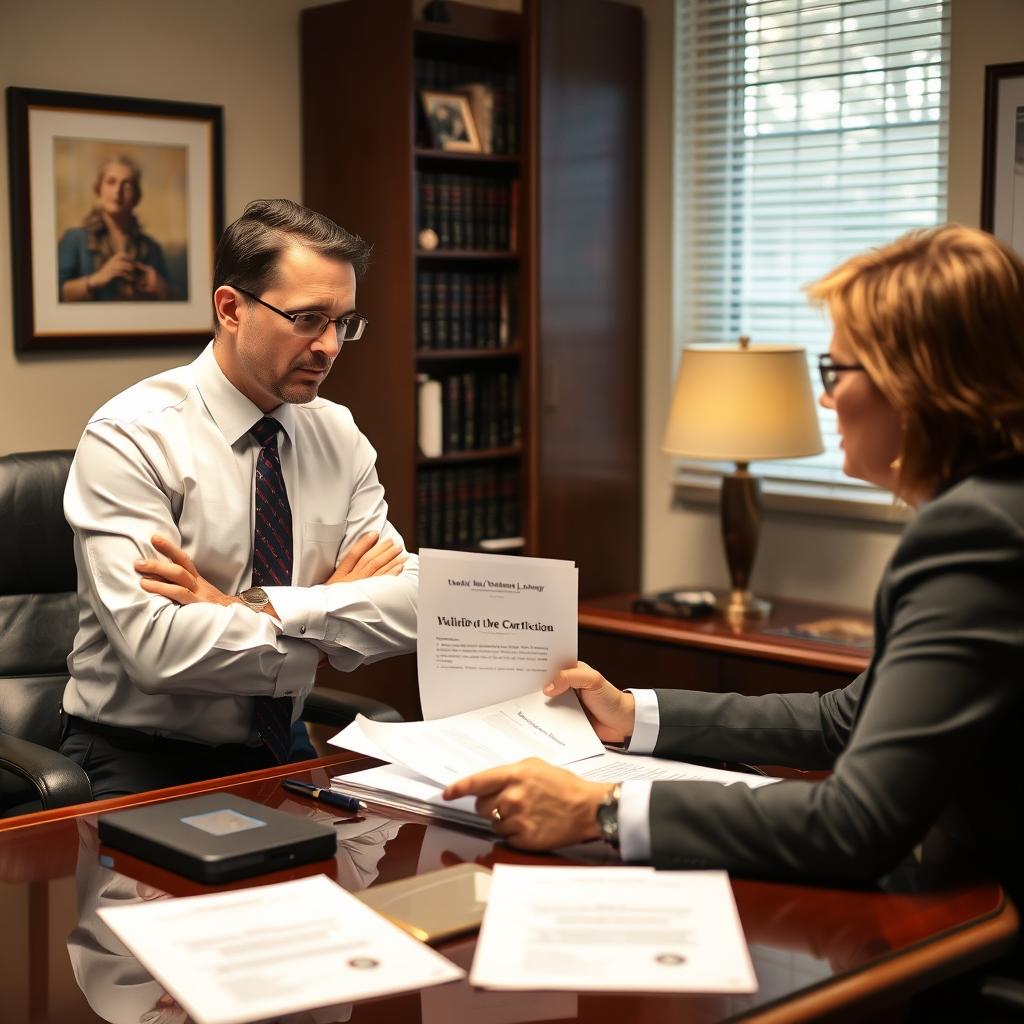
Felony Conviction Divorce Lawyer Virginia, VA
When a spouse is convicted of a felony and sentenced to serve time, the emotional and practical toll on a marriage can be staggering. Virginia law recognizes this by providing a specific fault-based ground for divorce. If you are seeking to end your marriage because your spouse is incarcerated following a felony conviction, understanding your rights under Va. Code § 20‑91 is an important first step. Mr. Sris and his Of Counsel at Law Offices Of SRIS, P.C. have extensive experience guiding clients through the divorce process in Virginia. To discuss your situation, reach our location at (888) 437‑7747. Law Offices Of SRIS, P.C. — Advocacy Without Borders.
What Felony Conviction Divorce Means in Virginia
Under Va. Code § 20‑91(A)(3), a spouse may obtain a divorce when the other spouse has been convicted of a felony, sentenced to confinement for more than one year, and is actually confined.
Source: Va. Code § 20‑91. Virginia Legislative Information System
Reviewed by Mr. Sris, admitted in VA/MD/DC/NJ/NY.
A felony conviction divorce is not an automatic process. The spouse seeking the divorce—the plaintiff—files a complaint in the Circuit Court where either party resides. The court must find that the conviction occurred, that a sentence of more than one year of confinement was imposed, and that the defendant spouse is actually confined. Evidence of the conviction order is typically required. Mr. Sris and his Of Counsel help clients gather the necessary documentation and file the appropriate pleadings.
This fault ground can have implications for property division and spousal support. Virginia is an equitable distribution state; the court divides marital property fairly, though not necessarily equally, based on factors in Va. Code § 20‑107.3. A spouse’s criminal conduct that led to the divorce may be considered. Because each situation is distinct, discussing the specifics with counsel is important.
How Mr. Sris and His Of Counsel Handle Felony Conviction Divorce Cases
When a client contacts us about a felony conviction divorce, the team begins by assessing the viability of the fault ground. This includes verifying the conviction, the sentence length, and the actual confinement status. Mr. Sris and his Of Counsel also evaluate whether a no‑fault divorce—which requires a period of separation—may be a more suitable or expedient option depending on the circumstances.
Once the appropriate ground is identified, the attorneys prepare and file the complaint, handle service of process on the incarcerated spouse, and work toward any necessary pendente lite orders for temporary support or custody. If the matter is uncontested and all issues are resolved by written agreement, the process can move efficiently through the court. If disagreements arise over custody, visitation, or property, Mr. Sris and his Of Counsel advocate for the client’s interests in hearings and, when necessary, at trial.
About Mr. Sris and His Of Counsel Team
Mr. Sris, Owner and Founder of Law Offices Of SRIS, P.C., is a former prosecutor who founded the firm in 1997. He is admitted to practice in Virginia, Maryland, the District of Columbia, New Jersey, and New York. His firsthand understanding of criminal law and courtroom procedure provides a valuable perspective when handling divorce cases that intersect with felony convictions. Mr. Sris testified before the Virginia House Courts of Justice Committee in support of 2019 HB 635 (chief patron Del. David Bulova).
Mr. Sris works alongside a team of seasoned Of Counsel attorneys. Collectively, Mr. Sris and his Of Counsel bring over 120 years of combined legal experience to family law matters, drawing on over 4,739+ documented firm-wide results. Results may vary. When you retain the firm, you benefit from collaborative legal analysis that draws on the strengths of multiple attorneys.
Frequently Asked Questions
What are the requirements for a felony conviction divorce in Virginia?
The petitioner must show that the other spouse has been convicted of a felony, sentenced to more than one year of confinement, and is actually confined. The divorce is filed in the Virginia Circuit Court. A certified copy of the conviction order and evidence of incarceration are typically presented. The ground is a fault ground, meaning no separation period is required. Mr. Sris and his Of Counsel help clients verify that all statutory elements are met before filing.
Can I file for divorce in Virginia if my spouse is in prison but the sentence is less than one year?
If the sentence is for one year or less, the felony conviction ground under Va. Code § 20‑91(A)(3) does not apply. In that situation, you may still be able to pursue a no‑fault divorce after the required period of separation (six months if you have no minor children and a signed separation agreement, or one year otherwise). Other fault grounds—such as cruelty or desertion—may also be available depending on the facts. A consultation can clarify which path fits your circumstances.
How does a felony conviction affect property division in a Virginia divorce?
The conviction itself does not automatically change the classification of marital property, but the court may consider the circumstances that led to the divorce when dividing assets. Under Virginia’s equitable distribution statute (Va. Code § 20‑107.3), the judge examines factors that include the causes of the dissolution. Conduct that resulted in a felony conviction and incarceration can influence the court’s decision about an equitable split. Each case is fact‑specific.
Do I need a lawyer for a felony conviction divorce in Virginia?
You are not legally required to hire a lawyer, but the procedural and evidentiary requirements make legal guidance advisable. Serving papers on an incarcerated spouse, proving the conviction and confinement, and addressing custody and support issues often involve complexities. Mr. Sris and his Of Counsel have handled many divorce cases involving incarcerated spouses and can help you navigate the process. To discuss your matter, reach Law Offices Of SRIS, P.C. at (888) 437‑7747.
What if my spouse was convicted in another state—can I still use the felony conviction ground in Virginia?
Yes, as long as the conviction qualifies as a felony under the law of the jurisdiction where it occurred, and the sentence of confinement for more than one year was imposed. The Virginia court will require proper documentation of the out‑of‑state conviction. Mr. Sris and his Of Counsel help clients obtain and authenticate the necessary records so the ground can be properly pleaded in a Virginia Circuit Court.
Is a felony conviction divorce faster than a no‑fault divorce in Virginia?
It can be, because there is no mandatory waiting period once the ground is established. However, the speed of the case also depends on court scheduling, whether the matter is contested, and the complexity of property and custody issues. Mr. Sris and his Of Counsel work to move cases forward efficiently while protecting the client’s interests.
Explore related practice areas: Virginia Divorce Lawyer · Contested Divorce Lawyer Virginia · No‑Fault Divorce Lawyer Virginia · Property Division Lawyer Virginia
Additional resources: Virginia Code Title 20 (Domestic Relations) · Virginia Circuit Courts · Virginia Judicial System
Attorney advertising. Prior results do not guarantee a similar outcome. Results may vary.
Case results depend on a variety of factors unique to each case.