
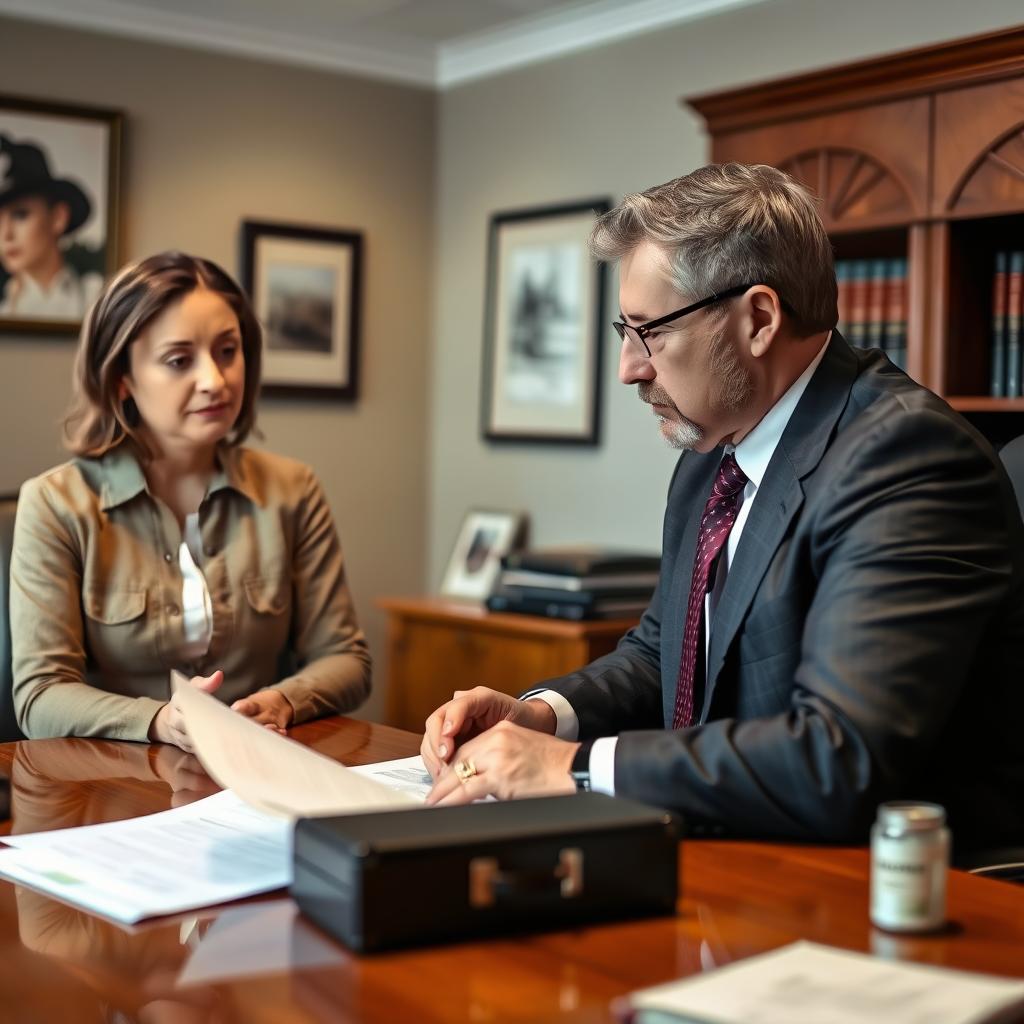
Felony Conviction Divorce Lawyer Powhatan County, VA
Your spouse was convicted of a felony and sentenced to a term of imprisonment longer than one year. The marriage is broken, but you are uncertain whether the law gives you a path to end it without a lengthy separation. Under Virginia law, a spouse’s felony conviction and incarceration can serve as a fault‑based ground for divorce — and it carries no mandatory separation period. Mr. Sris, a former prosecutor who understands how criminal cases and family law intersect, helps spouses in Powhatan County use this ground to move forward. For a confidential consultation, reach Law Offices Of SRIS, P.C. at (888) 437‑7747. Law Offices Of SRIS, P.C. — Advocacy Without Borders.
Using a Felony Conviction as a Divorce Ground in Virginia
Virginia Code § 20‑91(3) allows a divorce when one spouse has been convicted of a felony and sentenced to confinement for more than one year. Unlike a no‑fault divorce, this fault‑based ground does not require the parties to live apart for six or twelve months before filing. Once the conviction is final and the spouse is actually confined, you may immediately file a Complaint in the circuit court where you reside.
For Powhatan County residents, the divorce action is filed in the Powhatan County Circuit Court. The same courthouse that handles criminal sentencings is where you seek the divorce decree. Mr. Sris and his Of Counsel prepare the complaint, obtain certified records of the conviction, and serve the incarcerated spouse — often through the sheriff or by court‑approved alternative means.
What to Expect in a Felony Conviction Divorce in Powhatan County
Although the ground is straightforward, the divorce itself involves the same property, support, and custody issues as any other contested divorce. The Circuit Court handles equitable distribution of marital property and spousal support, while standalone custody, visitation, and child support matters are heard in the Powhatan County Juvenile and Domestic Relations District Court. When both courts are involved, coordination between the two proceedings is essential.
Because the ground is fault‑based, the incarcerated spouse’s conduct may influence the court’s decisions on property division and support. However, the court still focuses on the best interests of any children and on a fair division of assets. Mr. Sris and his team work to present the facts clearly so the court can reach a resolution that protects your financial future and your relationship with your children.
How the Fault Ground Affects Your Case
A felony‑conviction divorce is a fault‑based dissolution. That means the court may consider the conviction and incarceration when determining equitable distribution of marital property, spousal support, and — most critically — custody and visitation arrangements. An incarcerated parent’s ability to exercise parenting time is naturally limited, and the court will structure any parenting plan with those practical restrictions in mind.
While the fault ground can shorten the time to a final decree, it does not automatically guarantee a favorable property award. Virginia is an equitable distribution state, and the judge weighs multiple factors under Va. Code § 20‑107.3. Mr. Sris testified before the Virginia House Courts of Justice Committee in support of 2019 HB 635 (chief patron Del. David Bulova), the legislation that revised the state’s equitable distribution statute. That firsthand involvement with Virginia’s property division laws gives him a practical understanding of how the factors are applied in Powhatan County courtrooms.
About Mr. Sris and His Of Counsel Team
Mr. Sris, Owner and Founder of Law Offices Of SRIS, P.C., has practiced family law in Virginia since 1997. A former prosecutor, he brings a distinct perspective to fault‑based divorce cases that involve criminal convictions — he knows how to obtain and authenticate conviction records, what a judgment of sentence actually means, and how to present that evidence persuasively in a civil divorce proceeding. His Of Counsel team includes attorneys with backgrounds in criminal defense and law enforcement, which further strengthens the firm’s ability to handle the crossover between criminal and family court.
Mr. Sris and his Of Counsel bring over 120 years of combined legal experience and have secured 4,739+ documented firm-wide results. Results may vary. In Powhatan County, Law Offices Of SRIS, P.C. has secured favorable outcomes in all two documented matters. The firm’s Richmond location serves clients throughout Powhatan County and the surrounding Central Virginia region. For a consultation, call (888) 437‑7747.
Frequently Asked Questions
What is a felony conviction divorce in Virginia?
A felony conviction divorce is a fault‑based divorce available when one spouse has been convicted of a felony and sentenced to confinement for more than one year. It is authorized by Va. Code § 20‑91(3) and does not require a separation period. The filing spouse must prove the conviction and the sentence, but once those are established the court may grant the divorce without further delay.
How do I start a felony conviction divorce in Powhatan County?
You begin by filing a Complaint for divorce in the Powhatan County Circuit Court. The complaint sets out the ground, the facts of the marriage, and the relief you seek — property division, support, custody. You must serve the incarcerated spouse. An experienced family law attorney can prepare the necessary pleadings and gather certified conviction documents from the criminal court.
Do I have to wait for the conviction to be final before filing?
Yes, the conviction must be final and the spouse must actually be confined before you file on this ground. A pending appeal does not automatically prevent filing, but the court may stay the divorce proceeding until the appeal is resolved. The key requirement is that a sentence of more than one year has been imposed and is being served.
How long does a felony conviction divorce take in Powhatan County?
The timeline varies by case, but because no separation period is required it can move faster than a no‑fault divorce. Once the complaint is served and the incarcerated spouse has had an opportunity to respond, the court can schedule a hearing. If the divorce is uncontested or the defendant fails to answer, a final decree may be entered within a few months. Contested cases take longer.
What happens to property and custody when the ground is a felony conviction?
The court divides marital property equitably and decides custody based on the best interests of the child. The conviction may influence the equitable distribution factors under Va. Code § 20‑107.3, particularly if marital assets were spent on the criminal defense. Custody and visitation are determined under Va. Code § 20‑124.3; an incarcerated parent’s ability to exercise parenting time is heavily restricted.
Can the incarcerated spouse contest the divorce?
Yes, an incarcerated spouse can file an answer and participate in the proceeding. The prison may allow participation by phone or video. If the divorce is contested, discovery and a trial may be necessary. However, the conviction itself is a matter of public record and is difficult to dispute if it meets the statutory requirements.
Do I need a lawyer for a felony conviction divorce?
You are not legally required to hire a lawyer, but the intersection of criminal records, service on an incarcerated person, and fault‑based property division makes legal guidance highly advisable. Mistakes in pleading the ground or serving the defendant can delay the case. An attorney can also advise you on how the conviction may affect your financial future and custody arrangement.
Is a felony conviction divorce the same as an at‑fault divorce in Virginia?
Yes, it is one of the several fault‑based grounds listed in Va. Code § 20‑91. Other fault grounds include adultery, cruelty, and desertion. The felony conviction ground is unique because it does not require proof of marital misconduct — just the fact of the conviction and the sentence. It is often used when one spouse is imprisoned and the other wants to move on quickly.
How does child support work when one parent is incarcerated?
Child support is still calculated under the Virginia guidelines, but the court will consider the incarcerated parent’s limited income. A support obligation may be set at a minimal amount while the parent is confined, with the understanding that it may be modified upon release. The Powhatan County J&DR Court has jurisdiction over child support matters.
Will the court automatically give me more property because my spouse is a felon?
No, the conviction does not automatically shift the property division. The judge considers the full list of factors in Va. Code § 20‑107.3, including the circumstances that contributed to the dissolution of the marriage. The conviction can be one factor, but equitable distribution does not mean punitive distribution. Your attorney will present the facts so the court can weigh them along with all other factors.
For a deeper statutory analysis, visit our comprehensive Virginia divorce guide.
A spouse may obtain a divorce in Virginia when the other spouse has been convicted of a felony and sentenced to confinement for more than one year (Va. Code § 20‑91(3)).
Source: Va. Code § 20‑91(3). Official Virginia Code
Reviewed by Mr. Sris, admitted in VA/MD/DC/NJ/NY.
Law Offices Of SRIS, P.C. — Richmond Location
7400 Beaufont Springs Drive, Suite 300, Room 395
Richmond, VA 23225
Phone: (804) 201‑9009 · Toll‑free: (888) 437‑7747
By appointment only. Call to schedule.
Attorney advertising. Prior results do not guarantee a similar outcome.
Case results depend on a variety of factors unique to each case.
Results may vary.