
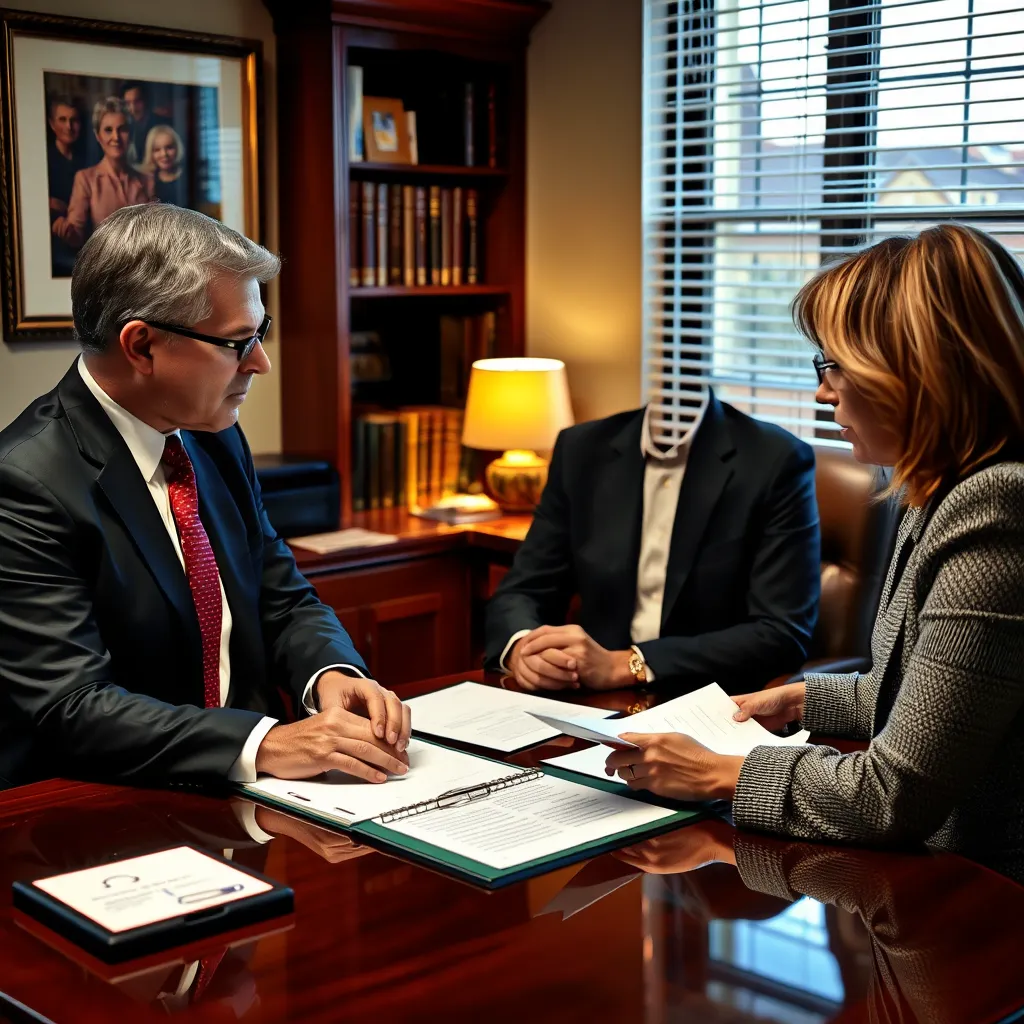
Family Law Lawyer Manassas, VA
David had worked at a Prince William County logistics firm for nearly a decade. When his wife told him she wanted a divorce, he sat in his car outside the Manassas VRE station trying to figure out what came next. Would he lose time with his two children? What happened to the house they had bought together near Signal Hill Park? He had never set foot in the Manassas Circuit Court at 9311 Lee Avenue, and the thought of walking into a courtroom without guidance weighed on him. He called a family law attorney to understand his options. Reach Law Offices Of SRIS, P.C. at (888) 437-7747 to discuss your situation. Law Offices Of SRIS, P.C. – Advocacy Without Borders.
How a Manassas Family Law Matter Unfolds
When you are facing a divorce, custody dispute, or support issue in Manassas, the path forward depends on whether you and the other party can reach agreement. Some couples in Manassas and Prince William County resolve their matters through negotiation and a signed separation agreement, avoiding contested court proceedings. Others need a judge in the Manassas Circuit Court to decide property division, custody, or spousal support after hearing both sides. The court at 9311 Lee Avenue handles divorce and equitable distribution, while the Manassas Juvenile and Domestic Relations District Court addresses standalone custody, visitation, and child support matters. No two family situations are identical, and the approach that worked for a neighbor may not fit your circumstances.
Mr. Sris and the firm’s Of Counsel attorneys work with clients to evaluate whether negotiation, mediation, or litigation serves their interests. Virginia law gives the court authority to divide marital property equitably—meaning fairly, though not necessarily equally—under Va. Code § 20-107.3. The judge considers factors including the duration of the marriage, each spouse’s contributions, and the circumstances that led to the separation. Understanding how these factors apply to your specific financial situation and family dynamics is central to preparing your case.
What to Expect When You Work With the Firm
After you contact Law Offices Of SRIS, P.C., you will speak with someone who listens to the details of your situation. The initial conversation covers the basic facts: whether children are involved, the nature of any property disputes, and whether both parties are willing to work toward an agreement. From there, the firm’s attorneys can outline the legal options available under Virginia law and help you decide on a course of action.
If your case proceeds in Manassas, filings are typically made in the Circuit Court for divorce matters or in the Juvenile and Domestic Relations District Court for custody and support issues. Virginia requires at least one corroborating witness for an uncontested divorce hearing, and a property settlement agreement signed by both spouses can resolve all contested issues without trial. The firm handles matters at the Thirty-first Judicial District courthouse at 9311 Lee Avenue, Suite 230, and the Fairfax location serves clients throughout Prince William County, including the Manassas and Manassas Park communities. For a more detailed statutory breakdown, you can review the firm’s comprehensive analysis on srislawyer.com.
What Is at Stake in a Virginia Family Law Case
Family law cases in Virginia can affect nearly every aspect of your life. Property division under equitable distribution determines who keeps the marital home, retirement accounts, vehicles, and debts. Child custody decisions shape where your children live, how often you see them, and how major decisions about their upbringing get made. Child support obligations are calculated under Virginia guidelines based on combined gross income, and spousal support may be ordered based on statutory factors including the standard of living during the marriage and each spouse’s earning capacity.
Virginia recognizes both no-fault and fault-based grounds for divorce. A no-fault divorce is available after a six-month separation if the couple has no minor children and has signed a separation agreement, or after a one-year separation if children are involved. Fault grounds include adultery, cruelty, and desertion, and these can affect property division and support determinations. The decisions made during a family law case carry consequences that last for years, particularly where children and financial obligations are concerned.
About Mr. Sris and the Firm’s Of Counsel Attorneys
Mr. Sris, Owner and Founder of Law Offices Of SRIS, P.C., established the firm in 1997. A former prosecutor, Mr. Sris brings courtroom experience to family law matters and has testified before the Virginia House Courts of Justice Committee in support of 2019 HB 635 (chief patron Del. David Bulova). His background gives him insight into how cases are built and presented in Virginia courtrooms.
The firm’s Of Counsel attorneys handle family law matters alongside Mr. Sris, drawing on diverse professional backgrounds that include prior prosecutorial and law enforcement experience. Together, they serve clients in Virginia, Maryland, the District of Columbia, New Jersey, and New York. The firm has been practicing in the Manassas area for years and is familiar with the local courts, the judges’ expectations, and the procedural requirements that apply in Prince William County family law cases. Reach the firm at (888) 437-7747 to schedule a consultation.
Frequently Asked Questions
How long does a divorce take in Manassas, Virginia?
Uncontested divorces in Virginia typically resolve within a few months after filing, while contested cases take longer depending on the disputes involved. The mandatory separation period must be met before filing—six months if no minor children and a signed agreement exist, or one year otherwise. Once filed at the Manassas Circuit Court, an uncontested divorce with a signed separation agreement may be finalized in roughly two to four months. Contested divorces involving custody, support, or property disputes can extend considerably, and complex equitable distribution cases with business valuations or retirement assets may take additional time. The court’s calendar and the complexity of the issues drive the timeline.
How much does a divorce cost in Manassas?
The cost of a divorce in Manassas depends on whether it is contested, the complexity of property issues, and whether children are involved. The Circuit Court requires a filing fee for the divorce complaint, and additional costs may include service of process, Guardian ad Litem fees if custody is disputed, and mediation expenses. Attorney fees vary by case and depend on the time required to resolve the matter. Uncontested cases with a signed separation agreement generally involve lower overall costs than cases that proceed to trial. Contact Law Offices Of SRIS, P.C. at (888) 437-7747 to discuss the specifics of your situation.
Is Virginia a community property state?
No, Virginia is an equitable distribution state, meaning marital property is divided fairly but not necessarily equally. The court considers multiple factors under Va. Code § 20-107.3, including each spouse’s contributions to the marriage, the duration of the marriage, and the circumstances that led to the divorce. Separate property—assets owned before the marriage or received as a gift or inheritance—is generally excluded from division. The Manassas Circuit Court at 9311 Lee Avenue handles all property division matters in divorce cases.
How is child custody decided in Manassas?
Child custody in Manassas is determined based on the best interests of the child under Virginia law. The court evaluates factors including each parent’s relationship with the child, the child’s needs, each parent’s willingness to support the child’s relationship with the other parent, and any history of abuse. The Manassas Juvenile and Domestic Relations District Court handles standalone custody cases, while custody within a divorce is decided by the Circuit Court. Parents who can agree on a parenting plan may submit it to the court for approval, which often leads to a faster resolution.
What are the grounds for divorce in Virginia?
Virginia allows both no-fault and fault-based grounds for divorce. No-fault grounds require a period of separation—six months if there are no minor children and the parties have a signed separation agreement, or one year in other cases. Fault grounds include adultery, cruelty, willful desertion for one year, and felony conviction resulting in imprisonment for more than one year. Fault grounds can affect property division and spousal support determinations, and adultery in particular does not require a waiting period before filing.
Do I need a lawyer for a family law matter in Manassas?
You are not legally required to hire a lawyer for a family law case, but having experienced counsel helps protect your rights and navigate court procedures. Family law involves detailed statutory requirements, court rules, and procedural deadlines. Mistakes in filing or failing to present relevant evidence can have lasting consequences for custody, property rights, and support obligations. An attorney familiar with the Manassas courts can help you understand your options and advocate for your interests. Reach Law Offices Of SRIS, P.C. at (888) 437-7747 to discuss whether legal representation makes sense for your circumstances.
Can I modify a custody or support order in Virginia?
Yes, custody and support orders in Virginia can be modified if there has been a material change in circumstances since the last order was entered. Common reasons for modification include a parent’s relocation, a change in either parent’s income, a change in the child’s needs, or concerns about the child’s safety. The party seeking the modification must file a motion with the court and demonstrate that the change warrants a revised order. The Manassas Juvenile and Domestic Relations District Court handles modification requests for existing custody and support orders.
What is the difference between legal custody and physical custody?
Legal custody refers to the authority to make major decisions about a child’s upbringing, while physical custody determines where the child lives. Virginia courts may award joint legal custody, giving both parents decision-making authority over education, healthcare, and religious matters, or sole legal custody to one parent. Physical custody can be shared or primary, with visitation schedules for the non-custodial parent. The court decides both based on the child’s best interests, and the two types of custody are evaluated separately.
How is spousal support determined in Manassas?
Spousal support in Virginia is based on statutory factors including the duration of the marriage, each spouse’s earning capacity, and the standard of living established during the marriage. The court considers the needs of the requesting spouse and the other spouse’s ability to pay. Support may be temporary, awarded while the divorce is pending, or permanent, continuing after the divorce is finalized. The amount and duration depend on the specific facts of the case, and fault grounds can influence the court’s determination.
What should I bring to a consultation with a family law attorney?
Bring any documents related to your marriage, finances, and children to your consultation so the attorney can give you informed guidance. Useful documents include tax returns, pay stubs, bank statements, retirement account statements, deeds, vehicle titles, and any existing court orders involving your family. If you have a prenuptial agreement or separation agreement, bring that as well. A list of questions you want to ask can help you make the most of the meeting. Contact Law Offices Of SRIS, P.C. at (888) 437-7747 to schedule a consultation and discuss what documents would be most helpful in your case.
Speak With a Family Law Attorney Serving Manassas
Family law matters affect your children, your property, and your future. The decisions made during a divorce, custody dispute, or support proceeding carry consequences that extend well beyond the courtroom. Mr. Sris and the firm’s Of Counsel attorneys represent clients in the Manassas courts and throughout Prince William County. Reach Law Offices Of SRIS, P.C. at (888) 437-7747 to request a consultation. The firm’s Fairfax location at 4008 Williamsburg Court, Fairfax, VA 22032, serves clients in Manassas, Manassas Park, and the surrounding communities. Consultation by appointment.
For a full statutory breakdown of Virginia family law, see the comprehensive analysis on srislawyer.com.
Attorney advertising. Prior results do not guarantee a similar outcome. Results may vary.
Case results depend on a variety of factors unique to each case.