
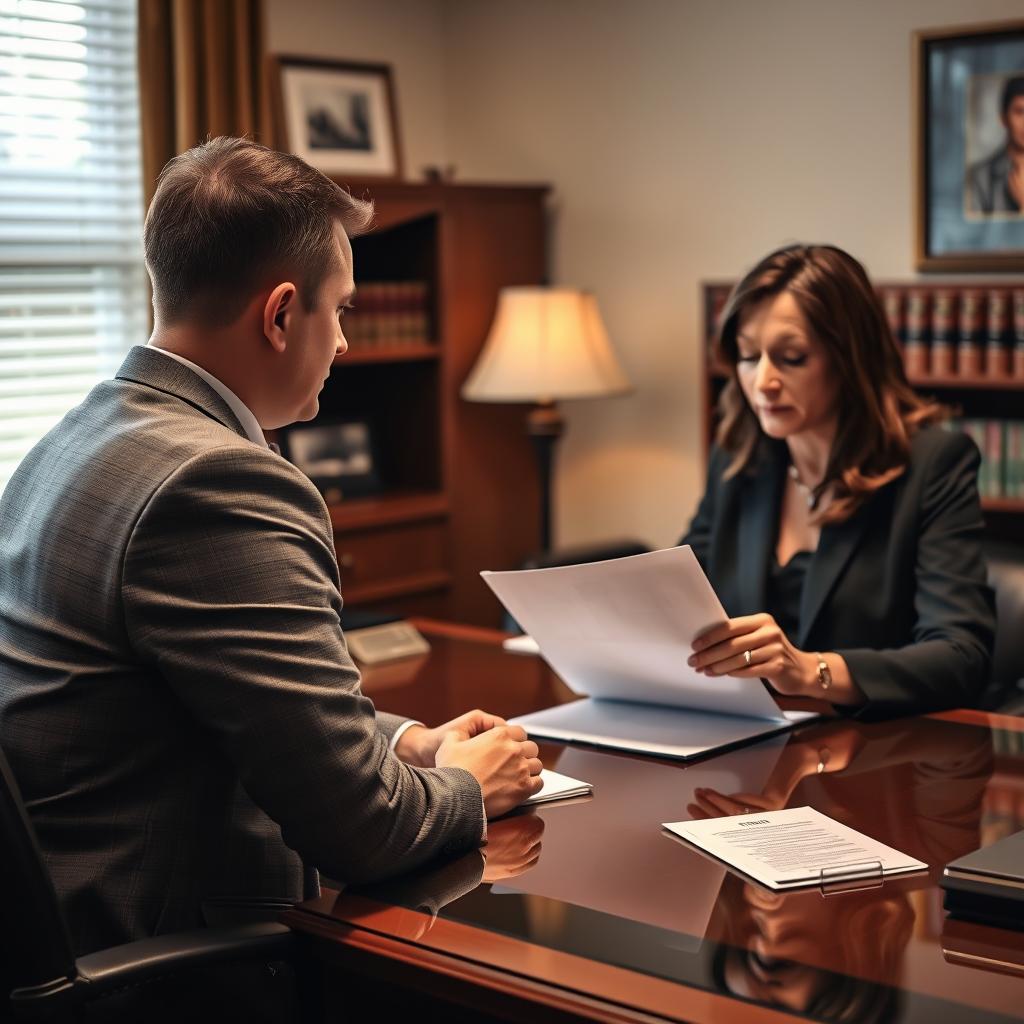
Equitable Distribution Lawyer Rockingham County, VA
Dividing a marital estate in Rockingham County can present challenges for a spouse who is uncertain about what property will be classified as marital or separate under Virginia law. Virginia does not divide assets equally; the state follows the equitable distribution framework set out in Va. Code § 20-107.3. The Rockingham County Circuit Court at 53 Court Square, Harrisonburg, VA 22801 hears all divorce and property-division matters for the county’s communities—including Harrisonburg, Bridgewater, Dayton, Elkton, Timberville, and Broadway. Mr. Sris and the firm’s Of Counsel attorneys help clients identify, classify, value, and advocate for a fair share of the marital estate. Reach Law Offices Of SRIS, P.C. at (888) 437-7747 to schedule a consultation. Law Offices Of SRIS, P.C. – Advocacy Without Borders.
What Equitable Distribution Means in Rockingham County, Virginia
Equitable distribution is the process by which a Virginia circuit court divides marital property when a marriage ends. Under Va. Code § 20-107.3, the court classifies all assets as marital, separate, or hybrid, then distributes the marital portion according to eleven statutory factors. The court is not required to split assets 50–50; it aims for a fair result based on the evidence. The Circuit Court of Rockingham County exercises exclusive jurisdiction over divorce, including the accompanying equitable distribution claims. The Rockingham County Juvenile and Domestic Relations District Court handles standalone custody, child support, and protective orders, but the division of property is always resolved in the Circuit Court.
For families in the central Shenandoah Valley, court appearances take place at the Rockingham County Courthouse on Court Square in Harrisonburg. The area sits within the Twenty-sixth Judicial District of Virginia. When a couple cannot agree on how to divide real estate, retirement accounts, business interests, or personal property, the court will hold an evidentiary hearing and assign each item. An attorney experienced with Virginia’s classification rules can help a spouse present the evidence needed to establish what is separate property—such as pre‑marital assets, gifts from a third party, or an inheritance—and what should be considered marital.
How Mr. Sris and the Firm’s Of Counsel Attorneys Approach Equitable Distribution Cases
Mr. Sris and the firm’s Of Counsel attorneys begin by working with the client to compile a complete inventory of all assets and debts. The classification stage is critical; only property acquired during the marriage and not excluded by statute can be divided. They analyze retirement plans, investment accounts, business valuations, and real estate holdings to determine each asset’s character. Where a business or professional practice is at issue, they typically coordinate with forensic accountants and business valuators to produce an accurate valuation.
After classification and valuation, the team negotiates a property settlement agreement when possible. If the parties are unable to reach an agreement, the matter proceeds to a contested hearing in Rockingham County Circuit Court. At that stage, Mr. Sris and the firm’s Of Counsel attorneys present evidence on each of the statutory factors—such as the contributions of each spouse, the duration of the marriage, and the circumstances that led to the breakdown—to support a distribution that is equitable under the facts. Throughout the process, the focus remains on protecting the client’s financial standing without making promises about a specific outcome.
About Mr. Sris and the Firm’s Of Counsel Attorneys
Mr. Sris is the Owner and Founder of Law Offices Of SRIS, P.C. He founded the firm in 1997 and is a former prosecutor. He is admitted to practice in Virginia, Maryland, the District of Columbia, New Jersey, and New York. Mr. Sris testified before the Virginia House Courts of Justice Committee in support of 2019 HB 635 (chief patron Del. David Bulova), which revised the equitable distribution statute’s provisions on retirement plans. His familiarity with Virginia’s domestic relations code informs the firm’s approach to property division cases.
The firm’s Of Counsel attorneys bring additional depth to family law matters, including experience in complex financial issues and litigation. Every attorney who works on a Rockingham County equitable distribution matter is an Of Counsel attorney who contracts directly with Law Offices Of SRIS, P.C. to discuss how the team can assist with your property division, call (888) 437-7747.
Frequently Asked Questions
How is property divided in a Rockingham County divorce?
A Rockingham County divorce court divides marital property through equitable distribution, not a 50‑50 split. The Rockingham County Circuit Court classifies assets as marital or separate, then distributes the marital portion according to the eleven factors listed in Va. Code § 20‑107.3. Separate property—items owned before the marriage, received as a gift, or inherited—remains with the owning spouse. The court can order a monetary award or transfer title to achieve a fair outcome. For specifics about your assets, contact Law Offices Of SRIS, P.C. at (888) 437‑7747.
What is considered marital property in Virginia?
Marital property generally includes all assets and debts acquired by either spouse during the marriage, regardless of which name is on the title. This can encompass wages, retirement accounts, real estate, vehicles, bank accounts, and business interests built during the marriage. Even if an asset is titled in one spouse’s name alone, the court may classify it as marital if it was purchased with marital funds. The burden is on the party claiming something as separate property to present clear evidence of its origin.
What is separate property in a Virginia divorce?
Separate property includes assets a spouse owned before the marriage, gifts received individually, and inheritances kept in the recipient’s name. It also includes property acquired with separate funds, provided the owner can trace the source. Under Va. Code § 20‑107.3(A), separate property is not subject to division by the court, although any increase in value that results from marital effort or funds may be considered marital. Keeping clear records of pre‑marital assets is essential in Rockingham County cases.
How does the court value a business in equitable distribution?
Virginia courts determine a business’s value by looking at fair market value, often with the help of a qualified valuation experienced attorney. The firm regularly works with forensic accountants who analyze financial records, tax returns, and revenue streams to produce an opinion. The court then considers whether the business is marital property and, if so, how to divide its value without disrupting operations. Factors such as a spouse’s sweat equity and the business’s date of inception are examined.
What factors does the court weigh when dividing property?
The court applies the eleven factors in Va. Code § 20‑107.3(E), which include the contributions of each spouse, the duration of the marriage, the parties’ ages and health, and the circumstances that led to the end of the marriage. The court also considers how and when the assets were acquired, the tax consequences of a proposed division, and whether an asset is liquid or non‑liquid. No single factor controls; the judge weighs all of them to determine a fair distribution.
Can an equitable distribution order be modified after the divorce is final?
Generally, an equitable distribution order cannot be reopened after the divorce decree becomes final. Virginia treats property division as permanent. The exceptions are narrow—such as proof of fraud or mutual mistake—and are difficult to establish. It is therefore important to present a full picture of the estate during the original proceeding. For guidance on your specific situation, reach Law Offices Of SRIS, P.C. at (888) 437‑7747.
Explore related family law resources for nearby counties: Family Law in Clarke County | Family Law in Shenandoah County | Family Law in Frederick County | Family Law in Warren County | Family Law in Augusta County.
Additional information: Va. Code § 20‑107.3 (equitable distribution) | Rockingham County Circuit Court | Virginia Code Title 20 (Domestic Relations).
Attorney advertising. Prior results do not guarantee a similar outcome. Results may vary.
Case results depend on a variety of factors unique to each case.