
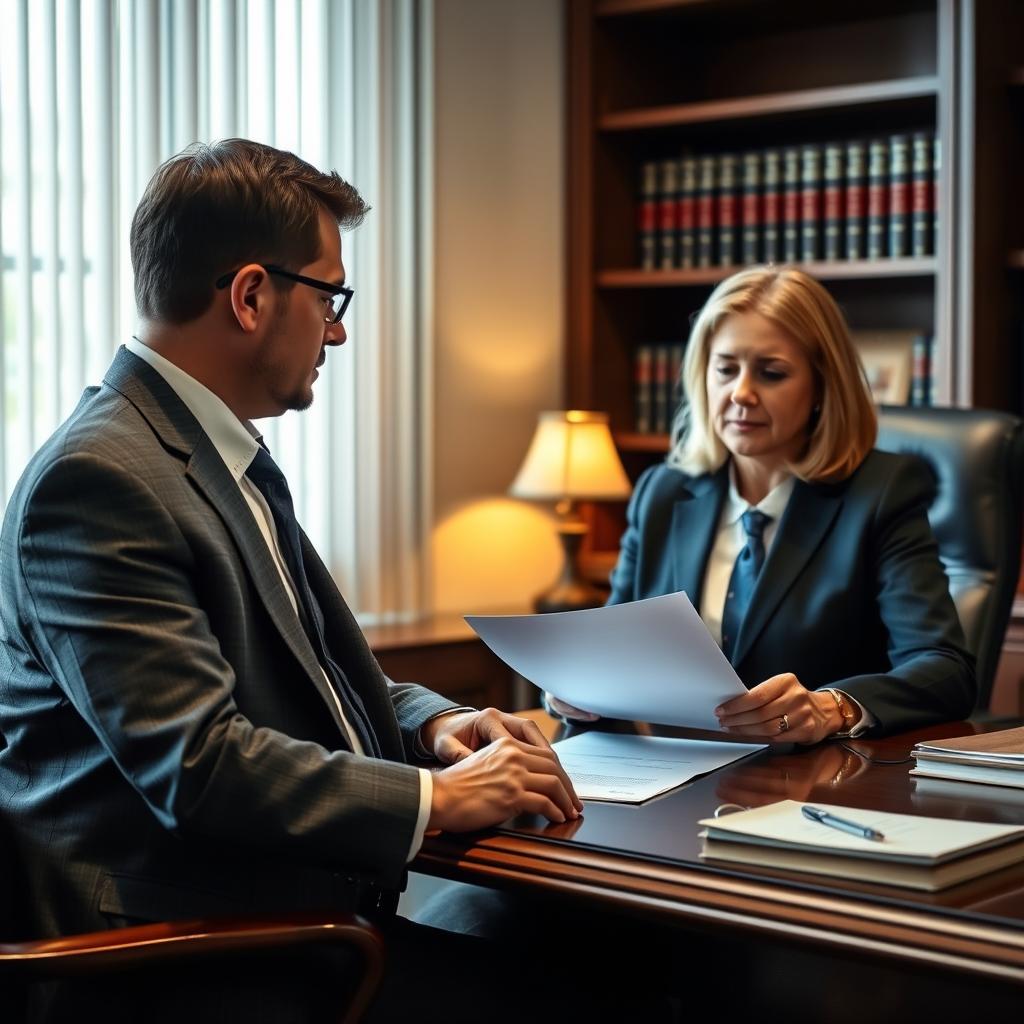
Equitable Distribution Lawyer Isle of Wight County, VA
You and your spouse have decided to divorce, and now you’re staring across the kitchen table at a stack of financial statements — the house, the retirement accounts, maybe the family business in Smithfield. You’re not sure how any of it will be divided. In Isle of Wight County, Virginia, the court doesn’t simply split everything down the middle. It uses a process called equitable distribution, governed by Va. Code § 20‑107.3, to divide marital property fairly — which may or may not mean equally. Whether you’re in Windsor, Carrollton, or anywhere in the county, having an experienced lawyer who understands how Isle of Wight County Circuit Court handles property division can make a critical difference. Reach Law Offices Of SRIS, P.C. at (888) 437‑7747 to discuss your situation. Law Offices Of SRIS, P.C. – Advocacy Without Borders.
How an Equitable Distribution Lawyer Can Help You Protect Your Assets
A lawyer’s job in equitable distribution is to make sure the court sees a complete and accurate picture of the marital estate. That starts with identifying and classifying every asset and debt. Under Virginia law, property acquired during the marriage is generally marital and subject to division; property owned before the marriage, or received as a gift or inheritance, is separate and stays with its owner. But the lines can blur — for example, when separate property has been commingled or increased in value due to marital effort.
Mr. Sris and the firm’s Of Counsel attorneys work to trace assets, gather documentation, and present a clear case to the court. They negotiate settlement agreements that preserve what matters to you, and when settlement isn’t possible, they prepare for trial in Isle of Wight County Circuit Court, located at 17122 Monument Circle, Suite A, Isle of Wight, VA 23397. Every strategy is built around the 11 statutory factors the court must consider — including each spouse’s contributions, the length of the marriage, and the circumstances that led to its end.
What to Expect in an Isle of Wight County Equitable Distribution Case
Equitable distribution happens as part of a divorce proceeding. You’ll file a complaint for divorce in Isle of Wight County Circuit Court. The court then classifies property, values it, and divides marital assets equitably. If you and your spouse have already signed a separation agreement that resolves property, the court generally incorporates that agreement into the divorce decree — but when there’s disagreement, the judge decides.
The process often involves formal discovery: interrogatories, requests for documents, and sometimes depositions. For complex estates — such as those with businesses, professional practices, or significant retirement assets — the firm may work with forensic accountants and valuation attorneys. The timeline varies by case complexity and the court’s calendar. Virginia law also permits pendente lite relief under Va. Code § 20‑103: while the divorce is pending, the court can order temporary support, exclusive use of the family home, and restrictions on disposing of marital property.
Why the Stakes Are High — and How We Approach Your Case
A fair settlement isn’t only about getting a dollar amount you can live with. It’s about securing your long-term financial stability. If the court undervalues a retirement plan, overlooks hidden assets, or misclassifies separate property, the consequences can follow you for years. Our approach is methodical: we examine tax returns, bank statements, business records, and real estate deeds, comparing them against what your spouse has disclosed.
Isle of Wight County sits within Virginia’s Fifth Judicial District. The court at Monument Circle handles all equitable distribution matters; standalone custody and support cases are handled by the Isle of Wight County Juvenile & Domestic Relations District Court. Understanding which court has jurisdiction and how local procedures operate helps you avoid unnecessary delays and surprises.
About Mr. Sris and the Firm’s Of Counsel Attorneys
Mr. Sris, Owner and Founder of Law Offices Of SRIS, P.C., has practiced since 1997. As a former prosecutor, he brings a trial‑tested perspective to family law disputes. His legislative experience is also a unique asset: Mr. Sris testified before the Virginia House Courts of Justice Committee in support of 2019 HB 635 (chief patron Del. David Bulova), which revised Virginia’s equitable distribution statute. This firsthand knowledge of how the law was shaped gives the firm a sharper edge when interpreting § 20‑107.3.
The firm’s Of Counsel attorneys contribute extensive experience in Virginia family law matters. Together, Mr. Sris and the Of Counsel team appear regularly in courts throughout the Commonwealth, including Isle of Wight County. Their collective work is grounded in meticulous preparation and a pragmatic approach to negotiation and litigation. When you reach the firm, you’ll work with attorneys who focus on getting the facts right and presenting them persuasively.
Frequently Asked Questions
What is equitable distribution and how does it work in Virginia?
Equitable distribution is the method Virginia courts use to divide marital property in a divorce, based on fairness rather than an automatic 50/50 split. Under Va. Code § 20‑107.3, the judge considers 11 statutory factors, including the duration of the marriage, each spouse’s contributions, and the reasons for the divorce. Separate property — what each spouse owned before marriage or received as a gift or inheritance — stays with that spouse. Marital property, such as income earned during the marriage, houses, and retirement accounts, is divided equitably. The process is case‑specific, and experienced counsel can help you present a strong argument for an outcome that protects your interests.
Is Virginia a community property state?
No, Virginia is not a community property state. Instead, it follows equitable distribution. In community property states, marital assets are usually split 50/50. In Virginia, the court aims for a division that is fair, which could be 60/40, 70/30, or even an equal split, depending on the facts. The Isle of Wight County Circuit Court at 17122 Monument Circle handles all property‑division matters in the county. Understanding the difference is essential because the outcome turns on the specific circumstances of your marriage and finances.
How long does a divorce take in Isle of Wight County?
The timeline for a divorce in Isle of Wight County depends on whether the divorce is contested and whether the parties have reached an agreement on property and support issues. An uncontested divorce — where both spouses have signed a separation agreement and the required separation period has been met — may be finalized relatively quickly once filed. Contested divorces, particularly those involving complex property division, custody, or spousal support, can stretch over many months. The Circuit Court’s calendar and the need for discovery, appraisals, and hearings all influence the pace. For guidance on what to expect in your case, reach Law Offices Of SRIS, P.C. at (888) 437‑7747.
What are the grounds for divorce in Virginia?
Virginia recognizes both no‑fault and fault‑based grounds for divorce. The most common no‑fault ground is living separate and apart: one year without a minor child, or six months with a signed separation agreement and no minor children. Fault grounds include adultery (which carries no waiting period), cruelty, desertion for one year, or a felony conviction resulting in imprisonment of more than one year. An attorney can explain which ground applies to your situation and how it may affect property division and support.
How much does a divorce cost in Isle of Wight County?
Divorce costs vary depending on whether the case is contested, the complexity of the assets, and the length of litigation. Typical costs include court filing fees and service of process, but contested matters that require discovery, expert witnesses, or multiple court appearances increase expenses. In custody disputes, the court may appoint a Guardian ad Litem, whose fees are additional. For a clear explanation of potential costs in your situation, contact Law Offices Of SRIS, P.C. at (888) 437‑7747.
Additional family law resources for Virginia:
Family Law Lawyer Fairfax County — serving Northern Virginia’s largest suburban county.
Family Law Lawyer Prince William County — experienced representation in the Prince William courts.
Family Law Lawyer Manassas, VA — downtown Manassas and surrounding communities.
Official Virginia legal resources:
Virginia Code § 20‑107.3 (equitable distribution)
Isle of Wight County Circuit Court
Ready to discuss your equitable distribution matter? Reach Law Offices Of SRIS, P.C. at (888) 437‑7747 to schedule a consultation.
Attorney advertising. Prior results do not guarantee a similar outcome. Results may vary.
Case results depend on a variety of factors unique to each case.