
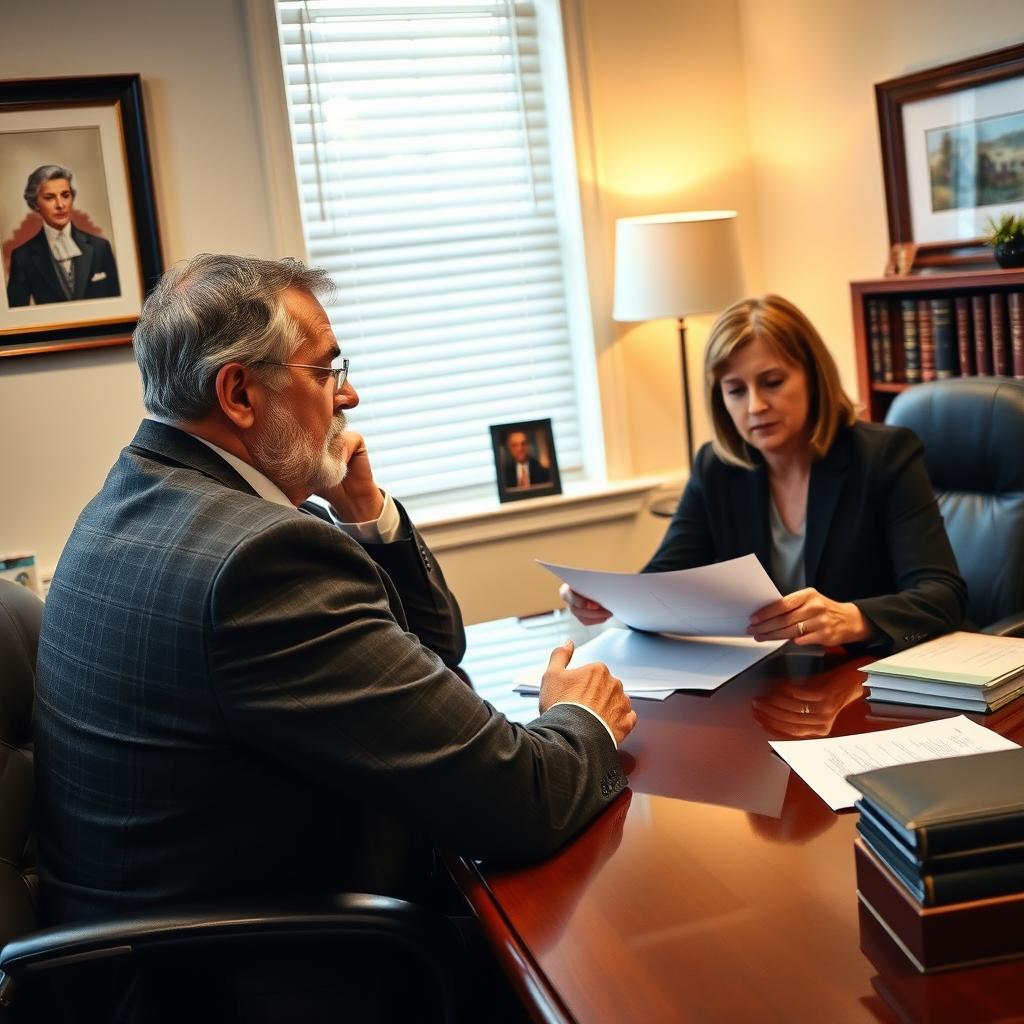
Equitable Distribution Lawyer Fluvanna County, VA
Equitable distribution is the process by which a Virginia court divides marital property in a divorce. In Fluvanna County, that process takes place in the Fluvanna County Circuit Court, located at 72 Main Street in Palmyra. Under Va. Code § 20‑107.3, Virginia uses an equitable—not equal—distribution framework. The judge considers eleven statutory factors to reach a fair division. Separate property brought into the marriage or received as a gift or inheritance is generally excluded. Mr. Sris and the firm’s Of Counsel attorneys represent individuals in equitable distribution matters across Fluvanna County, including Palmyra, Fork Union, and Lake Monticello. For a consultation about your property division case, call (888) 437‑7747. Law Offices Of SRIS, P.C. – Advocacy Without Borders.
What Equitable Distribution Means in Fluvanna County
Virginia is an equitable distribution state, not a community‑property state. That means the court does not automatically split everything fifty‑fifty. Instead, it classifies assets as marital, separate, or hybrid, values them, and then distributes the marital estate in a way that is fair under the specific facts of the case. The Fluvanna County Circuit Court has exclusive jurisdiction over all divorce and property division matters. The process applies to homes, retirement accounts, bank accounts, vehicles, business interests, and debts accumulated during the marriage. Real estate and closely held businesses often require professional valuation when the parties disagree on worth.
The court weighs eleven factors: each spouse’s monetary and non‑monetary contributions to the marriage, the duration of the marriage, the age and health of each party, the circumstances that led to the divorce, how and when the property was acquired, debts, the liquid or non‑liquid character of the assets, tax consequences, and any other factor the court considers relevant. Fluvanna County judges apply these factors to the particular circumstances presented. Because classification errors can ripple through every subsequent step—valuation, distribution, and tax treatment—careful attention to the record is important. A marital settlement agreement signed by both spouses can resolve all property issues outside court and often eliminates the need for an evidentiary hearing.
How Mr. Sris and the Firm’s Of Counsel Attorneys Handle Equitable Distribution Cases
Every equitable distribution case starts with assembling a complete picture of the marital estate. Mr. Sris and the firm’s Of Counsel attorneys work to identify and classify all assets and debts. When business interests, professional practices, or complex compensation structures are involved, the firm engages forensic accountants and valuation attorneys to support the record. The goal is to present the court—or the other side—with a well‑supported picture of the finances so that settlement discussions can proceed on solid ground.
Many Fluvanna County equitable distribution matters resolve through negotiation and a written property settlement agreement. When agreement fails, the matter proceeds to trial in the Circuit Court. Mr. Sris and the firm’s Of Counsel attorneys have experience presenting property‑division evidence across Virginia, including in rural counties where the court’s approach may differ from urban dockets. The firm helps clients understand how the statutory factors will likely apply to their specific facts and works to achieve a resolution that reflects the contributions made during the marriage. Throughout the process, the focus is on clear communication and informed decision‑making.
About Mr. Sris and the Firm’s Of Counsel Attorneys
Mr. Sris is the Owner and Founder of Law Offices Of SRIS, P.C. He is a former prosecutor who founded the firm in 1997 and has practiced family law across Virginia, Maryland, the District of Columbia, New Jersey, and New York for nearly three decades. Mr. Sris testified before the Virginia House Courts of Justice Committee in support of 2019 HB 635 (chief patron Del. David Bulova), a bill that revised the equitable distribution statute’s retirement‑plan provisions. His understanding of property‑division law is grounded in both courtroom advocacy and legislative process.
The firm’s Of Counsel attorneys bring a range of family‑law and litigation experience to Fluvanna County matters. Each Of Counsel attorney is an independent practitioner who contracts directly with the firm, and several have unique backgrounds—including former law‑enforcement service and extensive trial work—that strengthen the team’s ability to analyze evidence, challenge valuations, and develop case strategy. Together, Mr. Sris and the firm’s Of Counsel attorneys represent clients in equitable distribution proceedings throughout the Fluvanna County Circuit Court.
Frequently Asked Questions
What is the difference between equitable distribution and community property?
In an equitable distribution state like Virginia, marital property is divided fairly based on statutory factors, while community property states generally require an equal 50‑50 split of community assets. Virginia’s approach, codified at Va. Code § 20‑107.3, allows the judge to consider the parties’ contributions, the length of the marriage, and other circumstances that make a rigid split unfair. Separate property—assets owned before marriage or received as a gift or inheritance—stays with the owning spouse. Fluvanna County cases follow exactly the same framework.
Does marital misconduct affect equitable distribution in Fluvanna County?
Virginia law permits the court to consider the circumstances and factors that contributed to the dissolution of the marriage, including fault, when deciding an equitable distribution award. Adultery, cruelty, or desertion may influence the division if the behavior had a direct economic impact on the family. Fluvanna County Circuit Court judges have discretion to weigh fault under the catch‑all factor, but the primary objective remains a fair distribution of property rather than punishment of one party. For a consultation about how misconduct may affect your specific situation, call (888) 437‑7747.
Can we agree on property division without going to court in Fluvanna County?
Yes, spouses may resolve all property issues by signing a comprehensive marital settlement agreement, which a Fluvanna County Circuit Court judge can incorporate into the final divorce decree without a contested hearing. A valid separation agreement—sometimes called a property settlement agreement—must be in writing and signed by both parties. It typically covers classification of assets and debts, division of real estate, retirement accounts, vehicles, and personal property. When both sides voluntarily agree, the court rarely disturbs the arrangement. Mr. Sris and the firm’s Of Counsel attorneys can help draft or review such an agreement. For guidance on preparing a Florida County separation agreement, call (888) 437‑7747.
What assets are subject to equitable distribution in Virginia?
All property acquired during the marriage by either spouse, unless received as a gift from a third party or by inheritance, is generally classified as marital property subject to equitable distribution. This includes real estate purchased during the marriage, retirement benefits accrued during the marriage, bank accounts, investment portfolios, vehicles, business interests, and debts accumulated during the marriage. Separate property—assets owned before the marriage or obtained through gift or inheritance—stays with the original owner. The classification process is often the most contested step in a Fluvanna County equitable distribution case. For help determining which assets may be marital in your situation, contact Law Offices Of SRIS, P.C. at (888) 437‑7747.
How does the court divide a family business in Fluvanna County?
A family business or professional practice acquired during the marriage is marital property to the extent its value grew during the marriage, and the court may either award the business to one spouse and offset the value with other assets or order a buy‑out. The court usually relies on a forensic accountant’s valuation to determine fair market value. Fluvanna County judges consider the business’s cash flow, goodwill, assets, and debts. Because dividing an operating business can be disruptive, many couples negotiate an agreement that keeps the business intact while compensating the other spouse through assets of equivalent value. To discuss the details of your business‑division matter, contact Law Offices Of SRIS, P.C. at (888) 437‑7747.
Do I need a lawyer for equitable distribution in Fluvanna County?
Virginia law does not require you to have an attorney, but equitable distribution involves financial disclosure, asset classification, valuation, and permanent property division—decisions that are difficult to undo later. A lawyer can help identify hidden assets, challenge inaccurate valuations, and advise whether a proposed settlement is reasonable under the statutory factors. The Fluvanna County Circuit Court expects parties proceeding pro se to follow the same procedural rules as attorneys. For a consultation about your property‑division matter, call Mr. Sris and the firm’s Of Counsel attorneys at (888) 437‑7747.
Internal Links
Family Law Attorney Fairfax County, VA • Family Law Lawyer Prince William County, VA • Family Law Attorney Manassas, VA • Family Law Lawyer Falls Church, VA
Virginia Family Law Resources
Review the Virginia equitable distribution statute: Va. Code § 20‑107.3. Find court information for the Fluvanna County Circuit Court: Fluvanna County Circuit Court. Access the Virginia courts system: Virginia’s Judicial System.
Attorney advertising. Prior results do not guarantee a similar outcome. Results may vary.
Case results depend on a variety of factors unique to each case.