
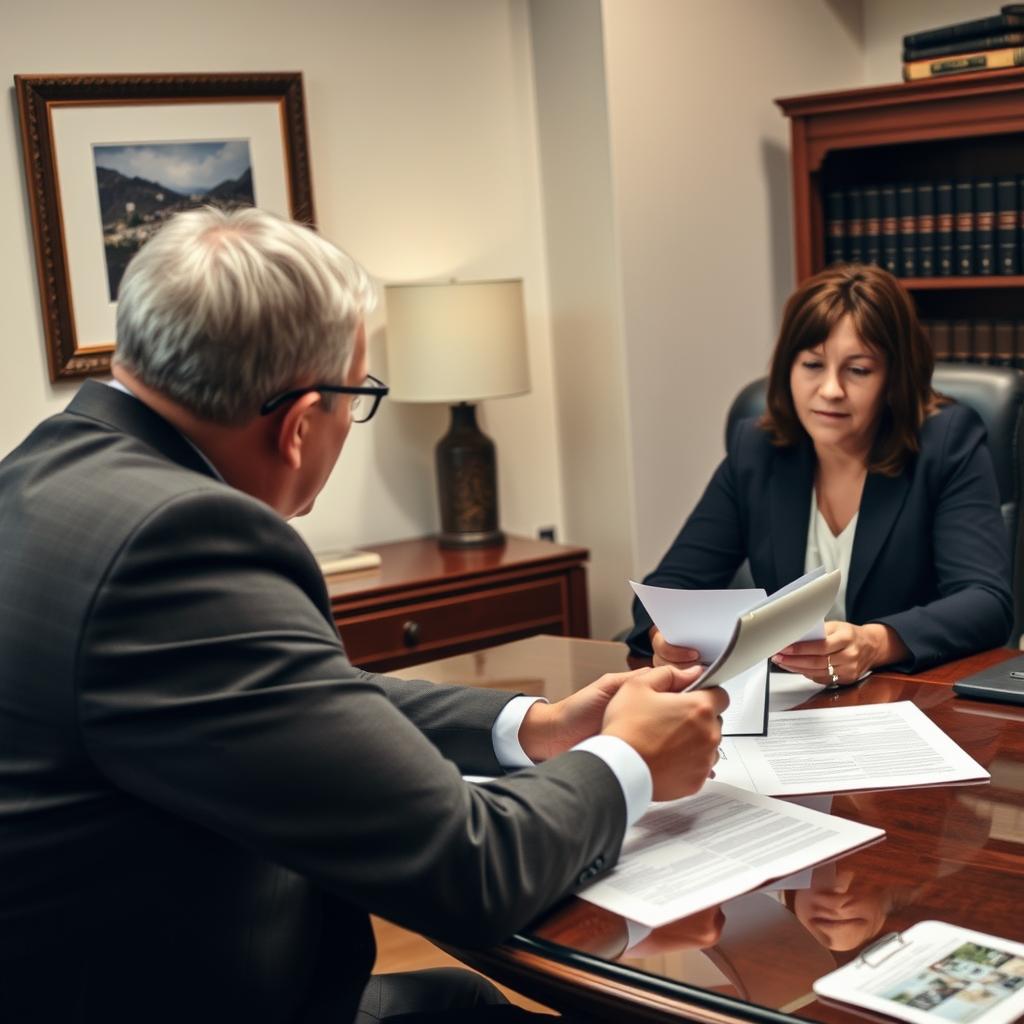
Domesticating Foreign Divorce Decree Lawyer Roanoke County, VA
If you obtained a divorce outside the United States and need it recognized in Virginia,
Law Offices Of SRIS, P.C. can help. Led by former prosecutor Mr. Sris,
the firm’s Of Counsel attorneys represent clients throughout Roanoke County —
including Salem, Vinton, Cave Spring, Hollins, and Catawba —
in domesticating foreign divorce decrees so that your marital status, property rights,
and custody or support obligations are enforceable under Virginia law.
A foreign divorce decree is not automatically binding in the Commonwealth;
you must ask a Virginia court to give it the same legal effect as a Virginia decree.
We work to present the decree properly and satisfy the court that it merits recognition.
Reach our firm at (888) 437-7747 to request a consultation.
Law Offices Of SRIS, P.C. – Advocacy Without Borders.
What Domesticating a Foreign Divorce Decree Means in Roanoke County
Domesticating a foreign divorce decree is the legal process by which a Virginia court
formally recognizes a divorce judgment issued in another country.
Once domesticated, the foreign decree carries the same weight as a Virginia divorce decree
— for remarriage, property division, spousal support, and enforcement of any custody
or child-support provisions contained in the foreign order.
In Roanoke County, the Circuit Court — located at 305 East Main Street, Salem, VA 24153 —
has jurisdiction over divorce and equitable distribution proceedings.
Because foreign decrees involve cross-border legal principles,
the court examines the fairness of the underlying proceeding,
whether both parties had proper notice, and whether the foreign court exercised
jurisdiction consistent with Virginia public policy.
The Juvenile and Domestic Relations District Court may become involved
if standalone custody or support issues require attention.
Virginia applies principles of comity — a legal doctrine under which courts
recognize the judgments of other sovereigns as a matter of courtesy,
provided the foreign proceeding was fair and the decree does not violate
fundamental Virginia policies. An attorney who understands these principles
can help you anticipate the documentation and evidence the court will expect
and present your case in the most persuasive light.
How Mr. Sris and the Firm’s Of Counsel Attorneys Handle Domesticating Foreign Divorce Decrees
The firm’s approach begins with a careful review of the foreign divorce decree
and the court record from the country where the divorce was granted.
We confirm that the decree is final under the foreign country’s law
and that the foreign court had jurisdiction over both parties.
Then we prepare a petition, sometimes called a complaint,
filed in the Roanoke County Circuit Court, asking the court to recognize
and domesticate the foreign judgment.
We work to authenticate the foreign documents through the procedures
the other country requires — which may involve an apostille under the
Hague Convention of 1961 or consular legalization, depending on the country.
If the original decree is not in English, a certified translation must accompany
the filing. The court will require evidence that the spouse who obtained
the foreign divorce complied with the foreign court’s procedural rules
and that the divorce was not obtained through fraud or coercion.
We present that evidence in a manner that addresses the court’s concerns.
Once the decree is domesticated, we assist clients in modifying or enforcing
provisions that require further action in Virginia, such as spousal support
arrears or custody orders. The firm also advises on related matters,
such as remarriage eligibility and how a domesticated foreign decree
affects property division under Virginia’s equitable-distribution framework.
About Mr. Sris and the Firm’s Of Counsel Attorneys
Mr. Sris, Owner and Founder of Law Offices Of SRIS, P.C.,
is a former prosecutor who has practiced since 1997.
He testified before the Virginia House Courts of Justice Committee
in support of 2019 HB 635 (chief patron Del. David Bulova).
Mr. Sris is admitted in Virginia, Maryland, the District of Columbia,
New Jersey, and New York, and he draws on extensive multi-state experience
when handling cross-border family law matters.
The firm’s Of Counsel attorneys, including practitioners with backgrounds
in family law, criminal defense, and civil litigation,
share a commitment to careful preparation and client-focused advocacy.
Together, Mr. Sris and the firm’s Of Counsel attorneys
bring extensive combined legal experience to each matter.
Results may vary. in your case.
Our Shenandoah location serves clients throughout Roanoke County.
We handle filings at the Roanoke County Circuit Court
and appear in both the Circuit Court and the Juvenile and Domestic Relations District Court
when a domestication matter involves custody or support issues.
Frequently Asked Questions
What is domesticating a foreign divorce decree in Virginia?
Domesticating a foreign divorce decree is the legal proceeding
through which a Virginia court formally recognizes a divorce judgment
issued in another country.
Because a foreign decree does not automatically carry legal effect
inside Virginia, the party seeking recognition must file a petition
in the Circuit Court. The court reviews the foreign proceeding
to ensure it was fair and that the decree does not conflict
with fundamental Virginia public policy. Once domesticated,
the decree is enforceable just like a Virginia divorce judgment.
Does Virginia automatically recognize a foreign divorce decree?
Virginia does not automatically give legal effect
to a divorce decree from another country.
The Commonwealth follows the doctrine of comity, under which courts
may choose to respect foreign judgments where the foreign proceeding
met basic standards of fairness and due process.
A judge will not enforce a decree that was obtained by fraud,
that denied one party a meaningful opportunity to be heard,
or that violates a strongly held Virginia policy.
An experienced attorney can help you gather the evidence
the court needs to make the comity determination
and increase the likelihood the decree is recognized.
Which court handles domestication of a foreign divorce decree in Roanoke County?
The Roanoke County Circuit Court, located at
305 East Main Street, Salem, VA 24153, has jurisdiction over
all divorce proceedings, including petitions to domesticate
a foreign divorce decree.
If the foreign decree includes custody or child-support provisions
that need independent enforcement or modification,
the Roanoke County Juvenile and Domestic Relations District Court
may also become involved. Mr. Sris and the firm’s Of Counsel attorneys
appear regularly in both courts and understand their local procedures.
Do I need a lawyer to domesticate a foreign divorce decree in Roanoke County?
You are not required to hire a lawyer to file a domestication petition,
but the process involves complex cross-border legal issues.
A lawyer can confirm the foreign decree meets Virginia’s recognition standards,
ensure all required documentation — such as authenticated copies,
certified translations, and apostilles — is correctly prepared,
and present legal arguments supporting comity.
Because a domestication proceeding can affect property rights,
remarriage eligibility, and child custody,
many people find that working with an attorney minimizes unforeseen problems.
How do I start the process of domesticating a foreign divorce decree?
The first step is to schedule a consultation with a lawyer
who can evaluate your foreign decree and explain what the Roanoke County Circuit Court
will require.
You will need a certified copy of the foreign judgment,
a certified translation if the decree is not in English,
and evidence that the divorce is final under the country’s law.
The attorney then prepares and files a petition —
sometimes with a supporting affidavit — setting out the grounds
on which the court should grant comity.
Timelines vary depending on the court’s calendar;
your attorney can help you plan accordingly.
Related pages:
Family Law Practice in Roanoke County |
Divorce Lawyer in Roanoke County |
Child Custody Lawyer in Roanoke County |
Family Law Practice Across Virginia
Official legal resources:
Virginia Code Title 20 — Domestic Relations |
Roanoke County Circuit Court
Attorney advertising. Prior results do not guarantee a similar
outcome.
Case results depend on a variety of factors unique to each case.
Attorney advertising. Prior results do not guarantee a similar outcome.