
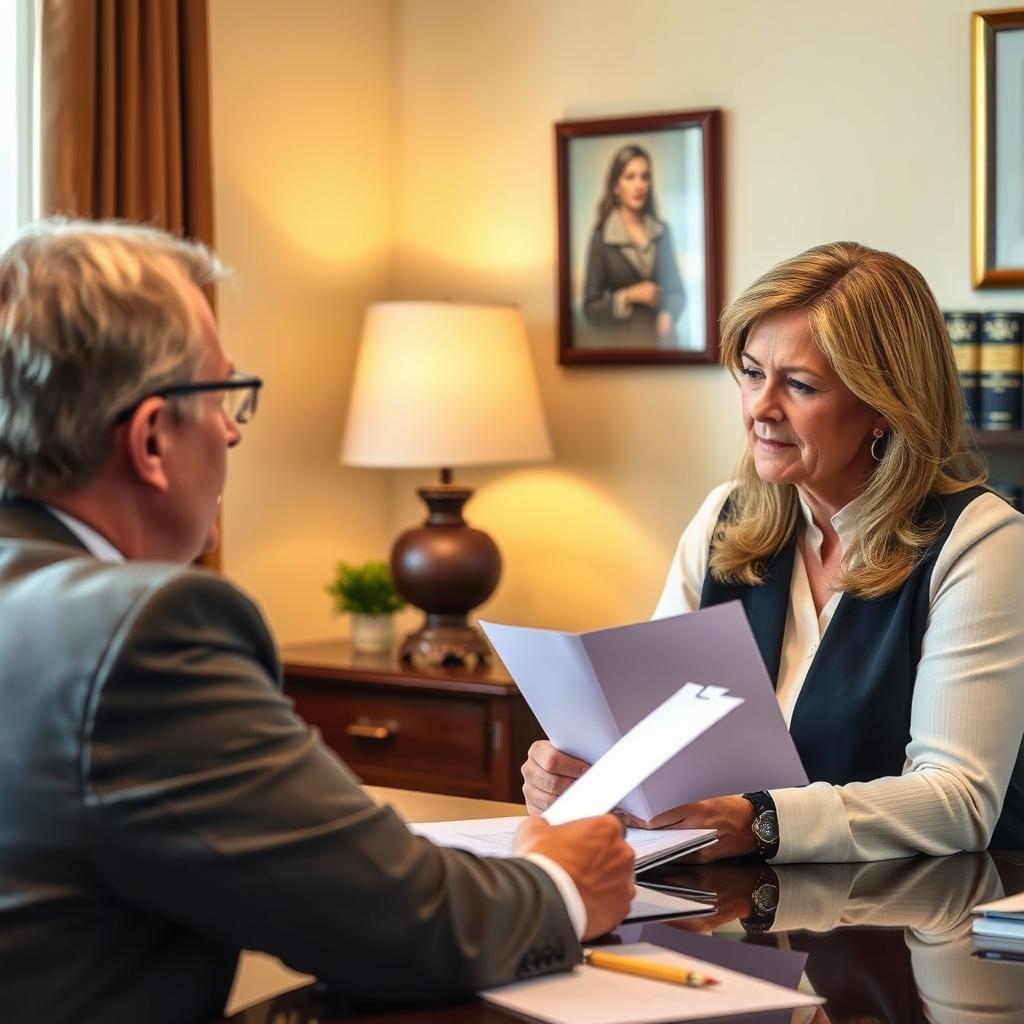
Domesticating Foreign Divorce Decree Lawyer Rappahannock County, VA
If you obtained a divorce outside the United States and now need that decree recognized and enforced in Virginia, you are likely seeking to domesticate a foreign divorce decree. For residents of Rappahannock County—including the communities of Washington, Sperryville, and Flint Hill—this process involves filing a petition with the Rappahannock County Circuit Court, which has exclusive original jurisdiction over divorce matters under Virginia Code § 20‑96. Domestication allows the court to give effect to the foreign judgment for purposes of property division, spousal support, or other relief, as long as the decree meets Virginia’s comity standards. Law Offices Of SRIS, P.C. assists clients throughout the Twentieth Judicial District. To discuss your situation, reach the firm at (888) 437‑7747. Law Offices Of SRIS, P.C. – Advocacy Without Borders.
How a Foreign Divorce Decree Is Domesticated in Rappahannock County, Virginia
Under Virginia law, a divorce decree issued by a court of a foreign country is not automatically binding here. The Rappahannock County Circuit Court—located at 250 Gay Street, Suite 1, Washington, VA 22747—will recognize the decree under principles of comity if it was rendered by a court that had jurisdiction over the parties and the subject matter, the foreign proceeding was fundamentally fair, and the judgment does not offend Virginia public policy. The party seeking domestication must file a complaint in the Circuit Court, accompanied by a certified copy of the foreign decree and, typically, a translation if the original is not in English. Virginia Code § 20‑97 also requires that one of the parties be a resident and domiciliary of the Commonwealth for at least six months before the suit is commenced, though the exact procedural requirements can vary depending on the nature of the relief sought.
Domestication does not re‑litigate the underlying divorce; rather, it focuses on the validity and authenticity of the foreign judgment. Because Rappahannock County is a rural jurisdiction sharing judicial resources with Fauquier and Loudoun Counties, familiarity with local court practice is valuable. Mr. Sris and the firm’s Of Counsel attorneys can guide you through the necessary filings, such as presenting the decree with appropriate authentication—often an apostille under the 1961 Hague Apostille Convention if the issuing country is a party. If the country is not a party, other forms of legalization may be needed. The firm’s Fairfax location serves clients at the Rappahannock County courts; contact us to schedule a consultation.
Frequently Asked Questions
What does it mean to domesticate a foreign divorce decree in Virginia?
Domestication means obtaining a Virginia court order that recognizes a foreign divorce decree and treats it as enforceable in Virginia. The Rappahannock County Circuit Court will examine whether the foreign court had jurisdiction and whether the decree meets basic fairness and public‑policy standards under Virginia law, rather than rehearing the marital dissolution itself. Once domesticated, the decree can be used to address property, support, or other ancillary matters within the Commonwealth.
Do I need a lawyer to domesticate a foreign divorce decree in Rappahannock County?
While you are not legally required to have an attorney, the domestication process involves procedural and evidentiary requirements that can be challenging without legal guidance. An experienced attorney can assist with obtaining the correct certified copy, arranging translations, and presenting the decree to the Rappahannock County Circuit Court in a manner that satisfies Virginia’s comity analysis. Law Offices Of SRIS, P.C. represents clients through these steps.
How does the Rappahannock County Circuit Court handle a foreign divorce decree?
The Circuit Court reviews the foreign decree for jurisdiction, procedural fairness, and consistency with Virginia public policy before deciding whether to give it full faith and credit through comity. The judge may request additional documentation, such as proof that the foreign court’s proceedings afforded due process. Because the court schedules hearings on its own calendar, the timeline varies; the firm’s familiarity with local practice helps clients prepare for what the judge may require.
What documents are required to domesticate a foreign divorce decree in Virginia?
You will generally need a certified copy of the foreign divorce decree, an official English translation if the original is in another language, and proof that the issuing court had jurisdiction over the parties. Depending on the country of origin, an apostille or consular legalization may be needed. The complaint filed with the Rappahannock County Circuit Court must cite the relevant Virginia statutes, typically Va. Code § 20‑91 and § 20‑96, and include a request that the court recognize the decree.
Is an apostille required for a foreign divorce decree?
An apostille is a common method of authenticating a public document under the Hague Apostille Convention, but it is not an absolute prerequisite under the lex loci celebrationis doctrine. Virginia courts generally recognize a marriage or divorce decree that was validly entered in the country of issuance; an apostille simply verifies the signature and seal. If the issuing country is not a party to the Hague Convention, alternative authentication methods are available. The firm’s attorneys can advise on the appropriate form of proof.
Can I domesticate a divorce decree from a non‑Hague country?
Yes, a divorce decree from a non‑Hague country can be domesticated in Virginia, though the authentication process may differ. Instead of an apostille, the decree may need to be legalized through the chain of certifications ending at the U.S. Consulate in that country. Once properly authenticated, the Rappahannock County Circuit Court can evaluate the decree under the same comity standards applied to Hague-country judgments.
What if the foreign decree includes child custody or support orders?
A foreign divorce decree that includes child custody or support provisions may be domesticated, but note that India is not a signatory to the 1980 Hague Convention on Civil Aspects of International Child Abduction. Custody and support orders are subject to separate analysis under Virginia law. The Rappahannock County Juvenile and Domestic Relations Court may be involved in registering or enforcing a support order, while custody must always be determined according to the trusted‑interests standard under Va. Code § 20‑124.3. Mr. Sris and the firm’s Of Counsel attorneys can explain the options.
How long does the domestication process take?
The overall timeline depends on the court’s calendar, the completeness of the documentation, and whether any objections are filed. Once all required materials are submitted, the Rappahannock County Circuit Court will schedule a hearing at its discretion. While uncomplicated cases may move forward in a matter of months, contested or document‑intensive matters can take longer. The firm works to present a complete and well‑organized petition to help reduce unnecessary delays.
What happens after the foreign divorce decree is domesticated?
Once the Rappahannock County Circuit Court enters an order domesticating the foreign decree, that decree has the same force and effect as a divorce granted in Virginia. The parties can then use the domesticated decree to enforce property division, spousal support, or other obligations in Virginia. The order can also be recorded in the local court records, providing an official basis for future proceedings or transactions.
How can I start the domestication process in Rappahannock County?
Begin by gathering the certified foreign decree and any related court orders, then consult with an attorney to evaluate the specific jurisdictional and evidentiary requirements. The complaint is filed with the Rappahannock County Circuit Court, and the court will set a timetable thereafter. To discuss the details of your matter, reach Law Offices Of SRIS, P.C. at (888) 437‑7747.
Does the firm handle domestication of divorce decrees from India?
Yes, the firm assists clients with domesticating divorce decrees from India, including those obtained under the Hindu Marriage Act or the Special Marriage Act, and is familiar with the authentication steps required. Mr. Sris testified before the Virginia House Courts of Justice Committee in support of 2019 HB 635 (chief patron Del. David Bulova), reflecting the firm’s engagement with Virginia family law. Dual‑citation of Indian statutes—for example, Section 13B of the Hindu Marriage Act, 1955—is used where applicable.
About Mr. Sris and the Firm’s Of Counsel Attorneys
Mr. Sris, Owner and Founder of Law Offices Of SRIS, P.C., founded the firm in 1997 and is admitted to practice in Virginia, Maryland, the District of Columbia, New Jersey, and New York. He testified before the Virginia House Courts of Justice Committee in support of 2019 HB 635 (chief patron Del. David Bulova). The firm’s Of Counsel attorneys work alongside Mr. Sris on family law matters, including the domestication of foreign divorce decrees. Mr. Sris and the firm’s Of Counsel attorneys bring extensive combined legal experience. Results may vary. The firm’s Fairfax location serves clients in Rappahannock County and throughout Northern Virginia. To schedule a consultation, call (888) 437‑7747.
See also: Family Law Attorney Fairfax County | Family Law Attorney Fairfax (City) | Family Law Attorney Falls Church | Family Law Attorney Prince William County | Family Law Attorney Manassas
Primary authority: Virginia Code Title 20 | Rappahannock County Circuit Court | Virginia Judicial System
Attorney advertising. Prior results do not guarantee a similar outcome.
Case results depend on a variety of factors unique to each case.