
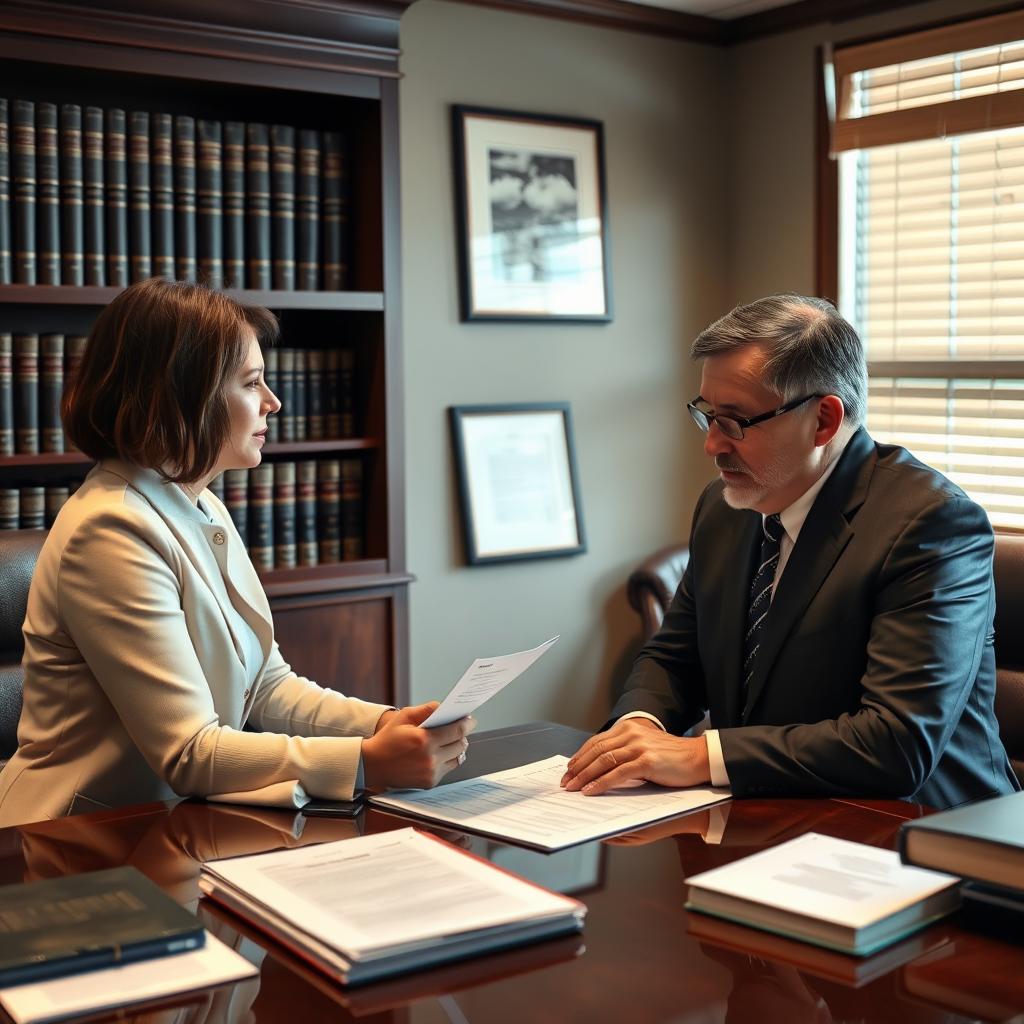
Domesticating Foreign Divorce Decree Lawyer Chesterfield County, VA
If you ended a marriage abroad and now need that foreign divorce recognized in Virginia, the domestication process can feel uncertain. In Chesterfield County, a foreign divorce decree is not automatically enforceable—you may need to petition the Chesterfield County Circuit Court to domesticate the judgment. Law Offices Of SRIS, P.C. represents clients in Chesterfield County and across Virginia in domesticating foreign divorce decrees. Mr. Sris and the firm’s Of Counsel attorneys understand the evidentiary requirements and procedural steps that Virginia courts expect when a decree originates outside the United States. Whether you plan to remarry, resolve property issues, or simply want a Virginia court to acknowledge your divorced status with a judicial order, we can help. Reach our location at (888) 437-7747 to schedule a consultation. By appointment only. Law Offices Of SRIS, P.C. – Advocacy Without Borders.
What Domesticating a Foreign Divorce Decree Means in Chesterfield County
When a couple divorces in another country, the decree may not automatically have legal force in Virginia. Under the doctrine of comity, Virginia courts generally recognize foreign divorce judgments, but a party often files a petition for domestication—sometimes called registration or recognition—in the local Circuit Court to obtain an enforceable Virginia court order. In Chesterfield County, that petition is heard before the Chesterfield County Circuit Court, located at 9500 Courthouse Road, Chesterfield, VA 23832. Once domesticated, the foreign decree carries the same weight as a Virginia divorce: it settles marital status, can be used to enforce property division or spousal support, and removes any cloud on the right to remarry.
Chesterfield County is part of Virginia’s Twelfth Judicial District, a suburban community that includes Midlothian, Chester, Colonial Heights area, Bon Air, Brandermill, and Moseley. Many residents have international ties and may possess divorce documents issued by courts in India, the Philippines, South Korea, or European countries. The Circuit Court handles all divorce and equitable distribution matters, while the Chesterfield County Juvenile & Domestic Relations District Court addresses custody, visitation, child support, and protective orders. Because a foreign decree may combine all of these issues, a thorough review of the original judgment is necessary to determine whether separate proceedings are needed for custody or support. Law Offices Of SRIS, P.C. Evaluates both the domestic steps and any interplay with international treaties, such as the 1961 Hague Apostille Convention, which can simplify the authentication of official documents from contracting states.
How Mr. Sris and the Firm’s Of Counsel Attorneys Handle Domesticating Foreign Divorce Decree Cases
Domesticating a foreign divorce decree is a civil proceeding, not a contested divorce filing. The core task is presenting sufficient evidence to the Chesterfield County Circuit Court that the foreign judgment is valid and should be recognized. Mr. Sris and the firm’s Of Counsel attorneys begin by reviewing the original decree and the foreign court’s jurisdictional basis. If the decree is in a language other than English, a certified translation must be procured. The firm then prepares a petition for domestication, citing applicable Virginia statutory and common-law authority, and files it with the Circuit Court.
A party seeking domestication must satisfy Virginia’s residency and jurisdictional requirements. Under Va. Code § 20-97, at least one party must have been a bona fide resident and domiciliary of Virginia for at least six months before commencing the suit. Service of the petition on the other party may be accomplished by personal service, by acceptance of service, or, when the other party cannot be located, by alternative methods allowed under Virginia law, such as publication. After service, if the matter is uncontested, the court may enter an order recognizing the foreign decree without a formal evidentiary hearing. If the other party opposes recognition, the court will hold a hearing. Mr. Sris and the firm’s Of Counsel attorneys present the certified documents, legal argument, and any necessary witness testimony to establish the decree’s validity under Virginia’s comity standards.
About Mr. Sris and the Firm’s Of Counsel Attorneys
Mr. Sris, Owner and Founder of Law Offices Of SRIS, P.C., has practiced law since 1997 and is admitted in Virginia, Maryland, the District of Columbia, New Jersey, and New York. As a former prosecutor, he brings a detail-oriented approach to every family law matter, including the procedural precision required when domesticating a foreign judgment. Mr. Sris testified before the Virginia House Courts of Justice Committee in support of 2019 HB 635 (chief patron Del. David Bulova). He works closely with the firm’s Of Counsel attorneys, who bring their own extensive experience in Virginia family law and civil procedure. Together, they ensure that a domestication petition is properly prepared, that all documentary evidence meets Virginia evidentiary standards, and that any objections are addressed promptly. Because the firm handles matters in multiple states, it is well positioned to assist clients whose divorce documents come from international jurisdictions or who need the domestication order for use in other U.S. States.
Frequently Asked Questions
What does it mean to domesticate a foreign divorce decree in Virginia?
Domesticating a foreign divorce decree means obtaining a Virginia court order that recognizes and gives legal effect to a divorce judgment issued by a court outside the United States. Once domesticated, the decree can be enforced in Virginia courts for property division, spousal support, or remarriage. The process typically involves filing a petition in the local Circuit Court, serving the other party, and presenting evidence that the foreign judgment is authentic and entitled to comity. Without a domestication order, a foreign divorce may not be accepted for purposes such as changing your marital status on official records.
Do I need to domesticate a foreign divorce decree if I plan to remarry in Chesterfield County?
Yes, domesticating your foreign divorce decree is generally necessary before remarrying in Virginia. The Virginia Department of Health requires a certified copy of the final divorce decree before issuing a marriage license. If your divorce was granted by a foreign court, the clerk may not accept the document unless a Virginia Circuit Court has entered a domestication order. Having the decree domesticated ensures there is no obstacle when you apply for a marriage license and eliminates uncertainty about the validity of your past divorce.
How long does it take to domesticate a foreign divorce decree in Chesterfield County?
The timeline varies depending on whether the petition is contested and on the court’s calendar, but an uncontested domestication can often be resolved within a few months. If both parties agree and the documentation is complete, the Chesterfield County Circuit Court may enter the recognition order relatively quickly. Contested matters or issues with service of process can extend the timeline. Mr. Sris and the firm’s Of Counsel attorneys can provide a realistic estimate after reviewing your specific situation and the foreign decree.
What if the foreign divorce decree also addresses child custody or support?
A foreign divorce decree that includes custody or support provisions may require separate proceedings in the Chesterfield County Juvenile & Domestic Relations District Court. While the Circuit Court can recognize the marital dissolution and property disposition, custody, visitation, and child support matters fall under the J&DR Court’s jurisdiction. The firm evaluates the entire decree to determine whether a domestication petition in the Circuit Court is sufficient or whether ancillary custody and support proceedings are also advisable to make those provisions enforceable in Virginia. India is not a signatory to the 1980 Hague Convention on Civil Aspects of International Child Abduction.
Can a foreign divorce decree be domesticated if my former spouse is outside Virginia or cannot be located?
Yes, the domestication petition can be filed in Chesterfield County Circuit Court even if the other spouse lives abroad, provided the petitioner meets Virginia’s six-month residency requirement. Service of process on a party outside the United States may be accomplished through the Hague Service Convention (if the foreign country is a signatory) or, when that is not feasible, through alternative service methods such as publication authorized by the court. The firm handles service issues thoroughly to ensure the court acquires personal jurisdiction or, where appropriate, that the court proceeds based on the constructive service permitted under Virginia law.
How does an attorney help with the domestication process?
An experienced family law attorney guides you through every step, from gathering the required certified documents and translations to drafting the petition, serving the other party, and presenting the case to the court. Errors in documentation or service can delay the proceeding for months. Mr. Sris and the firm’s Of Counsel attorneys handle all procedural requirements, interface with the clerk’s office at 9500 Courthouse Road, and represent you at any hearing. This allows you to move forward with confidence that the domestication is done correctly.
Internal resources and nearby service areas: Learn more about our family law services in Henrico County, Hanover County, and Fairfax County. Mr. Sris and the firm’s Of Counsel attorneys appear regularly in the Twelfth Judicial District and surrounding counties.
Official Virginia legal resources:
- Virginia Code Title 20 – Domestic Relations
- Virginia’s Judicial System (vacourts.gov)
- Chesterfield County Circuit Court
Attorney advertising. Prior results do not guarantee a similar outcome. Results may vary.
? 1997-2026 Law Offices Of SRIS, P.C.
Case results depend on a variety of factors unique to each case.