
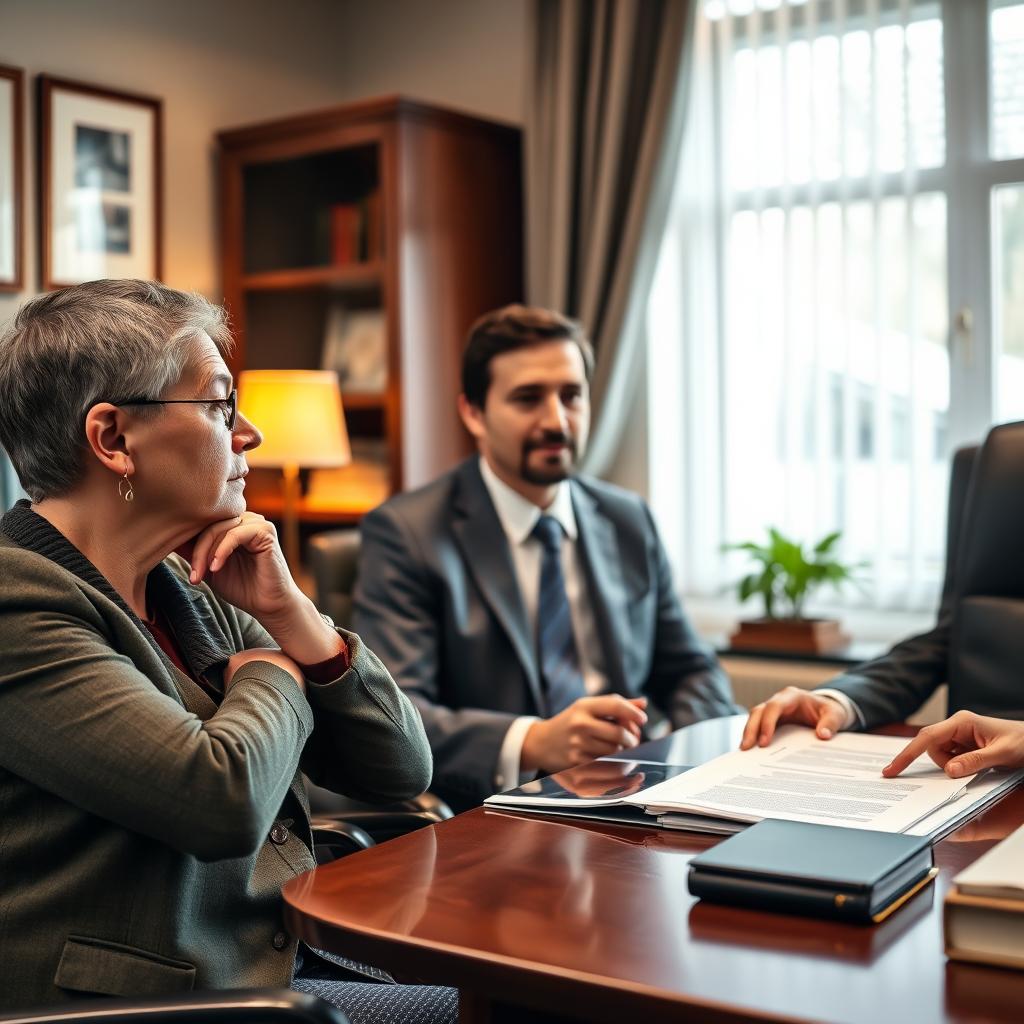
Alimony Modification Lawyer Prince George County, VA
Alimony—spousal support—can become a point of contention long after a divorce decree is final. A change in circumstances may justify a modification of the alimony obligation. In Prince George County, these matters are heard in the courts that issued the original support order, and the legal standard requires a showing of a material change in circumstances that was not foreseeable at the time of the original award. For a party seeking to adjust the amount or duration of spousal support, the guidance of an attorney familiar with Virginia’s statutory factors and local court procedures is essential. Mr. Sris, Owner and Founder of Law Offices Of SRIS, P.C., and his Of Counsel team bring extensive combined legal experience to alimony modification cases in Prince George County. Reach Law Offices Of SRIS, P.C. at (888) 437-7747 to request a consultation. Law Offices Of SRIS, P.C. – Advocacy Without Borders.
What Alimony Modification Means in Prince George County
Alimony modification is the process by which either the payor or the payee seeks a court order altering an existing spousal support obligation. Under Virginia law, the party requesting a modification must demonstrate a material change in circumstances that was not reasonably contemplated at the time of the last support order. This standard applies whether the original support was established by a court after a contested hearing or by agreement of the parties incorporated into a final decree. The statute governing spousal support—Va. Code § 20-109—permits the court to modify, terminate, or set aside a support award upon clear proof of a change in circumstances.
In Prince George County, alimony modification petitions are typically filed in the Prince George County Circuit Court, which has jurisdiction over divorce and equitable distribution. The Prince George County Juvenile and Domestic Relations District Court handles standalone custody and child support matters; spousal support modification tied to a divorce decree is within the Circuit Court’s authority. The court considers the same 13 statutory factors listed in Va. Code § 20-107.1 when evaluating whether a modification is warranted. Common examples of a material change include a substantial and involuntary decrease in the payor’s income, a significant increase in the payee’s income, remarriage of the recipient, cohabitation in a relationship analogous to marriage, or a change in the health of either party that affects earning capacity. The party seeking the modification bears the burden of proving that the change justifies an adjustment.
How Mr. Sris and His Of Counsel Handle Alimony Modification Cases
When a client seeks to modify alimony, the first step is a careful evaluation of the factual and financial circumstances. Mr. Sris and his Of Counsel examine the original support order, the financial disclosures from the original proceeding, and the current income and expenses of both parties. If a material change appears to be present, the attorney prepares a motion or petition to modify spousal support and files it with the appropriate court. The motion must specify the facts that constitute the material change and the relief requested.
After filing, the matter proceeds through discovery, where each party may request financial documents, tax returns, pay stubs, and other relevant records. In many cases, Mr. Sris and his Of Counsel engage in negotiations with the opposing party or their attorney to reach an agreed modification that can be submitted to the court for entry as a consent order. If an agreement cannot be reached, the court schedules a hearing at which both sides present evidence and argument. At the hearing, the judge determines whether a material change has been proved and, if so, how the alimony obligation should be adjusted. Throughout the process, Mr. Sris and his Of Counsel work to protect their clients’ interests while complying with all procedural and evidentiary requirements of the Prince George County courts.
About Mr. Sris and His Of Counsel Team
Mr. Sris, Owner and Founder of Law Offices Of SRIS, P.C., is a former prosecutor who founded the firm in 1997. He is admitted to practice in Virginia, Maryland, the District of Columbia, New Jersey, and New York. Mr. Sris testified before the Virginia House Courts of Justice Committee in support of 2019 HB 635 (chief patron Del. David Bulova). His experience includes representing clients in a range of family law matters, including spousal support modification, divorce, equitable distribution, and child custody. Mr. Sris and his Of Counsel bring extensive combined legal experience to alimony modification cases in Prince George County. Mr. Sris and his Of Counsel have documented case results across all practice areas since 1997. Results may vary.
Frequently Asked Questions
Can I modify alimony if I lose my job in Virginia?
A significant involuntary reduction in income may support a petition to modify alimony if the change is material and was not foreseeable at the time of the original order. Virginia courts consider the payor’s ability to pay and the payee’s need for support. A job loss through no fault of the payor is a common ground for modification. The payor must prove that the loss is not temporary and that the existing obligation is no longer fair. An experienced attorney can help gather the necessary financial evidence and present the case to the court.
How does the court define a material change in circumstances?
A material change in circumstances is a change that is significant, not merely temporary, and was not contemplated by the parties or the court when the support award was originally set. The change must relate to the financial position of either party—such as a substantial increase or decrease in income, remarriage, cohabitation in a marriage-like relationship, or a change in health. The court examines the facts of each case individually. Minor fluctuations in income generally do not meet the threshold.
Does cohabitation of the recipient automatically end alimony in Virginia?
Cohabitation in a relationship analogous to marriage may serve as a basis to modify or terminate alimony, but it is not automatic. Under Virginia law, the payor must prove that the recipient has been habitually cohabiting with another person in a relationship analogous to marriage for one year or more. The court considers factors such as shared residence, the duration and nature of the relationship, and any financial interdependence. Proof of cohabitation can shift the burden to the recipient to show that support should continue. A thorough investigation and presentation of evidence are critical.
Where do I file an alimony modification petition in Prince George County?
Alimony modification petitions are filed in the same court that issued the original spousal support order—typically the Prince George County Circuit Court if the support was part of a divorce decree. The Circuit Court is located at 6601 Courts Drive, Prince George, VA 23875. The Juvenile and Domestic Relations District Court handles spousal support matters only when they are not connected to a divorce. An attorney can determine the correct court and ensure that all procedural requirements—including proper service and filing fees—are met.
Do I need a lawyer to modify alimony, or can I do it myself?
You are not required to have a lawyer, but alimony modification involves complex legal standards, financial documentation, and procedural rules that are most effectively handled by an attorney familiar with Virginia family law. An incorrectly drafted motion or a failure to present sufficient evidence can result in denial of the petition. An attorney can help you build a persuasive case, negotiate with the other party, and present evidence in court. To discuss the details of your matter, contact Law Offices Of SRIS, P.C. at (888) 437-7747.
How long does an alimony modification case take?
The timeline for an alimony modification case depends on factors such as court scheduling, the complexity of the issues, and whether the parties are able to reach an agreement. Cases that are resolved by consent order can move more quickly. Contested hearings may take longer depending on the court’s calendar. Mr. Sris and his Of Counsel work to move cases forward efficiently while ensuring that all necessary evidence is prepared. For a consultation about your specific matter, reach our firm at (888) 437-7747.
Related Family Law Resources:
Virginia Primary Legal Sources:
- Virginia Code Title 20 (Domestic Relations)
- Prince George County Circuit Court
- Virginia Court System
Attorney advertising. Prior results do not guarantee a similar outcome. Results may vary.
Case results depend on a variety of factors unique to each case.