
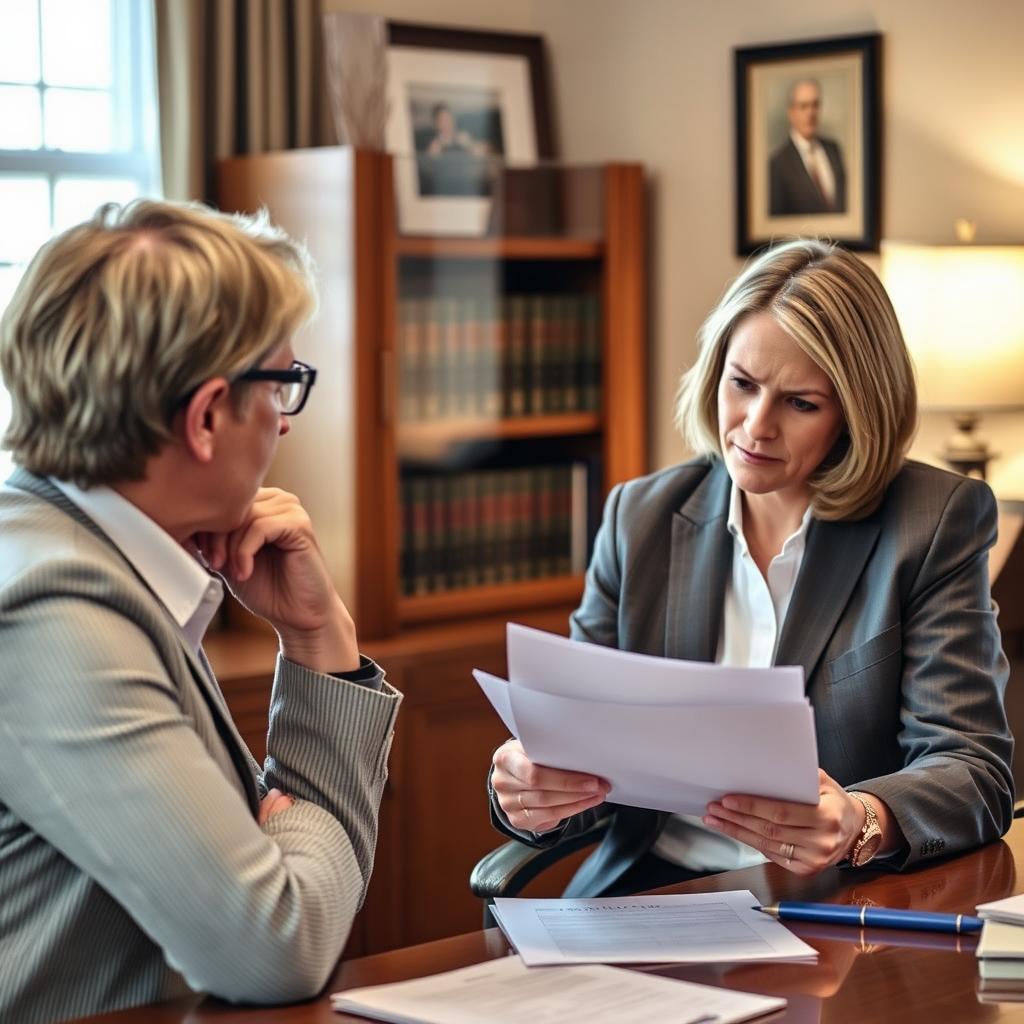
Alimony Modification Lawyer Fauquier County, VA
Susan had been receiving spousal support for three years after her divorce was finalized in the Fauquier County Circuit Court. The payments helped her transition back into the workforce while covering the mortgage on her Warrenton home. Then her former husband lost his long‑time job with a government contractor in northern Virginia and stopped making the payments. Susan needed the support modified—not necessarily an increase, but a court order that reflected the changed circumstances and could be enforced. She called Law Offices Of SRIS, P.C. at (888) 437-7747 to find out what her options were. Law Offices Of SRIS, P.C. – Advocacy Without Borders.
What Alimony Modification Means in Fauquier County
Alimony modification in Fauquier County is a request to the court that originally ordered spousal support to adjust the amount, duration, or terms of the obligation based on a material change in circumstances. Under Virginia law, the court retains ongoing authority to modify or vacate its own support orders, and the process is governed by the same statutory factors that controlled the original award—principally those listed in Va. Code § 20‑107.1.
In Fauquier County, spousal support orders are typically entered by the Circuit Court at 6 Court Street in Warrenton as part of a final divorce decree, though standalone support proceedings are also heard there. The court will consider modification petitions when one party can show a substantial change—such as a significant increase or decrease in either party’s income, a change in the recipient’s need for support, or the payor’s inability to continue paying at the existing level. The same thirteen factors that guided the initial determination of support are re‑weighed, and the judge has broad discretion to increase, decrease, or terminate the obligation.
Because Fauquier County is a rural‑exurban community with a significant commuter base, changes in federal and private‑sector employment often trigger modification motions. An experienced family‑law attorney can help frame the change of circumstances in a way the court will credit—and can help defend against a modification petition that is based on incomplete or misleading financial information.
How Mr. Sris and His Of Counsel Handle Alimony Modification Cases
Mr. Sris and his Of Counsel approach every alimony‑modification case by first examining whether the legal threshold—a material change of circumstances—has been met. Not every drop in income or increase in expenses will satisfy the court; the change must be substantial, unanticipated at the time of the original order, and not temporary. The team gathers financial records, tax returns, pay stubs, and other documentation to build a clear factual picture before a motion is ever filed.
Where the facts support a modification, the attorney drafts and files a motion in the Fauquier County Circuit Court, serves it on the opposing party, and sets the matter for a hearing. If the parties can agree on new terms before the hearing, a consent order is prepared and submitted to the court, which can resolve the matter without contested litigation. If agreement cannot be reached, the case proceeds to an evidentiary hearing where each side presents testimony and financial evidence. Mr. Sris and his Of Counsel prepare witnesses, cross‑examine the opposing party, and present argument grounded in the statutory framework of Va. Code § 20‑107.1.
About Mr. Sris and His Of Counsel Team
Mr. Sris, Owner and Founder of Law Offices Of SRIS, P.C., has practiced family law in Virginia since 1997. A former prosecutor, he brings extensive courtroom experience to each case, and he has testified before the Virginia House Courts of Justice Committee in support of 2019 HB 635 (chief patron Del. David Bulova). Mr. Sris is admitted in Virginia, Maryland, the District of Columbia, New Jersey, and New York. He works alongside a team of Of Counsel attorneys who bring additional depth in litigation, negotiation, and support‑enforcement matters.
Mr. Sris and his Of Counsel bring extensive combined legal experience. The team is familiar with the Fauquier County Circuit Court and its procedures, and they understand how local judges analyze the thirteen spousal‑support factors when deciding whether a modification is warranted. Clients receive individual case review and thorough preparation whether the matter is resolved by consent order or requires a contested hearing.
Frequently Asked Questions
What is alimony modification?
Alimony modification is a court proceeding that changes the amount, duration, or terms of an existing spousal‑support order when a substantial change in circumstances has occurred since the order was entered. Under Virginia law, the paying or receiving spouse may ask the court to increase, decrease, or terminate support. The court reviews the same factors it considered in the original order—income, earning capacity, needs, standard of living during the marriage, and others listed in Va. Code § 20‑107.1—to decide whether a modification is justified.
When can spousal support be modified in Virginia?
Spousal support may be modified when a party can prove a material change in circumstances that was not reasonably foreseeable at the time of the original order. Examples include a substantial involuntary loss of income, a significant increase in the recipient’s income, remarriage of the recipient (which terminates support in many cases), or a change in the recipient’s need for support. The change must be more than temporary and must affect the ability to pay or the need for support. Minor fluctuations in finances typically do not meet the legal threshold.
Do I need a lawyer to modify alimony in Fauquier County?
You are not legally required to have a lawyer to file a motion to modify alimony, but the process involves complex financial disclosure, statutory factors, and court rules that can be difficult to navigate without legal training. An experienced attorney can help you present a persuasive case to the Fauquier County Circuit Court, negotiate a consent order if the other side is willing, and ensure all procedural requirements are met. Representing yourself carries significant risk, particularly when the opposing party is represented.
How does the court decide whether to modify spousal support?
The court re‑weighs the same thirteen factors that governed the initial spousal‑support determination under Va. Code § 20‑107.1. It examines the current financial circumstances of both parties, including income, earning capacity, expenses, and any changes since the original order. The judge will also consider the reason for the change—whether it was voluntary or involuntary—and whether the change is likely to persist. If the court finds a material change, it may adjust the support upward, downward, or terminate it entirely.
What is the process for filing an alimony‑modification motion in Fauquier County?
The process begins when one party files a motion to modify with the Fauquier County Circuit Court at 6 Court Street in Warrenton. The motion must state the facts supporting the claimed change of circumstances. The motion and a notice of hearing are served on the other party, who has an opportunity to respond. The parties may exchange financial documents, and the court may schedule a hearing. If the parties can agree on new terms, they submit a consent order; if not, the court hears evidence and issues a ruling. The timeline varies by court scheduling and case complexity.
What happens if my former spouse refuses to pay the modified support?
If a court‑ordered modification of spousal support is not paid, the receiving spouse may seek enforcement through the Fauquier County Circuit Court. Enforcement remedies can include a rule to show cause, contempt proceedings, wage garnishment, or a lien on property. The court has the authority to impose sanctions to compel compliance. An experienced family‑law attorney can help you pursue enforcement while also protecting your own rights under the modified order.
Family law representation in Fairfax County | Prince William County family law attorney | Stafford County family law services | Loudoun County family law representation
For authoritative information, consult the Virginia Code Title 20 (Domestic Relations), the Fauquier County Circuit Court, and the Virginia Judicial System.
Attorney advertising. Prior results do not guarantee a similar outcome.
Case results depend on a variety of factors unique to each case.
Results may vary.
Reach Law Offices Of SRIS, P.C. at (888) 437-7747 to schedule a consultation.