
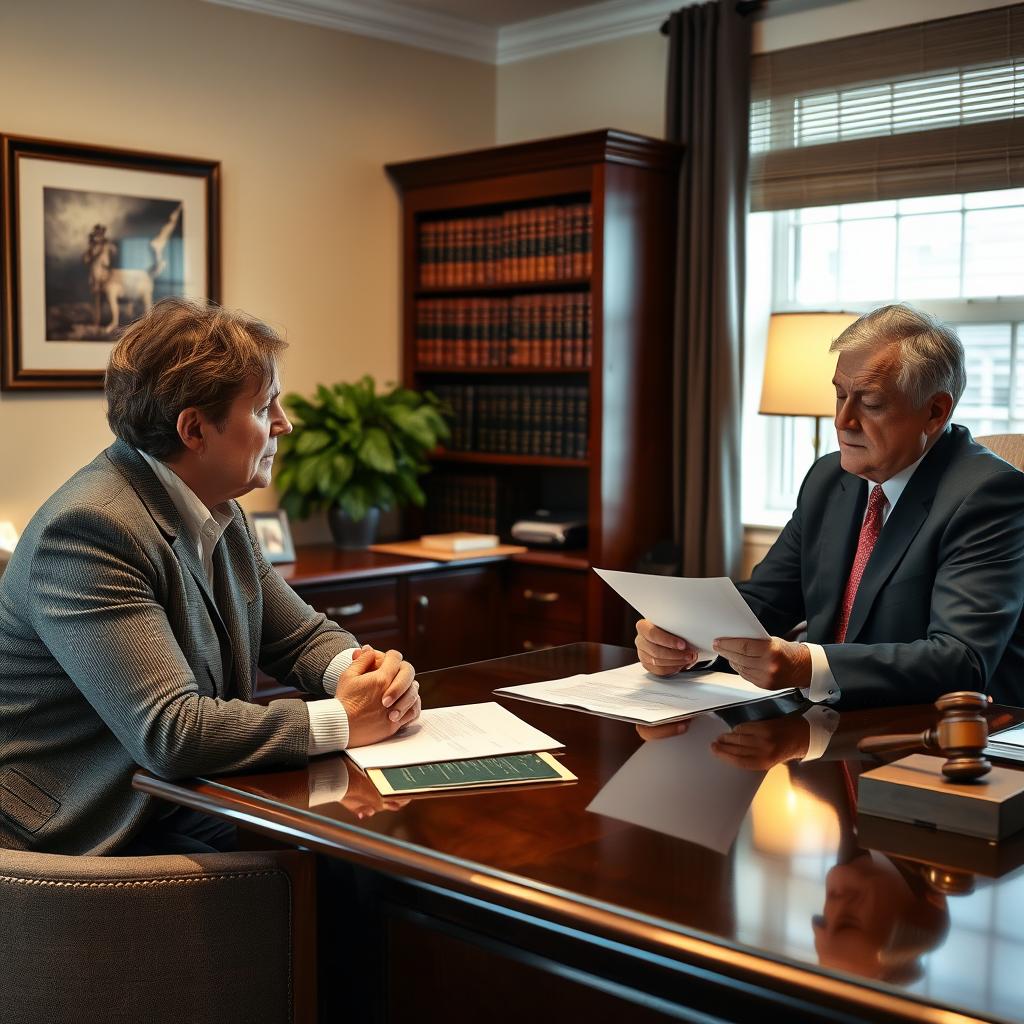
Post Divorce Enforcement Lawyer Fluvanna County, VA
When a final divorce decree is not being honored, enforcing the terms ordered by the Fluvanna County Circuit Court becomes a pressing family-law concern. Whether the issue involves unpaid spousal support, a missed child-support payment, property-division obligations left unfulfilled, or custody and visitation interference, post-divorce enforcement in Virginia requires a clear understanding of the court’s contempt powers and the statutory tools available under Title 20 of the Virginia Code. In Fluvanna County, these matters typically proceed through the Circuit Court—located at 72 Main Street, Suite B, Palmyra, VA 22963—or through the Juvenile and Domestic Relations District Court, depending on the type of obligation at issue. Law Offices Of SRIS, P.C. – Advocacy Without Borders.
Mr. Sris and his Of Counsel team at Law Offices Of SRIS, P.C. Concentrate their practice in family-law matters, including post-decree enforcement for clients in Palmyra, Fork Union, Lake Monticello, and across Fluvanna County. The firm’s Shenandoah Location serves Fluvanna County from Woodstock, and consultation can be scheduled by calling (888) 437-7747. Mr. Sris and his Of Counsel bring extensive combined legal experience to enforcement proceedings. Results may vary.
What Post Divorce Enforcement Means in Fluvanna County
Post-divorce enforcement in Virginia is the procedural mechanism by which a party asks the court to compel compliance with an existing divorce decree. The decree itself—issued by the Fluvanna County Circuit Court—resolves equitable distribution, spousal-support awards, child custody, visitation schedules, and other terms. When the opposing party fails to abide by those terms, the aggrieved spouse may return to the same court to seek enforcement. The court’s authority stems from its inherent contempt power and from specific statutory provisions, including Va. Code § 20-91 (defining the divorce judgment) and Va. Code § 20-107.3 (governing equitable distribution).
In Fluvanna County, enforcement petitions are filed in the same court that entered the decree—generally the Circuit Court for divorce matters or the Juvenile and Domestic Relations District Court for standalone custody and support cases. The enforcement process does not reopen the underlying divorce; it addresses non-compliance with the existing order. Common enforcement tools include rule-to-show-cause hearings, wage-withholding orders, liens on real property, suspension of licenses, and incarceration for civil contempt in particularly egregious cases. Because the enforcement proceeding can affect a parent’s liberty or financial standing, procedural fairness and evidentiary rules apply, and an experienced family-law attorney can help present the necessary documentary and testimonial evidence.
Local practice in Fluvanna County takes place within the Sixteenth Judicial District. The Circuit Court at 72 Main Street, Suite B, Palmyra, hears equitable-distribution and spousal-support enforcement, while the Juvenile and Domestic Relations Court handles matters involving child support, custody, and visitation. Mr. Sris has testified before the Virginia House Courts of Justice Committee in support of 2019 HB 635 (chief patron Del. David Bulova), which revised the equitable-distribution statute and reinforced procedural safeguards for retirement-asset division—an issue that frequently arises in enforcement when a former spouse has not executed a QDRO or properly divided pension benefits. That legislative background, combined with decades of multi-state family-law practice, informs the team’s approach to post-divorce enforcement in Fluvanna County.
How Mr. Sris and His Of Counsel Handle Post Divorce Enforcement Cases
When a client contacts Law Offices Of SRIS, P.C. about an unenforced divorce decree, the first step is a thorough review of the existing order and its underlying terms. Mr. Sris and his Of Counsel examine the decree for clarity, check for any subsequent modifications, and assess whether the non-compliance is willful or based on a genuine inability to perform. The team then identifies the most appropriate enforcement remedy—show-cause motion, garnishment, charging lien, or contempt proceeding—and files the necessary petition in the Fluvanna County court that retains jurisdiction over the matter.
Because enforcement actions often involve procedural nuances such as personal service on the non-complying spouse and the standard of proof for civil contempt (clear and convincing evidence), Mr. Sris and his Of Counsel prepare each matter as a complete evidentiary hearing. The team gathers financial records, payment histories, communication logs, and witness testimony to demonstrate the violation and the remedy sought. Where compliance is still possible, they frequently negotiate a structured repayment plan or a consent order that avoids a full contempt hearing. Throughout the process, the client is kept informed of the likely timeline—which varies depending on the court’s calendar and the complexity of the dispute—and of the potential outcomes. Results may vary.
About Mr. Sris and His Of Counsel Team
Mr. Sris, Owner and Founder of Law Offices Of SRIS, P.C., has been practicing family law since the firm’s inception in 1997. Admitted in Virginia, Maryland, the District of Columbia, New Jersey, and New York, he guides the firm’s family-law practice from its multiple locations. Mr. Sris testified before the Virginia House Courts of Justice Committee in support of 2019 HB 635 (chief patron Del. David Bulova), a bill that revised the equitable-distribution framework—a credential that underscores the firm’s deep engagement with Virginia family-law policy. His Of Counsel team includes attorneys with substantial backgrounds in litigation and family-law matters, and together they bring extensive combined legal experience to post-divorce enforcement cases. Results may vary.
Frequently Asked Questions
How does a Virginia lawyer defend against post divorce enforcement charges?
An experienced Virginia family-law attorney defends against post-divorce enforcement charges by carefully examining the underlying decree for ambiguity, contesting the proof of willful non-compliance, and negotiating with the moving party. The alleged violating spouse may argue that the order’s terms are not clear enough to enforce, that the non-compliance was not deliberate but due to changed circumstances, or that the enforcement motion is procedurally deficient. The court requires clear and convincing evidence of contempt. Counsel may also file a motion to modify the underlying support obligation if a material change in circumstances has occurred, which can simultaneously resolve the enforcement issue. Each defense is tailored to the specific facts and to the language of the original decree.
What should I do if I am facing post divorce enforcement charges in Virginia?
If you have been served with a show-cause motion or enforcement petition in Virginia, contact a family-law attorney immediately and refrain from discussing the case with anyone except your lawyer. Preserve all financial documents, payment receipts, bank statements, and any communications with your former spouse. The court may impose sanctions—including incarceration for civil contempt—if it finds that you willfully disobeyed a lawful order. An attorney can help you file a response, request discovery, and raise defenses such as inability to pay or lack of willful violation. Do not ignore the court date; failure to appear can result in a capias or default ruling.
What are the penalties for failing to comply with a divorce decree in Virginia?
The consequences for violating a Virginia divorce decree range from monetary sanctions and attorney-fee awards to incarceration for civil contempt. Under Virginia law, the court may order the non-complying party to pay the other spouse’s legal fees incurred in bringing the enforcement action. It can enter a judgment for accrued arrearages, order wage withholding, suspend driver’s or professional licenses, and—in cases of willful contempt—sentence the party to jail until compliance is achieved. The penalty depends on the nature of the violation, the clarity of the decree, and the party’s contumacious behavior. For guidance on your specific situation, reach Law Offices Of SRIS, P.C. at (888) 437-7747.
Can I enforce a divorce decree that was originally entered in another state?
Yes, a divorce decree from another state can be enforced in Virginia after it is domesticated—a process that involves registering the foreign judgment with the Fluvanna County Circuit Court. Under the full faith and credit clause and Virginia’s Uniform Enforcement of Foreign Judgments Act, the out-of-state decree must be authenticated and filed in Virginia. Once domesticated, the decree is treated as a Virginia judgment and can be enforced through the same contempt and collection tools used for in-state decrees. This process is especially common for military families or individuals who have relocated to Palmyra or surrounding communities. An attorney can handle the domestication filing and subsequent enforcement.
How is child support enforcement different from spousal support enforcement in Fluvanna County?
Child-support enforcement in Fluvanna County is typically handled through the Juvenile and Domestic Relations District Court using statutory tools such as income-withholding orders, while spousal-support enforcement generally proceeds in the Circuit Court as a contempt matter. The Virginia Division of Child Support Enforcement can also intercept tax refunds, suspend licenses, and report arrearages to credit bureaus for child-support obligations. Spousal-support enforcement relies more directly on the court’s contempt power, and the moving party must prove the payor had the ability to pay and willfully refused. Both types of enforcement require thorough documentation, and an attorney can help identify the most effective mechanism.
Do I need a lawyer to enforce a divorce decree in Fluvanna County?
While you are not legally required to hire a lawyer, proceeding without one can be difficult because enforcement actions involve procedural rules, evidentiary standards, and contempt remedies that can seriously affect your rights. A self-represented litigant must file motions, present evidence, and examine witnesses according to the Virginia Rules of Evidence and local court practice. Mistakes can delay enforcement or result in a denial of the requested relief. Mr. Sris and his Of Counsel team have extensive experience with post-divorce enforcement and can help you navigate the process. For a consultation, reach Law Offices Of SRIS, P.C. at (888) 437-7747.
Additional Family Law Resources
Family Law representation in Fairfax County
Family Law in Fairfax City
Family Law lawyer in Prince William County
Family Law in Manassas
Family Law in Falls Church
Primary Legal Authorities
Virginia Code Title 20 – Domestic Relations
Fluvanna County General District Court
Virginia Court System
Attorney advertising. Prior results do not guarantee a similar outcome.
Results may vary.
Case results depend on a variety of factors unique to each case.