
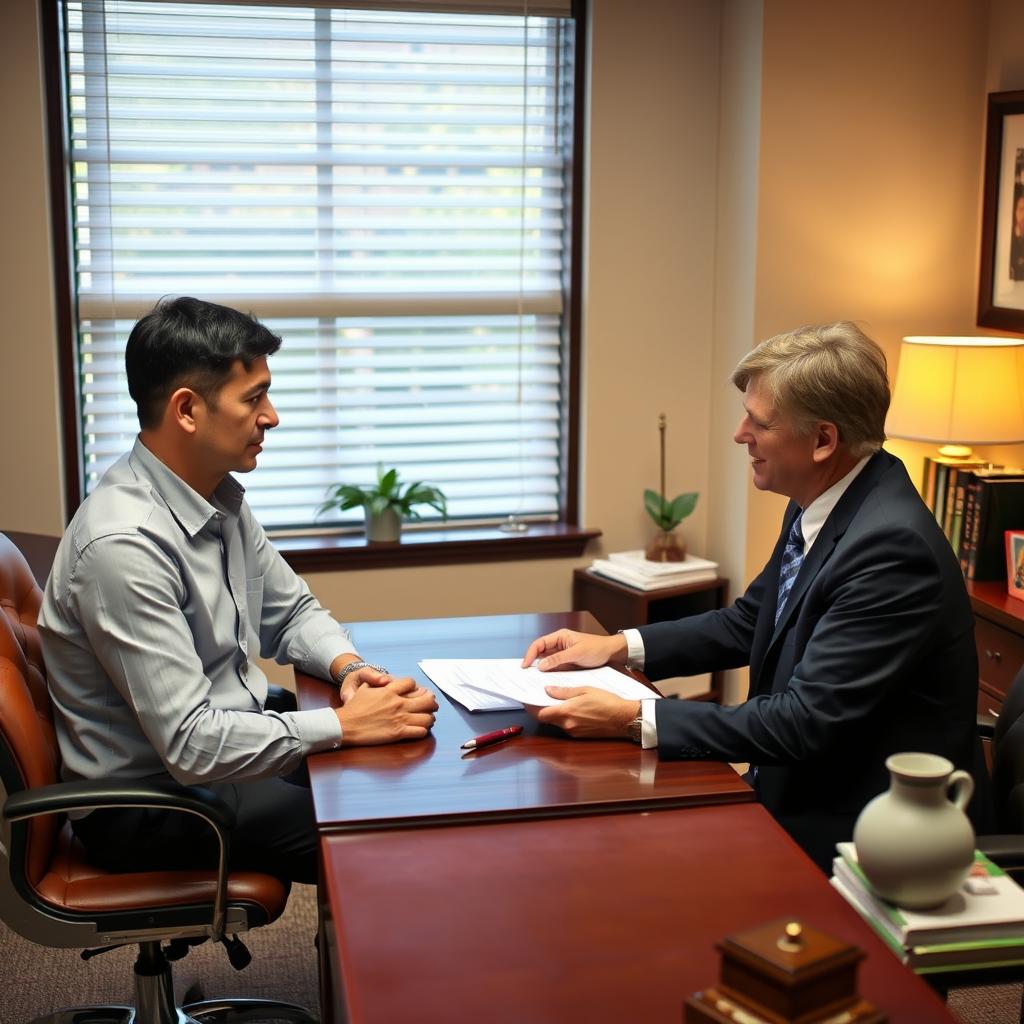
Establish Paternity Lawyer Fauquier County, VA
Fauquier County families seeking to establish legal parentage turn to Law Offices Of SRIS, P.C. for guidance through the Virginia paternity process. Whether you are a mother seeking to confirm a father’s obligations, a father pursuing parental rights, or a child in need of support, paternity establishment carries significant legal consequences. Under Va. Code § 20-49.1 et seq., Virginia law provides a statutory framework for identifying a child’s legal father, and the Fauquier County Juvenile and Domestic Relations District Court and Fauquier County Circuit Court both handle paternity-related matters depending on the circumstances. Mr. Sris, Owner and Founder of Law Offices Of SRIS, P.C., and his Of Counsel team bring extensive experience to paternity cases, working to protect clients’ interests while navigating local court procedures. To request a consultation, reach our Fairfax Location at (888) 437-7747. Law Offices Of SRIS, P.C. – Advocacy Without Borders.
What Establishing Paternity Means in Fauquier County, Virginia
Establishing paternity is the legal process of determining a child’s biological father and creating a parent-child relationship under Virginia law. In Fauquier County, paternity can be established voluntarily through an acknowledgment of paternity signed by both parents, or involuntarily through a court order following genetic testing and a hearing. Once paternity is established, the father gains rights to seek custody and visitation, and the child gains rights to financial support, inheritance, and access to family medical history. The process is governed by Virginia’s Title 20 and specifically by Va. Code § 20-49.1, which allows any person with an interest—including the mother, the alleged father, the child, or a state agency—to file a petition to establish paternity.
Fauquier County’s court system handles paternity cases through its Juvenile and Domestic Relations District Court when the matter involves a child not already part of a divorce proceeding. If paternity arises as part of a divorce or equitable distribution action, the Fauquier County Circuit Court at 6 Court Street in Warrenton exercises jurisdiction. Both courts sit in the Twentieth Judicial District and follow Virginia’s procedural rules, including requirements for service of process, genetic testing protocols, and evidentiary standards. The Office of the Attorney General’s Division of Child Support Enforcement often becomes involved when state benefits have been paid, adding another layer that counsel can help navigate.
Because paternity determinations directly affect custody, visitation, child support, and even a child’s identity, the court applies statutory factors to decide what arrangement serves the best interests of the child. Mr. Sris and his Of Counsel have handled family law matters across Northern Virginia and understand local practice at the Fauquier County courts, from initial pleadings through final orders.
How Mr. Sris and His Of Counsel Handle Paternity Establishment Cases
When a client contacts Law Offices Of SRIS, P.C. regarding a paternity matter in Fauquier County, the first step is a consultation to understand the specific circumstances. Is the father’s identity disputed? Are both parents cooperating? Is the case tied to a divorce, or is it a standalone petition? The answers shape the legal strategy. For uncontested situations, the firm may guide the parties toward a voluntary acknowledgment of paternity, which can be signed at the hospital after birth or later through the Virginia Department of Social Services. For disputed paternity, a petition is filed in the appropriate Fauquier County court, and the court typically orders genetic testing through an accredited laboratory.
Once genetic test results confirm parentage, the court proceeds to address related issues: child support calculated under Virginia’s guidelines, custody and visitation schedules, and the child’s surname if that is in dispute. Mr. Sris and his Of Counsel prepare clients for hearings, marshal documentary evidence, and, where appropriate, negotiate agreements that avoid contested proceedings. Throughout, the team communicates plainly about what to expect at each stage, helping clients make informed decisions. Because Fauquier County courts follow specific local rules and docketing practices, having counsel familiar with the Twentieth Judicial District can make the process more efficient.
About Mr. Sris and His Of Counsel Team
Mr. Sris, Owner and Founder of Law Offices Of SRIS, P.C., has been practicing since 1997 and is admitted in Virginia, Maryland, the District of Columbia, New Jersey, and New York. A former prosecutor, he brings an understanding of how evidence is built and challenged—an insight that serves paternity clients when factual disputes arise. Mr. Sris testified before the Virginia House Courts of Justice Committee in support of 2019 HB 635 (chief patron Del. David Bulova), demonstrating his engagement with Virginia law.
Working alongside Mr. Sris, the firm’s Of Counsel team contributes a breadth of experience that includes criminal defense, CPS matters, and former law enforcement backgrounds. Collectively, Mr. Sris and his Of Counsel bring over 120 years of combined legal experience to family law cases, with over 4,739 documented firm-wide results. Results may vary. For paternity establishment in Fauquier County, clients benefit from this depth of knowledge and from a firm that appears regularly in Northern Virginia courts.
Frequently Asked Questions
How does a Fauquier County lawyer handle paternity establishment?
A Fauquier County paternity lawyer guides clients through the legal process of identifying a child’s biological father and securing associated rights and obligations under Virginia law. For an uncontested case, the attorney may help file a petition and a voluntary acknowledgment of paternity, then present the matter to the Fauquier County Juvenile and Domestic Relations District Court. For a disputed case, the lawyer requests genetic testing, reviews the test results, and argues paternity and related issues such as custody and support at a hearing. Counsel also negotiates with the other parent or the Division of Child Support Enforcement when appropriate.
What should I do if I am facing a paternity dispute in Fauquier County?
If you are involved in a paternity dispute in Fauquier County, contact a family law attorney to discuss your legal rights before taking any action that could affect custody or support. Avoid making informal agreements about paternity without legal review, because once paternity is legally established, it is difficult to undo. Preserve any relevant documents, including birth records, correspondence with the other parent, and evidence of financial support. Mr. Sris and his Of Counsel can evaluate your situation and explain the steps that apply under Va. Code § 20-49.1 et seq., including whether you are the appropriate party to file a petition.
How is paternity established if the father is not cooperative?
When an alleged father refuses to cooperate, a court can order genetic testing to determine paternity. A mother, a state agency, or in some cases an adult child, files a petition in the Fauquier County Juvenile and Domestic Relations District Court. The court then orders the mother, the alleged father, and the child to submit to DNA testing through an approved laboratory. If the test results show a high probability of paternity, the court enters an order establishing paternity and may proceed to address child support, custody, and other matters. Refusal to submit to testing can be treated as an admission of paternity in some circumstances.
Does establishing paternity give the father custody rights in Virginia?
Establishing paternity gives a father the legal right to seek custody and visitation, but it does not automatically grant custody. Once paternity is confirmed, the father may petition the court for a custody and visitation order. The Fauquier County court will determine custody and visitation based on the best interests of the child under Va. Code § 20-124.3, considering factors such as each parent’s relationship with the child, the child’s needs, and any history of family abuse. A father who has been absent from the child’s life may need to demonstrate his ability to provide a stable environment.
How does paternity affect child support in Virginia?
Establishing paternity is the first step to obtaining a child support order against the father. Under Virginia law, both parents have a duty to support their child. Once paternity is legally established, the court can calculate child support using the Virginia guidelines based on the parents’ combined gross income and the number of children. The order is enforceable through the Division of Child Support Enforcement, which can garnish wages, intercept tax refunds, and suspend licenses. Retroactive support may be available for the period before paternity was established, up to the date of the petition.
Can paternity be challenged after an acknowledgment has been signed?
In Virginia, a signed acknowledgment of paternity can be challenged, but only under limited circumstances and within strict timeframes. A party may rescind an acknowledgment within 60 days of signing or before a court order is entered, whichever is earlier. After that, rescission requires proof of fraud, duress, or material mistake of fact. Genetic test results that exclude the father are strong evidence of a mistake. Because the window to act is narrow, anyone considering a challenge should consult an attorney promptly. Mr. Sris and his Of Counsel can assess whether the acknowledgment is vulnerable and what steps are needed to bring the matter before the Fauquier County court.
What role does the Fauquier County court play in paternity cases?
Fauquier County’s Juvenile and Domestic Relations District Court hears standalone paternity petitions, while the Circuit Court handles paternity issues tied to divorce or annulment. Both courts are located at 6 Court Street in Warrenton. The J&DR District Court has jurisdiction over paternity, custody, visitation, and support matters when the parents are not married. The Circuit Court exercises jurisdiction when paternity is raised as part of a divorce or equitable distribution case. Each court follows Virginia’s civil procedure rules, and parties may request genetic testing, present evidence, and call witnesses. Counsel familiar with local practice can help navigate docketing nuances.
Do I need a lawyer for paternity establishment in Fauquier County?
You are not legally required to have a lawyer to establish paternity in Virginia, but the consequences of an improperly handled case can be significant. The Division of Child Support Enforcement often represents itself in paternity and support matters, and having experienced counsel ensures your interests are protected. An attorney can negotiate on your behalf, present evidence effectively, and help avoid procedural missteps that could delay the case or result in an unfavorable order. For guidance on your specific situation, reach Law Offices Of SRIS, P.C. at (888) 437-7747.
How long does a paternity case take in Fauquier County?
The timeline for a paternity case in Fauquier County varies depending on the complexity of the matter, court scheduling, and whether the parties cooperate. A straightforward uncontested case may resolve in a few months after filing, particularly if genetic testing is not contested and both parents agree. A contested case involving multiple hearings, discovery, and expert testimony can take significantly longer. The court’s docket and the availability of genetic test results also influence the schedule. Mr. Sris and his Of Counsel work to move cases forward efficiently while ensuring clients are prepared for each step.
What are the potential consequences of not establishing paternity?
Without legal paternity, a child may lack access to child support, inheritance rights, health insurance coverage, and Social Security or veterans’ benefits through the father. A mother may bear the sole financial burden of raising the child without a support order. The father, conversely, has no legal right to custody or visitation and cannot participate in decisions about the child’s upbringing. Establishing paternity secures legal recognition of the parent-child relationship for both the child and the father. For a consultation, reach Mr. Sris and his Of Counsel at (888) 437-7747.
Attorney advertising. Prior results do not guarantee a similar outcome.
Case results depend on a variety of factors unique to each case.
Results may vary.